
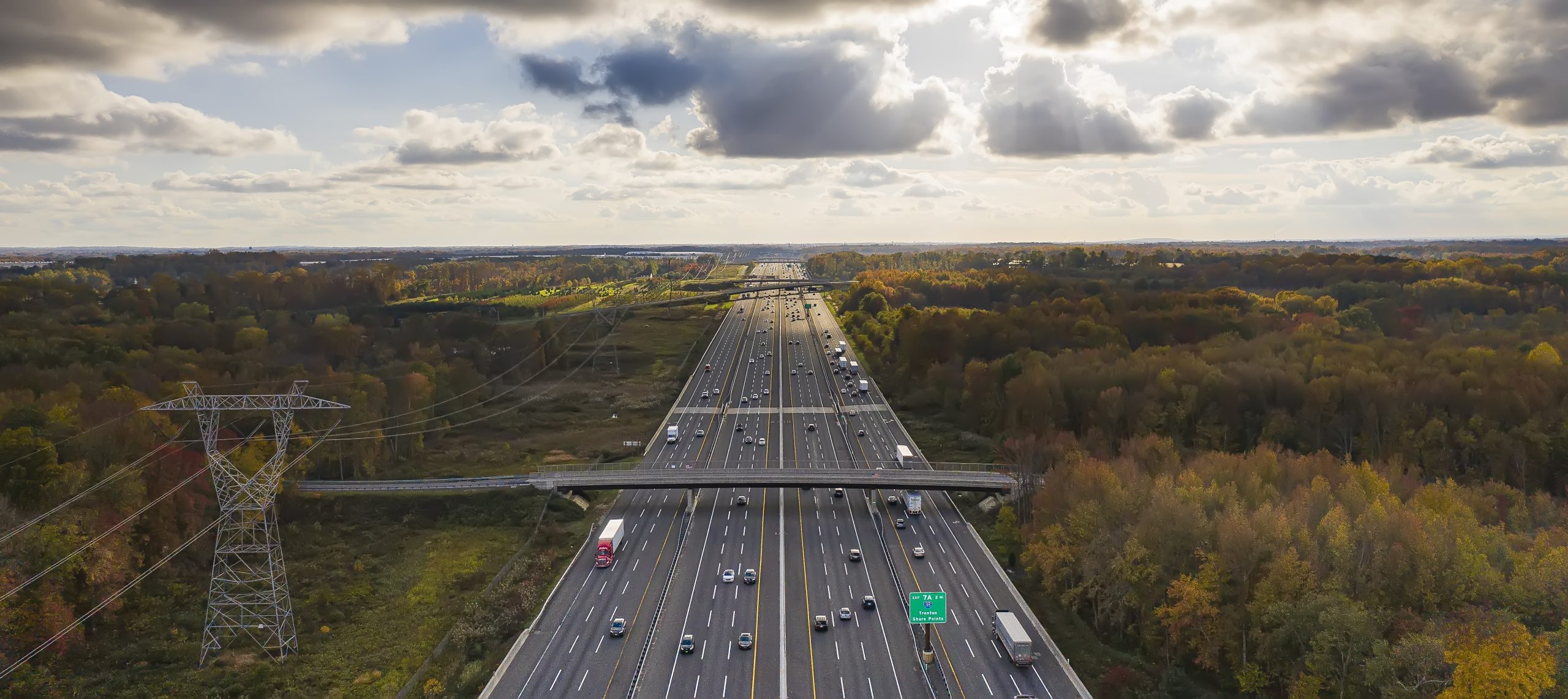
The cameras are pitched as a fast way to find stolen cars, suspects and missing people. They also create location records that can show where a vehicle was seen, when it passed and how often it appears.
A network of cameras is monitoring vehicles in New Jersey, using automated license plate readers to track vehicles, scan and store license plate images, and help law enforcement see what it knows about drivers. The systems are now a routine part of public safety infrastructure across the state.
The immediate issue is simple: a camera that reads a plate can also create a record of where a vehicle was seen and when. That is useful for police work, but it also raises questions for anyone who drives through New Jersey.
How the cameras read a trip
Automated license plate readers, often called ALPRs, are high-speed camera systems designed to capture plate numbers from passing vehicles. They can be mounted at fixed locations, placed near roadways or integrated into broader law enforcement networks.
The New Jersey Office of the Attorney General describes ALPR systems as automated camera networks that scan and store computer-readable images of license plates in a centralized database accessible to law enforcement. That means the camera is not just taking a picture for the moment. It is producing a searchable record.
In practice, a plate read can include the plate number, an image of the plate or vehicle, the time of the scan and the location of the camera. A single read may show little. Repeated reads can begin to show a vehicle’s travel pattern.
The technology does not need a traffic stop to work. A driver can pass a camera without knowing it, and the plate can be checked against law enforcement data in near real time.
What the system can reveal
The most basic thing an ALPR knows is that a specific license plate passed a specific point at a specific time. That can help police locate a stolen car, reconstruct a route or identify whether a wanted vehicle moved through an area.
It can also reveal more by accumulation. If the same vehicle is scanned at different locations over days or weeks, those records may indicate commuting habits, visits to neighborhoods, trips to workplaces, stops near sensitive locations or travel between cities.
The plate reader itself does not automatically know who is driving. A license plate is tied to a vehicle registration, and law enforcement would need other data to connect that vehicle to a registered owner, a driver or a suspect. That distinction matters, because the camera is not a facial recognition device. It is a location-and-plate tool.
New Jersey officials say the information helps identify, locate and recover stolen vehicles; interrupt auto theft networks; apprehend people involved in vehicle theft and other violent crimes; and find missing people, including Amber and Silver alert cases.
Where New Jersey uses them
The clearest recent expansion described by the Attorney General’s Office is in Atlantic City. Attorney General Matthew J. Platkin announced more than $1.4 million in funding for automated license plate reader technology and related equipment in and around Atlantic City roadways.
The plan called for the New Jersey State Police to receive money from the Department of Community Affairs and the Casino Reinvestment Development Authority for 120 ALPR units. The cameras were to be installed at fixed locations throughout Atlantic City.
Atlantic City is not the whole map. The Attorney General’s Office said ALPR technology is already used around New Jersey. It also said 34 law enforcement agencies in all 21 counties, along with the New Jersey State Police, previously received $10 million in grant funding for ALPR systems.
That does not mean every block in New Jersey has a camera, or that every driver is scanned on every trip. It does mean the network is statewide in reach, with local agencies and state police sharing a common technology used on roadways and at fixed points.
The public safety argument
State officials present the cameras as a force multiplier. Platkin said reducing auto theft and violent crime was his top priority and described ALPR technology as crucial for detecting, responding to and solving crimes.
The New Jersey State Police role is central. According to the Attorney General’s Office, information obtained through the Atlantic City equipment is to be shared by State Police in real time through the Regional Operations Intelligence Center and Real Time Crime Centers with relevant law enforcement partners when there is an investigative or operational need.
That real-time sharing is the feature police value most. A stolen car can move across municipal borders in minutes. A plate reader network can send an alert faster than an officer relying only on observation or a radio call.
Supporters also argue that fixed cameras can deter crime by making certain routes riskier for stolen vehicles or suspects. In a city such as Atlantic City, officials frame the technology as a public safety tool for residents, workers and visitors.
The privacy concern underneath
The same feature that makes ALPRs useful also makes them controversial. They gather information from vehicles that may have no connection to a crime. Most plate reads are likely to involve ordinary drivers going to work, school, stores, medical appointments or home.
That creates a basic tension: police want broad coverage because they do not know in advance which vehicle will matter, while privacy advocates worry that broad coverage can become routine movement tracking.
New Jersey has recognized the need for rules. The Attorney General’s Office says ALPR technology and the data it generates are governed by Attorney General Directive 2022-12, which significantly updated the state’s ALPR policies for the first time since New Jersey began using the systems in 2010.
For drivers, the key policy questions are practical ones: how long records are kept, who can search them, what counts as a valid law enforcement purpose, how audits work, and whether data is shared beyond the agency that collected it. The public safety case depends on speed and access. The privacy case depends on limits and accountability.
What remains unclear for drivers
New Jersey’s camera network is visible in policy announcements, grant awards and local installations, but it is less visible from the driver’s seat. A person passing a roadway camera may not know whether it is an ALPR, which agency controls it or how long the scan will remain in a database.
The strongest argument for the technology is concrete: stolen cars, missing people and violent crime investigations can move fast, and plate data can give police a lead. The strongest concern is also concrete: the same system can document the movements of people who are not suspected of anything.
The takeaway is not that every driver should panic or that every camera is abusive. It is that automated license plate readers have turned vehicle travel into data. In New Jersey, that data is now part of a growing law enforcement network, and the rules around access, retention and oversight matter as much as the cameras themselves.









Leave a Reply