

Cyclosporiasis is usually not considered life-threatening, which is why the reported deaths are drawing attention. Officials are still investigating clusters of illness, including a large Midwest outbreak linked to produce.
First deaths reported in the cyclosporiasis outbreak are now the first known deaths linked to a cyclosporiasis outbreak in this multistate public health investigation. Health officials reported the deaths on Monday after two people in Michigan died in connection with the outbreak, a notable turn because cyclosporiasis is usually not considered fatal.
The Michigan Department of Health and Human Services said both people had significant underlying health conditions that may have been affected by cyclosporiasis and dehydration. The US Centers for Disease Control and Prevention said it is aware of the two outbreak-related deaths in Michigan.
Why the deaths stand out
Cyclosporiasis is a foodborne intestinal illness caused by a microscopic parasite that can contaminate fresh food or water. It is known for causing severe diarrhea, and dehydration can become a serious complication, particularly for people who are already medically fragile.
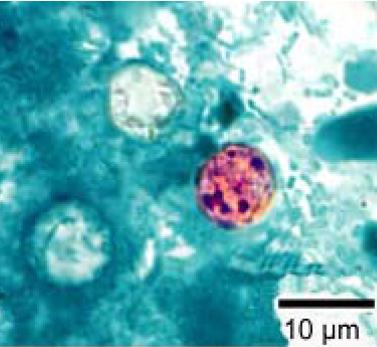
That is why the Michigan deaths are getting attention. The state health department described deaths from cyclosporiasis as far from common and said the infection is generally not a life-threatening illness.
Officials did not release identifying details about the two people who died. The department said no additional information would be provided on the cases, citing medical records and the presence of significant underlying health conditions.
The key public health message is not that cyclosporiasis has suddenly become broadly deadly. It is that a large outbreak can create more opportunities for severe outcomes, especially when dehydration overlaps with existing health problems.
Michigan’s unusually large outbreak
Michigan has reported 11,234 cases so far, according to the state health department. Of those, 193 people have been hospitalized.
Those numbers help explain why two deaths, while rare in the context of the illness, matter in the context of the outbreak. A disease that is usually survivable can still produce serious consequences when thousands of people are infected.
The CDC has identified more than 18,000 domestic cyclosporiasis cases this season. Of those, 6,707 are confirmed, while about 11,500 others are still undergoing laboratory testing and analysis to determine whether the illness was acquired in the United States.
Case counts typically rise in the spring and summer. The CDC says the usual US season runs from the beginning of May through the end of August, but officials have said this year’s counts are particularly high.
The produce link under investigation
Multiple clusters of cyclosporiasis cases are under investigation this year by the US Food and Drug Administration, the CDC and state partners. One major multistate outbreak has been centered in the Midwest.
The CDC’s outbreak page, updated August 3, identifies an outbreak linked to iceberg lettuce in nine states. Iceberg lettuce supplied by Taylor Farms has been recalled, and officials have indicated that contaminated products were likely already eaten or removed from shelves.
That timing is a familiar challenge in produce outbreaks. Fresh foods move quickly through stores, restaurants and homes, and by the time investigators connect illnesses to a product, much of it may no longer be available to test or recover.
The recall does not automatically answer every question. Investigators still have to sort out which illnesses belong to which cluster, how far contaminated products traveled, and whether additional foods or supply-chain steps played a role.
What cyclosporiasis does
Cyclosporiasis is not the same as common stomach flu, and it is not caused by a virus. It is an infection from a parasite that can be spread when people consume contaminated food or water.
The illness can cause severe diarrhea, which is the symptom most often emphasized by health officials because it can be prolonged and dehydrating. Dehydration is especially concerning for older adults, people with chronic illnesses and anyone whose health is already compromised.
For most healthy people, cyclosporiasis is not expected to be fatal. The Michigan deaths, as described by officials, involved people with underlying conditions that may have been worsened by the infection and dehydration.
That distinction matters. It keeps the risk in perspective without minimizing what happened: rare deaths can still signal that an outbreak is large enough, and severe enough for some patients, to demand close attention.
What remains unclear
Several important details have not been made public. Officials have not identified the two people who died, their ages, where in Michigan they lived or whether they were exposed to the same food source as other known cases.
Health agencies also have not said whether all Michigan cases are tied to the same product or whether multiple clusters are overlapping. That is common in foodborne illness investigations, where similar infections can occur at the same time from different sources.
The CDC and FDA are continuing to work with state partners. More lab results may clarify how many suspected cases were acquired domestically and how many belong to confirmed outbreak clusters.
For now, the clearest takeaway is that the outbreak has moved beyond a routine seasonal bump. Two deaths in Michigan do not make cyclosporiasis broadly deadly, but they do show why large foodborne outbreaks are treated seriously even when the underlying illness is usually considered manageable.
The public health stakes
Foodborne outbreaks often become visible only after people are already sick. That makes prevention, traceback and rapid communication essential, especially with fresh produce that may be eaten raw and distributed across state lines.
The Michigan fatalities also point to a harder truth about outbreak math. When infections climb into the thousands, rare complications become more likely to appear, and the burden falls most heavily on people whose bodies have less room to absorb dehydration or prolonged illness.
Officials have not suggested panic. They have suggested continued investigation, attention to recalls and careful monitoring of a high-count season that is still within its usual peak window.
The deaths are notable because they are the first known fatalities linked to this multistate cyclosporiasis outbreak. They are also a reminder that food safety warnings are not just about temporary stomach illness; for some patients, the consequences can become much more serious.











Leave a Reply