
The move grants North Korea a longstanding demand just as Kim Jong Un continues to expand his military capabilities. Any diplomatic opening will be judged by whether Pyongyang offers verifiable limits on its nuclear program in return.
Donald Trump scaled back major military exercises with South Korea, a move involving North Korean leader Kim Jong Un that could create a path toward a nuclear breakthrough. The decision affects U.S.-North Korea nuclear diplomacy because Pyongyang has long opposed the drills, while Seoul and U.S. commanders see them as central to deterring a nuclear-armed North Korea.
Trump said the exercises were costly and sent an unnecessarily hostile signal, according to CNN. The immediate question is whether reducing them becomes a bargaining chip that brings Kim back to negotiations — or a unilateral concession that leaves U.S. and South Korean forces less prepared with nothing concrete in return.
A concession Kim has long wanted
Major joint exercises between the United States and South Korea have been a recurring target of North Korea’s government for decades. Pyongyang routinely describes them as rehearsals for an invasion, while Washington and Seoul say they are defensive training designed to maintain readiness on the peninsula.
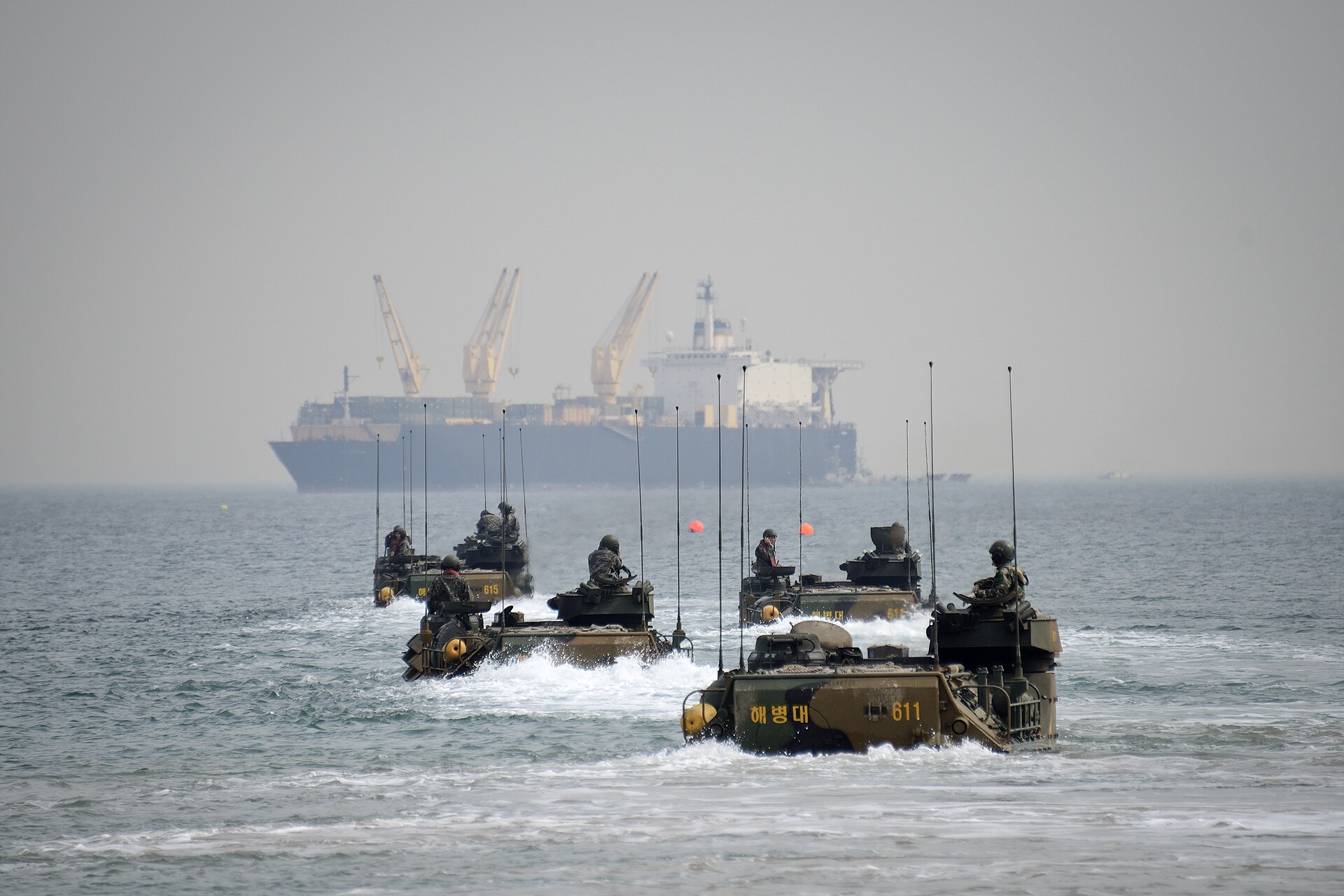
That history gives Trump’s decision an obvious diplomatic logic. If Kim views the scaled-back drills as evidence that Washington is willing to address one of North Korea’s stated security concerns, it could lower the political cost of restarting high-level contact.
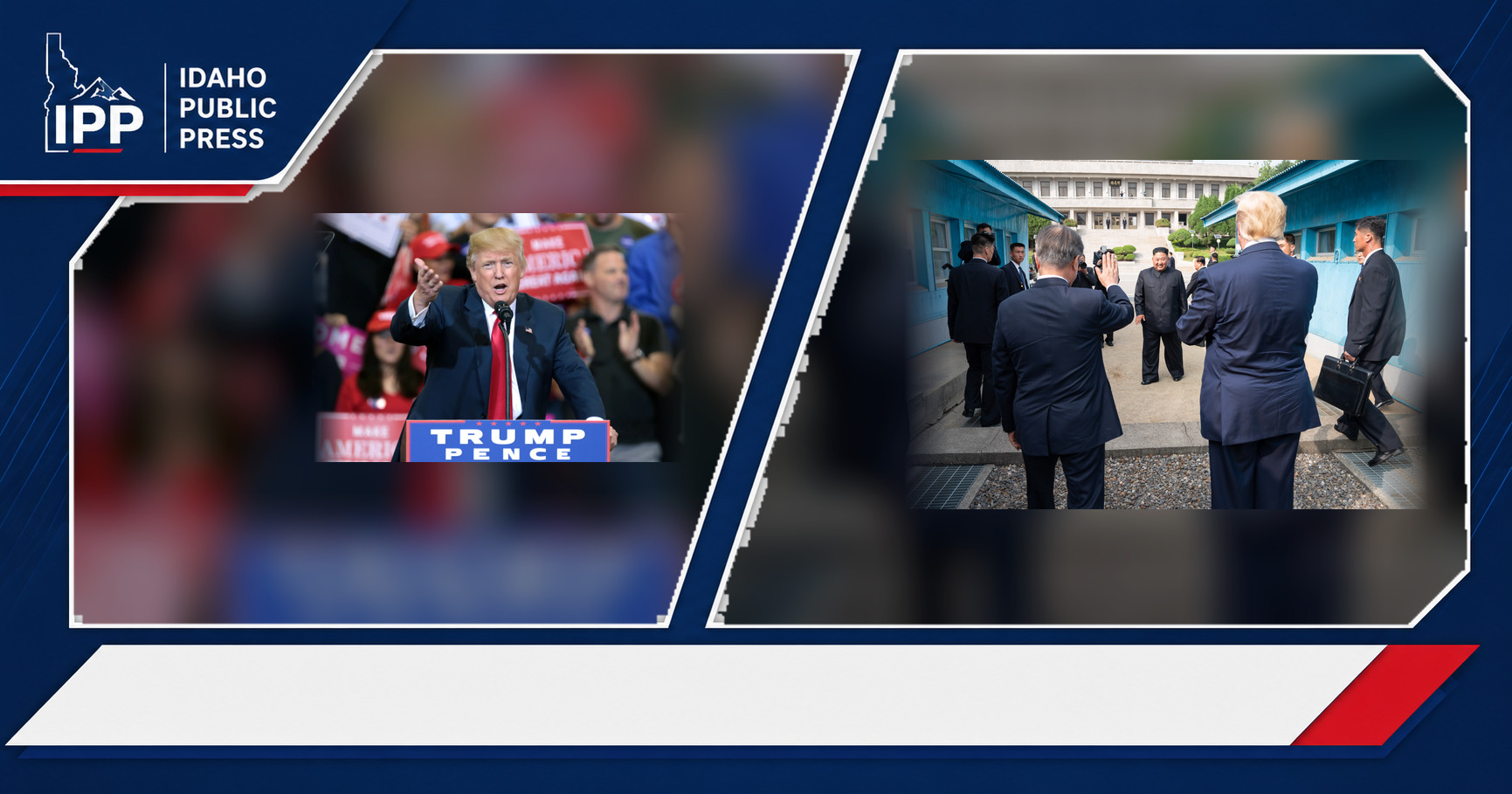
Trump has shown a preference for leader-to-leader diplomacy with Kim. Their first-term summits produced historic images and direct engagement, but did not produce an agreement that dismantled North Korea’s nuclear weapons program or established a durable inspection process.
That record matters now. A meeting, a warmer tone, or a pause in military activity could be the start of diplomacy, but none of those developments alone would amount to a nuclear breakthrough.
Why the timing raises concerns
CNN reported that Trump announced the reduction just as the 10-day Ulchi Freedom Shield exercises, involving tens of thousands of troops, were due to begin. He said North Korea had been “unthreatening and respectful” toward his administration.
Critics argue that assessment conflicts with the broader direction of Kim’s military policy. CNN reported that North Korea has continued expanding its armed forces and nuclear weapons program, while deepening military cooperation with Russia and displaying new military capabilities in state media.
Kim’s relationship with Moscow has become especially relevant to the security calculation. North Korea has supplied Russia with personnel and weapons connected to the war in Ukraine, CNN reported, while a mutual-defense treaty has strengthened the two countries’ formal ties.
For skeptics, scaling back drills at this moment risks signaling that Washington will reduce pressure even while Pyongyang strengthens the tools it could bring to a future negotiation.
The readiness argument is not simple
There is a genuine competing case for reducing exercises. Jennifer Kavanagh of Defense Priorities told CNN that bilateral drills consume U.S. resources and readiness at a time when the military faces demands elsewhere. The United States has shifted assets toward the Middle East during the Iran conflict, including moving missile interceptors from the Korean Peninsula earlier in the war, CNN reported.
That argument treats the exercises as one part of a wider resource problem. Training is expensive, forces are finite, and the Pentagon must decide how to allocate personnel, ships and air-defense systems across several regions.
But supporters of the drills say readiness is precisely what cannot be improvised during a crisis. Retired Adm. Mark Montgomery, now at the Foundation for Defense of Democracies, told CNN that scaling back lowers coalition readiness and puts U.S. forces at risk without a tangible benefit.
Carl Schuster, a former director of the U.S. Pacific Command’s Joint Intelligence Center, also told CNN that much of the exercise cost had already been incurred and that missed training would need to be made up later or readiness would suffer.
South Korea needs more than reassurance
The alliance is not only a diplomatic symbol. CNN noted that nearly 30,000 U.S. troops are stationed in South Korea, with more than 50,000 U.S. personnel in nearby Japan. Their ability to operate together depends on practicing communications, command arrangements and responses under pressure.
For South Korea, the political message is as important as the training calendar. A sudden change ordered from Washington can renew doubts about whether the United States will sustain its commitments when North Korea raises tensions.
Those doubts can have consequences beyond the Korean Peninsula. Allies watch whether U.S. security guarantees are matched by predictable policy, especially when they face neighboring authoritarian states with growing arsenals.
Trump’s move also places Seoul in a difficult position. South Korea may welcome a reduction in tensions if it genuinely advances talks, but it must also prepare for the possibility that North Korea accepts the benefit while declining limits on missiles or nuclear weapons.
What a real breakthrough requires
The strongest case for Trump’s approach is that diplomacy often requires an initial gesture. North Korea has repeatedly sought an end to large-scale joint exercises, and a reduction could test whether Kim is prepared to respond with more than rhetoric.
Yet the test needs clear terms. A meaningful nuclear breakthrough would require specific North Korean steps, such as a verifiable freeze, disclosure of relevant facilities, limits on weapons production, access for inspectors, or a negotiated process for dismantlement. The available reporting does not indicate that Pyongyang has offered such concessions in exchange for the scaled-back drills.
The central uncertainty is whether Trump intends the change as a limited confidence-building measure before a renewed negotiation, or as a broader shift away from exercises regardless of North Korea’s conduct. CNN noted that Trump can change course quickly, and the practical effect of the order may still be limited because preparations for the drills were already underway.
For now, the move is a diplomatic opening, not a deal. It could help create conditions for direct U.S.-North Korea talks, but the outcome will turn on what Kim Jong Un is willing to put on the table — and whether the United States and South Korea preserve enough deterrence while finding out.







Leave a Reply