

Trump’s remarks turn a military blockade claim into a far more sweeping assertion about one of the world’s most consequential shipping routes. Iran has rejected the premise, while details of any formal U.S. policy remain unclear.
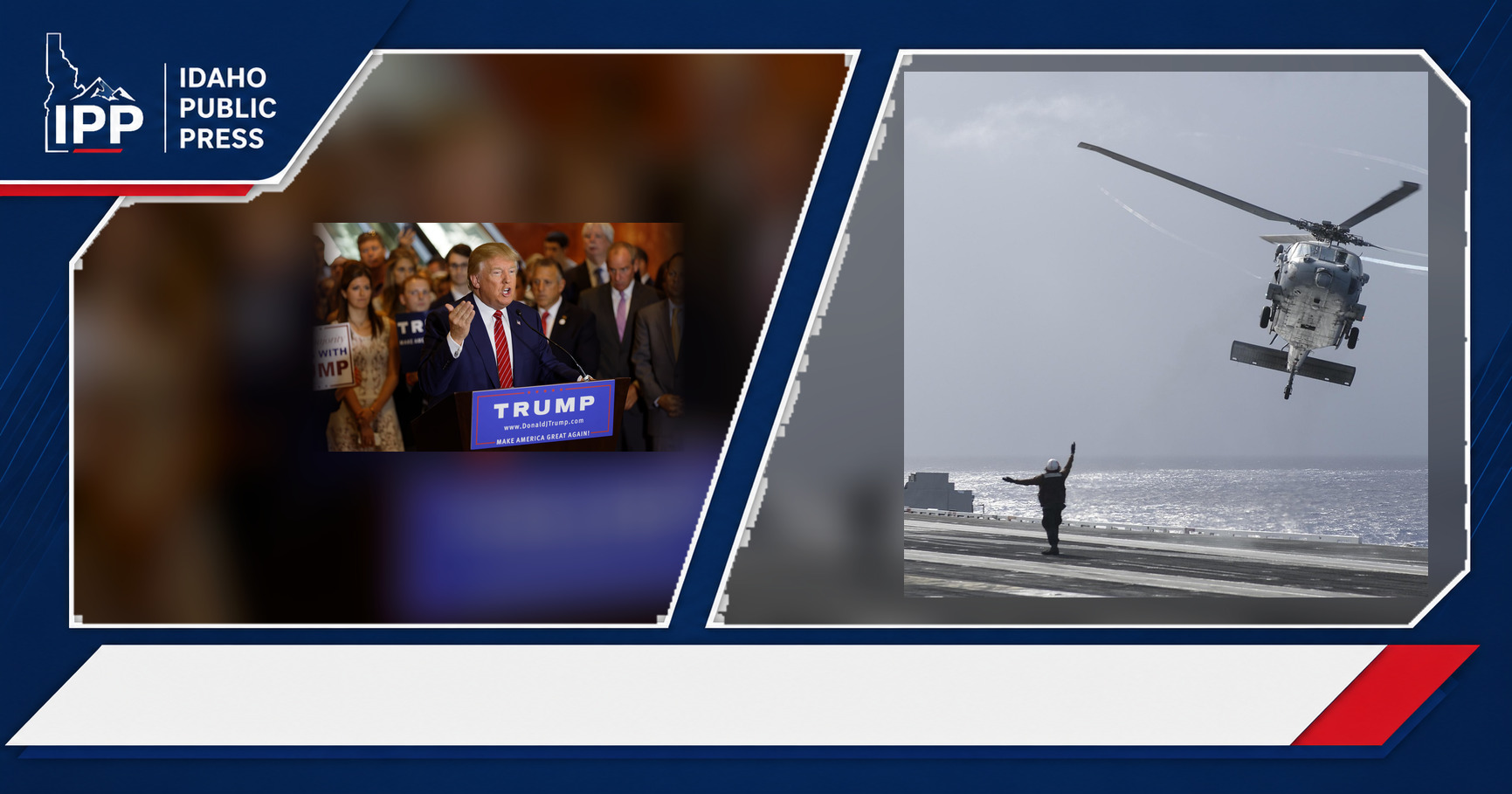
Donald Trump said he plans to soon declare the Strait of Hormuz a United States territory, asserting U.S. control over the strategic waterway amid the war in Iran. Speaking Aug. 14, 2026, in Garden City, New York, Trump linked the proposed declaration to what he described as a successful American naval blockade of Iranian ports.
The statement does not appear to establish a completed policy or change the Strait of Hormuz’s legal status. But it raises the stakes around a route central to oil shipping, where Iran has flatly rejected Trump’s account of U.S. control and where conflict has already contributed to gasoline prices above $4 a gallon nationally.
Trump tied the claim to blockade
Trump said he would make the declaration after the United States finishes defeating Iran, which he described as happening soon. He argued that the blockade itself had effectively given Washington control over the strait.
“No ships get through unless we want them to,” Trump said, according to USA Today. His remarks presented the claimed ability to regulate passage as evidence for describing the Strait of Hormuz as U.S. territory.
That is a major rhetorical jump. A naval operation, even one that restricts shipping, is not the same thing as an explained territorial policy. The reporting did not identify a formal order, legal rationale, timetable or U.S. government process that would accompany Trump’s proposed declaration.
A narrow passage with huge stakes
The Strait of Hormuz connects the Persian Gulf and the Gulf of Oman along the coasts of Iran and Oman. It is a major access route for Middle Eastern oil shipping, which is why disruption there can quickly become a concern far beyond the immediate conflict.
Trump said the United States had opened the strait to commercial vessels other than those from Iran, while using the blockade to squeeze Iran’s oil-dependent economy. That assertion is at the center of his argument that the U.S. is controlling the waterway.
The practical stakes are already visible in the administration’s own messaging at home. Trump acknowledged higher gasoline prices in his New York speech but defended the war and said he would not apologize for its costs.
Iran rejects the U.S. narrative
Iran disputes both Trump’s characterization of events and his implied claim to authority over the strait. Iranian officials have said the waterway is under Iran’s “complete management and control” and that commercial ships cannot pass without Iran’s permission.
Kazem Gharibabadi, Iran’s deputy foreign minister for legal and international affairs, dismissed Trump’s latest statement in unusually direct language. He said the Strait of Hormuz could not be seized “by tweet, nor by aircraft carrier, nor by issuing an order, nor by an election speech.”
Those competing claims matter because they leave commercial shipping caught between opposing descriptions of who can authorize passage. The reporting does not establish how individual shipping companies, other governments or international bodies would respond to a formal declaration if Trump issues one.
War has intensified the shipping risk
The declaration talk comes after a U.S.-Iran memorandum of understanding aimed at ending the war fell apart in July, according to USA Today. Since then, Iran has resumed attacks on ships in the Strait of Hormuz that it says lacked permission to use the channel.
The United Arab Emirates blamed Iran for Aug. 13 drone strikes on two tankers sailing through the strait. Those reported attacks underscore why control of the route is not simply a matter of political language: vessels, crews, cargo and energy markets face immediate consequences when access is contested.
Defense Secretary Pete Hegseth said Aug. 13 that the U.S. military could maintain a naval presence in the Middle East indefinitely to enforce the blockade, with ships rotating in and out. That suggests the administration sees the blockade as an ongoing operation rather than a short-term demonstration of force.
Gas prices add domestic pressure
Trump’s comments also carried a domestic political message. He argued that Americans paying more at the pump should view the added cost as part of preventing Iran from obtaining a nuclear weapon.
National prices for a gallon of regular gasoline remained above $4, USA Today reported, creating a political challenge for Republicans ahead of the November midterm elections. Trump called the increase small, but fuel costs are highly visible to households and can become a broader test of support for an overseas conflict.
Supporters of the administration’s approach may see the blockade as a show of force meant to weaken Iran and protect commercial traffic. Critics may focus on the risk that increasingly expansive claims over the waterway could deepen the conflict, unsettle shipping or leave the U.S. committed to a prolonged military mission.
What remains unclear after the speech
Trump said he plans to act “pretty soon,” but neither the timing nor the mechanics of a declaration were laid out in the reporting. It is also unclear whether the comment represents a new policy position or another escalation in his rhetoric about the Strait of Hormuz.
The immediate question is not only whether a declaration is issued, but what it would mean in practice. For now, the clearest confirmed development is Trump’s assertion that a U.S. blockade amounts to control of the strait, set against Iran’s unequivocal rejection and a conflict that is already affecting shipping and fuel prices.



Leave a Reply