

A White House directive has reopened a debate over how the Navy launches aircraft from its carriers. The proposed shift affects a ship already under construction, raising questions about cost, industrial capacity and the fleet’s future carrier availability.
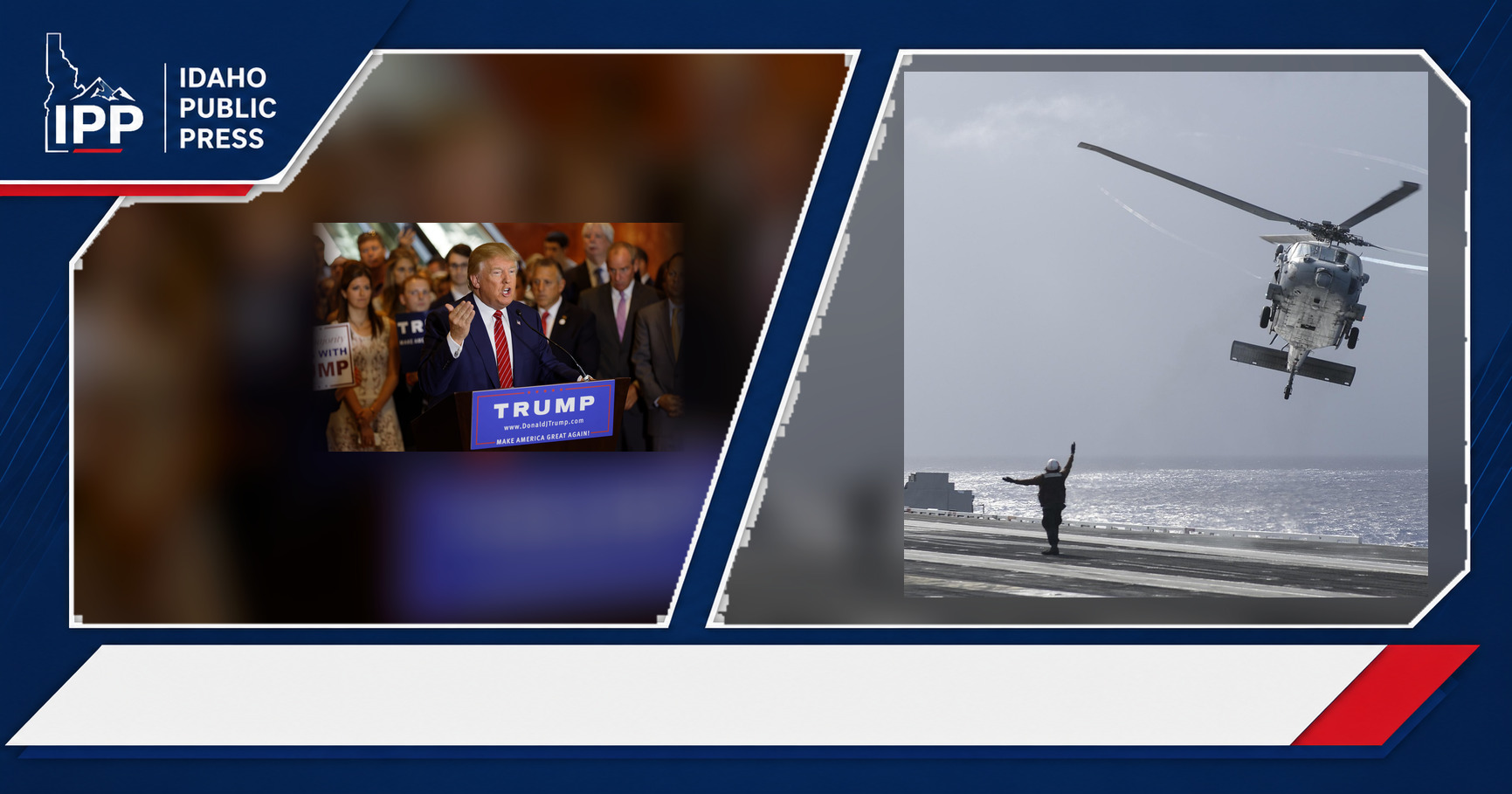
Donald Trump directed the U.S. Navy to replace the electromagnetic launch system with steam catapults on a new aircraft carrier, the future USS Doris Miller. Naval experts said the move was very outdated and unusual, warning it could add billions of dollars to the carrier’s cost and delay deployment into the late 2030s.
The White House memo and fact sheet released Thursday instruct Defense Secretary Pete Hegseth to submit a plan within 60 days. The order turns a long-running argument over carrier technology into an immediate shipbuilding decision, with consequences for a vessel already under construction.
The order targets USS Doris Miller
The directive calls for a plan to install steam-powered aircraft-launch catapults on the carrier slated to be named USS Doris Miller. That ship is part of the Ford-class program, whose defining technological change is the Electromagnetic Aircraft Launch System, or EMALS.
EMALS uses electrical energy to accelerate aircraft for takeoff. Steam catapults, by contrast, use pressurized steam and are the established system aboard the Navy’s older Nimitz-class carriers.
The distinction matters because this is not a choice being made on a blank drawing board. According to Bryan Clark, a senior fellow at the Hudson Institute who spoke with CNN, switching systems after construction has begun would mean redesigning parts of the ship.
The White House said its broader memorandum is intended to fix what it calls critical long-term problems in Navy shipbuilding and ship repair. It did not, in the material described by CNN, provide a public engineering assessment of the specific redesign required for the Doris Miller.
Why experts see a costly reset
Clark told CNN the redesign would probably cost into the billions of dollars. He said a carrier expected to enter service around 2034 could instead arrive near the end of the following decade.
That estimate reflects more than the price of replacing one launch mechanism with another. A carrier’s propulsion, steam generation, piping, controls, maintenance arrangements and flight-deck operations are interconnected systems. Altering a major system after a ship is underway can create work far beyond the equipment itself.
Clark described the electromagnetic system as comparatively simpler, likening its operation to high-speed rail. Steam catapults involve components including valves, pressure regulators and pistons, he said.
He also said the Ford class has saved roughly $100 million a year in personnel and maintenance costs because electromagnetic catapults are easier to operate and maintain. Those operating-cost claims are part of the case for preserving EMALS, though Trump has voiced a sharply different view of the technology’s reliability.
Trump’s reliability case for steam
Trump has criticized electromagnetic catapults for years. At the Defense and Innovation Summit in July, he argued that the newer system was overly complex and harder to repair, referring to reported past problems with carrier catapults.
His criticism centers on a familiar defense-procurement tension: a newer system may promise better performance and lower operating burdens, but it can introduce unfamiliar failure points and a steeper learning curve. EMALS faced well-documented developmental and early operational issues before the USS Gerald R. Ford entered service.
Still, the current argument is not only about whether a system ever experienced problems. It is about whether the Navy should abandon the launch technology selected for its newest carrier class after investing in it, training for it and contracting for it.
Chris Cavas, a veteran naval journalist who told CNN he has experienced launches using both systems, called the proposed reversal “very old thinking, very outdated.” He said electromagnetic launches feel smoother and put less stress on aircraft.
A vanished manufacturing challenge
The practical obstacle may be as consequential as the engineering debate. Cavas and Clark told CNN that the Navy would need to identify or create a manufacturer for new steam catapults.
General Atomics built EMALS for the USS Gerald R. Ford and had been expected to provide it for the Doris Miller. CNN said it sought comment from the company. The existing EMALS supply chain does not automatically translate into one for steam equipment.
Steam catapults were once built by the Navy, Cavas said, but new units have not been needed since the carrier USS George H. W. Bush, which entered service in 2009. He said the associated production infrastructure is gone.
Clark said no U.S. steam-catapult manufacturers remain and that restarting a production line could cost tens of millions of dollars, take years and delay delivery of the first unit. That means a policy preference for older equipment could require the government to recreate capacity that no longer exists at scale.
Carrier numbers raise the stakes
The timing is sensitive because aircraft carriers are not interchangeable assets. The Navy schedules deployments, maintenance periods, training and retirements years in advance, and a delay to a new carrier can affect the broader force plan.
Clark warned that a late Doris Miller delivery, combined with Nimitz-class retirements, could leave the Navy short of carrier capacity in the next decade. That is an assessment, not a confirmed forecast: the ultimate effect would depend on construction schedules, retirement decisions, funding and the technical plan Hegseth submits.
Democratic Sen. Mark Kelly of Arizona, a retired Navy captain and former test pilot, criticized the memo on X Thursday. Kelly argued that political leaders should not dictate detailed engineering choices for ship systems. His response illustrates the larger dispute over how much weight should be given to presidential direction versus Navy technical and acquisition expertise.
Supporters of Trump’s approach can argue that expensive defense programs deserve direct scrutiny when reliability concerns arise. Critics counter that changing an in-progress design without a demonstrated replacement industrial base risks making shipbuilding slower and costlier—the very outcomes the White House says it wants to address.
The 60-day plan is only a start
The immediate next step is the plan ordered from the defense secretary within 60 days. It should clarify whether the administration intends a feasibility study, a binding redesign decision or a broader shift for future carriers.
Key unanswered questions include how steam catapults would be integrated into the Doris Miller, who would manufacture them, how much the change would cost and whether Congress would fund it. The Navy’s views on schedule, safety, maintenance and aircraft compatibility will also be central.
For now, the dispute is a test of whether a familiar technology is necessarily the safer one. Steam catapults have a long Navy history, but EMALS is the system built into the Ford class—and reversing course on the Doris Miller would mean paying not just for older hardware, but for the time and industrial capacity required to bring it back.








Leave a Reply