
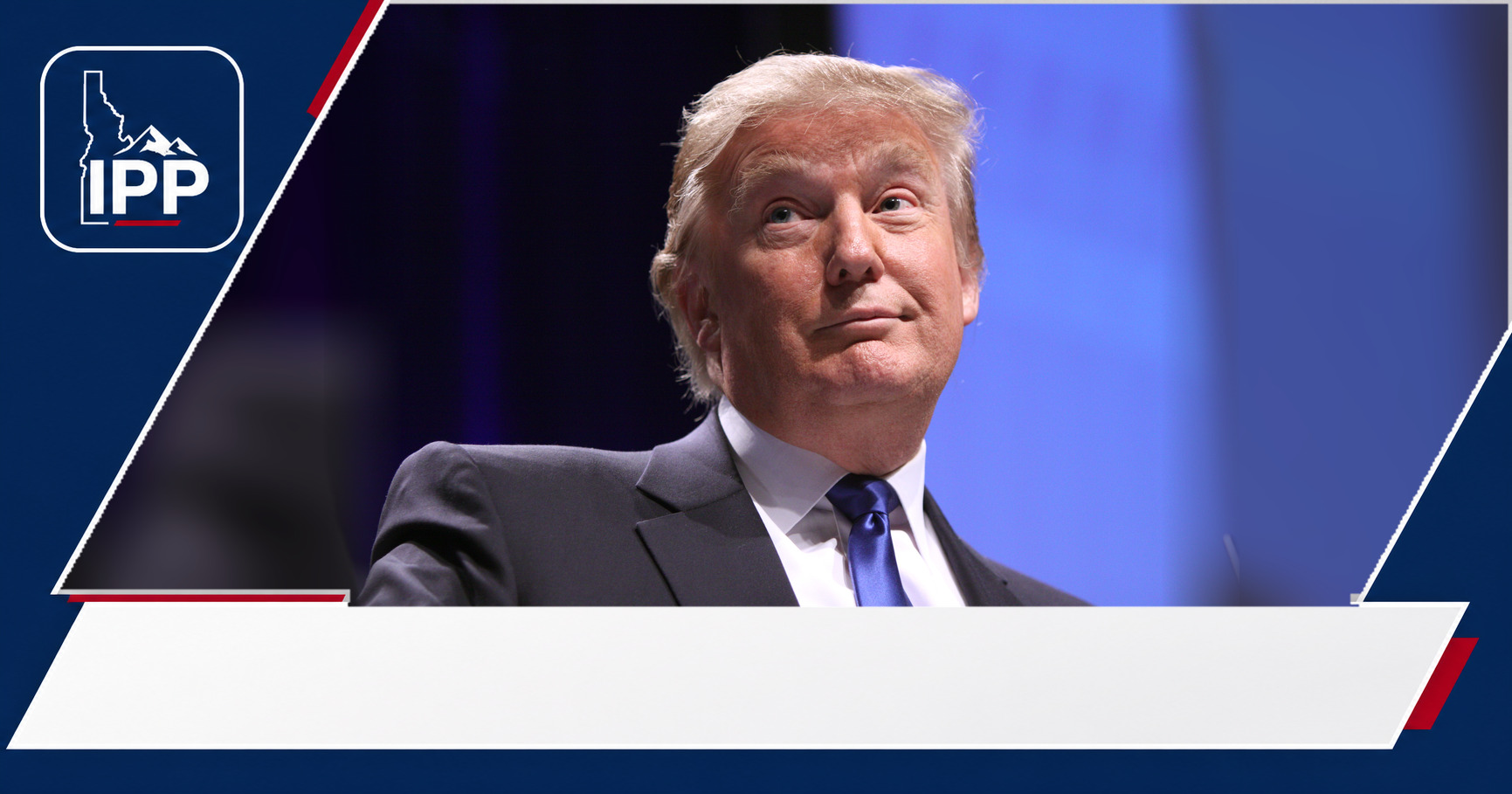
Trump’s forecast would require the Dow Jones Industrial Average to nearly double from its 50,000 milestone in roughly 740 trading days. That is possible in markets, but history suggests it would be an extraordinary and potentially unstable run.
President Donald Trump claims the stock market will double by the end of his term, predicting the Dow Jones Industrial Average will reach 100,000. Historical market performance suggests otherwise: with roughly 740 trading days left in the period Trump outlined, economists say a doubling from the Dow’s recent 50,000 level would be possible but highly unusual.
The prediction matters because a fast-rising Dow can shape confidence in the economy, retirement accounts and political narratives. But the Dow is not the entire stock market, and a dramatic climb to 100,000 would demand a pace of gains that history treats as an exception—not a baseline expectation.
Trump’s 100,000 Dow prediction
Trump made the forecast in a Truth Social post after the Dow crossed 50,000, writing that he expected the index to hit 100,000 by the end of his term. He also credited his economic policies, including tariffs, with the market’s earlier advance.
That framing is politically potent: a rising index is visible, easily measured and often treated as a shorthand for investor optimism. Yet no president directly controls the market. Corporate earnings, interest rates, inflation, global growth, investor expectations and sudden shocks all help determine where major indexes move.
There is also an important distinction in the claim itself. The Dow Jones Industrial Average tracks 30 large, publicly traded U.S. companies. It is a prominent market barometer, but it is not interchangeable with broader indexes such as the S&P 500, and it does not represent every stock or every household’s financial position.
The math behind a doubling
A move from 50,000 to 100,000 is not a routine round-number milestone. It would mean a gain of nearly 100% from the level where the Dow cleared 50,000.
Da Huang, an assistant professor of finance at Northeastern University, estimated there were about 740 trading days available to reach the target. Depending on the precise starting point and end date, that kind of move would require sustained annual gains far above what investors generally build into long-term plans.
The challenge is compounded by the fact that markets rarely rise in straight lines. Even strong bull markets can include sharp pullbacks prompted by disappointing earnings, changing rate expectations, trade disputes, geopolitical events or fears that valuations have run ahead of business fundamentals.
For investors, the key point is that a doubling target creates a very different expectation from a normal positive year. It implies an extended stretch of exceptional returns with limited interruption.
History sets a longer timetable
Huang’s review of Dow history found that, since 1900, the index has taken an average of 2,804 trading days—just over 11 years—to double. Looking only at the most recent decade produced a faster average of 1,808 trading days, but that still far exceeds the roughly 740 days associated with Trump’s forecast.
Those figures do not make the target impossible. Averages are not ceilings, and markets can move much faster in periods of intense optimism, rapid earnings growth or major technological change.
Still, David H. Myers, an associate teaching professor and director of Northeastern’s Business Sustainability Initiative, characterized a move to 100,000 in the period discussed as unlikely. Huang likewise said neither the internet-driven market era nor the more recent AI boom had pushed the Dow to double over a comparable period.
That comparison matters because both episodes were associated with powerful shifts in corporate investment and investor expectations. If even those eras did not produce the required pace from a similar starting point, the burden of proof for a new forecast is high.
Fast gains carry their own warning
The Dow has doubled in fewer than 740 trading days before. Huang pointed to the period from the lows around the Asian financial crisis in 1997 to near the peak of the dot-com boom in 1999.
That example offers encouragement to market bulls, but also a caution. The dot-com bubble soon burst, showing that an unusually rapid rise can reflect speculation as well as durable improvement in profits and economic output.
A 100,000 Dow would not automatically signal a bubble. Companies could post stronger earnings, productivity gains could broaden, and inflation or monetary conditions could influence nominal index levels. The index’s price alone cannot settle the question.
But investors would need to examine what is powering any rally. Broad profit growth, manageable valuations and improving economic fundamentals make a different case from gains concentrated in a narrow group of heavily priced stocks.
Markets do not follow campaign clocks
Trump’s prediction invites a familiar debate over how much credit or blame a president deserves for market performance. Administrations can influence taxes, regulation, trade policy and federal spending, while the Federal Reserve’s decisions and private-sector earnings can be just as consequential for equities.
Markets also respond to policy uncertainty. Investors may welcome some measures while worrying about their effects on costs, supply chains, inflation or international retaliation. A policy that helps one sector can weigh on another.
That makes a single index target a blunt measure of economic success. The Dow can rise while households still face high borrowing costs or uneven wage growth; it can fall even when other indicators remain resilient. Retirement savers with diversified funds may also have very different exposure than traders focused on 30 blue-chip names.
What investors can reasonably take away
The most defensible reading of Trump’s forecast is not that the Dow cannot reach 100,000. It is that achieving it by the end of his term would require an unusually fast market advance by historical standards.
That leaves two competing views. Optimists can point to innovation, corporate adaptability and the market’s capacity for surprise. Skeptics can point to the long average time required for a doubling, the limited trading days available and the risks that can accompany a rush higher.
For everyday investors, a presidential prediction is best treated as a claim to evaluate rather than a blueprint for portfolio decisions. A diversified strategy, time horizon and tolerance for losses remain more relevant than whether a headline-grabbing index level arrives on a political timetable.









Leave a Reply