

The backlash turned a solemn military ritual into another political flashpoint. The fuller picture includes what dignified transfers are, what protocol calls for, and who the six soldiers were.
Donald Trump attended a dignified transfer for slain U.S. soldiers on Saturday, and his failure to bow drew outrage among critics after the ceremony took place at Dover Air Force Base, Delaware. The transfer honored six soldiers killed in the Middle East, with Trump joining their grieving families for one of the presidency’s most solemn military rituals.
The reaction quickly became a political flashpoint: Donald Trump sparks outrage was the framing circulating around the moment. But the ceremony itself, according to the Associated Press, followed a tightly controlled protocol in which Trump did not speak and saluted as each flag-draped transfer case was carried from the aircraft.
A salute, not a speech
The dignified transfer at Dover Air Force Base brought together Trump, Vice President JD Vance, their spouses and senior administration officials, according to AP. Defense Secretary Pete Hegseth, Attorney General Pam Bondi, White House chief of staff Susie Wiles, special envoy Steve Witkoff and Director of National Intelligence Tulsi Gabbard were also reported to be in attendance.
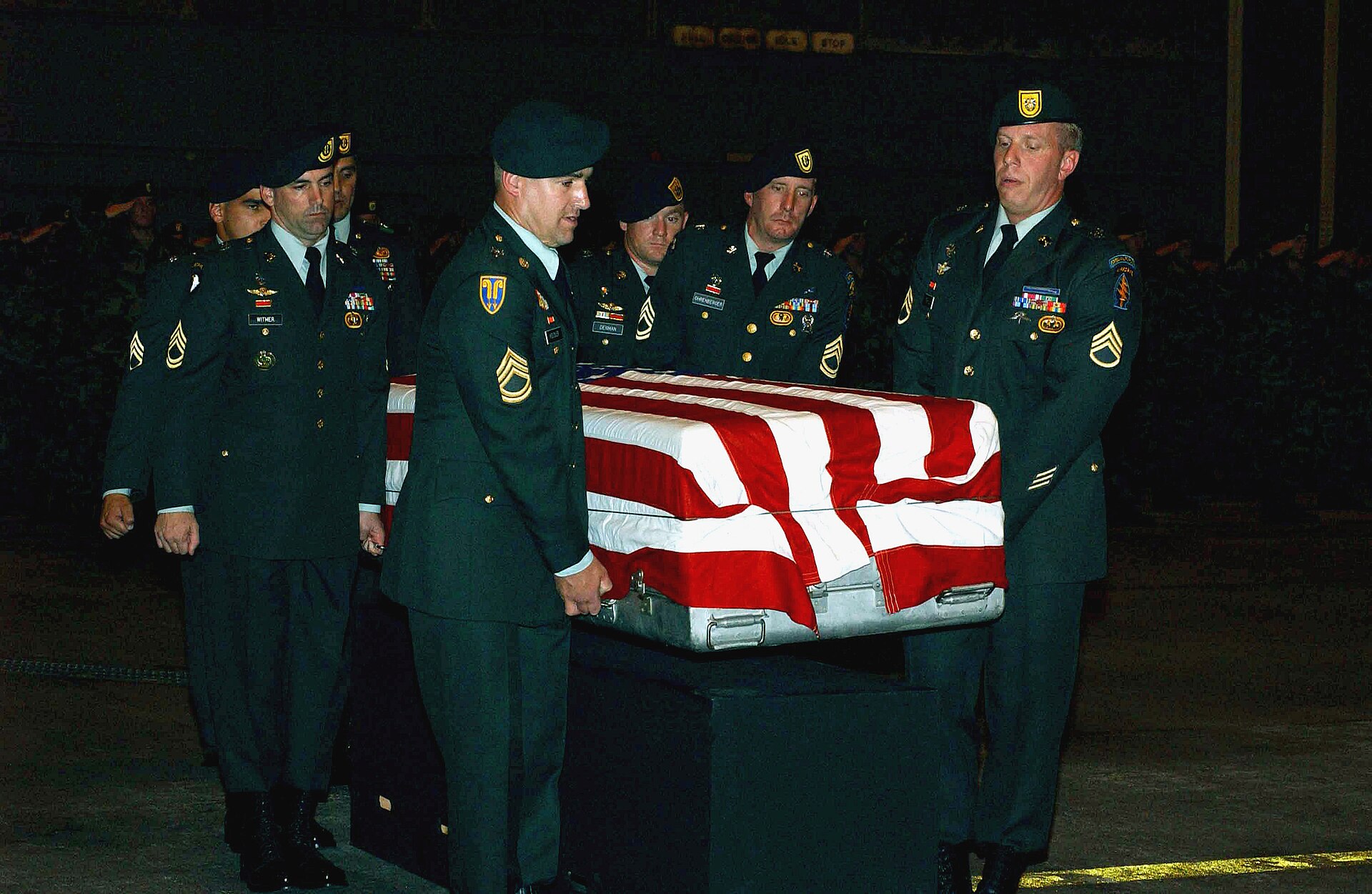
The ceremony lasted about half an hour. The remains of the six U.S. service members, each in a transfer case draped with the American flag, were carried from the military aircraft to waiting vehicles. Those vehicles then took the remains to the mortuary facility at Dover, where service members are prepared for their final resting place.
AP reported that Trump, wearing a blue suit, red tie and white USA hat, remained silent during the transfer, as protocol calls for. He saluted as each transfer case was moved. The families, AP reported, were largely silent as they watched.
That is the heart of the dispute now spreading online: critics focused on what they saw as Trump not bowing during a moment of mourning, while the reported ceremony emphasized the commander in chief’s salute and silence rather than a bow.
Why Dover carries weight
A dignified transfer is not a memorial service, a funeral or a campaign-stage tribute. It is the formal return of the remains of U.S. service members killed in action. Dover Air Force Base in Delaware has long been the place where that ritual is carried out.
The ceremony is designed around restraint. There are no speeches from the president during the transfer. The focus is on the fallen, the families and the service members carrying the remains. Every movement is deliberate because the setting is meant to protect both military honor and private grief.
That is why even small gestures can draw intense scrutiny. A salute, a hand over the heart, a bowed head, a facial expression or a missed gesture can be interpreted as a statement, even when no words are spoken.
Trump has previously described witnessing dignified transfers as among the hardest duties of the presidency. AP noted that during his first term he called it “the toughest thing I have to do” as president.
The six soldiers honored
The six soldiers honored Saturday were members of the Army Reserve’s 103rd Sustainment Command, based in Des Moines, Iowa, according to AP. The unit helps provide food, fuel, water, ammunition, transportation equipment and supplies.
AP identified those killed as Maj. Jeffrey O’Brien, 45, of Indianola, Iowa; Capt. Cody Khork, 35, of Winter Haven, Florida; Chief Warrant Officer 3 Robert Marzan, 54, of Sacramento, California; Sgt. 1st Class Nicole Amor, 39, of White Bear Lake, Minnesota; Sgt. 1st Class Noah Tietjens, 42, of Bellevue, Nebraska; and Sgt. Declan Coady, 20, of West Des Moines, Iowa, who was posthumously promoted from specialist.
They were killed by a drone strike at a command center in Kuwait, AP reported. Their deaths came one day after the U.S. and Israel launched a military campaign against Iran.
The individual details shared by families made the ceremony more than a national security event. Amor’s husband, Joey Amor, told AP she had been due home to him and their two children within days. Coady’s father described him as a hardworking soldier and deeply kind person. Khork’s family remembered him for his “infectious spirit” and lifelong desire to serve.
How the backlash took hold
Public anger over the bowing issue reflects how presidential rituals are now processed: first as images, then as symbols, then as political arguments. A short clip or still photo can travel faster than the official explanation of what the ceremony required.
For Trump’s critics, the absence of a bow became another example in a broader argument about his relationship with the military, public grief and ceremonial norms. For his defenders, the criticism looked like an attempt to turn a solemn military return into a partisan attack, especially when AP reported that he saluted and followed the no-speech protocol.
Both reactions point to the same tension. Dignified transfers are among the least political duties a president performs, yet they happen in a political environment where every gesture by a president is treated as evidence of character.
The central factual distinction matters: not bowing is not the same as not honoring. The reporting available from the ceremony says Trump saluted each transfer case. The outrage is about how that honor was visually expressed, not about whether he was absent from the ceremony.
Officials stressed sacrifice
Administration officials and lawmakers focused their public comments on the soldiers and their families. Hegseth wrote before the transfer of “an unbreakable spirit to honor their memory and the resolve they embodied,” according to AP.
Sen. Joni Ernst of Iowa, a Republican and combat veteran, said earlier in the week that the soldiers were engaged in “the most noble mission: protecting their fellow Americans and keeping our homeland secure.” She added that the nation owed them “an incredible debt of gratitude that can never be repaid.”
Trump also spoke about the families after the ceremony. On Air Force One, as he returned to Florida later Saturday, he called it “a very sad day” and said he was “glad we paid our respects,” AP reported. He described the relatives as “great people, great parents, wives, family” and said the parents were proud.
Those remarks did not end the criticism, but they add context to the moment now being debated. The ceremony was not built around a presidential statement. It was built around the return of six Americans and the families standing nearby.
What remains unresolved
The unanswered question is not whether Trump attended. He did. Nor is it whether the fallen soldiers were returned at Dover. They were. The unresolved part is whether viewers should judge the moment by formal military protocol, by personal expectations of visible mourning, or by Trump’s larger political history.
That split is why the story has traveled beyond the ceremony itself. To some, a bow would have signaled humility. To others, the salute was the appropriate commander in chief gesture, and the demand for a bow imposes a standard that may not apply to the ritual.
The sharper takeaway is that dignified transfers leave little room for performance, but public life leaves little room for ambiguity. A president’s gesture can be read as respect by one side and insufficiency by another.
For the families of O’Brien, Khork, Marzan, Amor, Tietjens and Coady, the ceremony’s purpose was far more basic and far heavier: their loved ones came home. The politics around the image may keep spreading, but Dover’s ritual was about the cost carried by those six soldiers and the people who stood there waiting for them.




Leave a Reply