

The backlash is about more than one quote. It lands as the U.S. military operation against Iran expands, casualties mount and Congress prepares to confront war powers questions.
Donald Trump was criticized for his response to the deaths of three U.S. service members after U.S. Central Command said the troops were killed during military strikes against Iran. The backlash focused on comments critics described as flippant: Trump told NBC News, "We expect casualties with something like this," adding, "We have three, but we expect casualties, but in the end it’s going to be a great deal for the world."
The reaction matters because the U.S. military operation against Iran is still unfolding, with five additional U.S. service members wounded, Iranian retaliation reported and lawmakers split over whether Trump has defined a clear strategy or exceeded Congress’ role in matters of war.
The remark that drew anger
Trump’s comments came in a phone interview with NBC News hours after the U.S. military announced the deaths. The line that drew the sharpest scrutiny was his statement that casualties are expected in an operation like this.

Presidents often speak in grim, careful language after service members are killed. Trump’s phrasing landed differently for critics because it paired the deaths of three Americans with a broader claim that the operation would be, in his words, "a great deal for the world."
The criticism is not only about tone. It is also about timing. The families of the dead service members, the wounded troops and the wider military community were absorbing the first confirmed U.S. casualties from the Iran strikes as the president was describing the operation’s expected costs and potential upside.
Supporters of Trump are likely to view the remark as blunt wartime realism: military operations carry risks, and presidents sometimes have to explain that reality plainly. His critics heard something colder, especially because the specific deaths had just been announced.
How the troops were killed
U.S. Central Command said three U.S. service members were killed during military operations against Iran, according to NBC News. CENTCOM also said five U.S. service members were wounded.
The strikes began as a joint U.S.-Israeli operation early Saturday, NBC reported. Trump said the strikes killed Iran’s supreme leader, Ayatollah Ali Khamenei, and told NBC that a "large amount" of other senior Iranian leaders were also killed.
Those claims place the service members’ deaths inside a much larger and more dangerous military campaign than a limited strike. The operation, as described by Trump and U.S. officials, appears aimed not only at Iranian nuclear capabilities but also at senior leadership and naval assets.
Trump said the reason for launching the strikes was "very simple," telling NBC that Iranian officials "weren’t willing to stop their nuclear research" and "weren’t willing to say they will not have a nuclear weapon."
A wider fight with Iran
Since the initial U.S. military action, Iran has launched retaliatory strikes against Israel and U.S. bases in the Middle East, according to NBC News. That raises the immediate concern that the operation could become a sustained regional conflict rather than a short, contained strike campaign.
Trump told NBC the U.S. military operation was "ahead of schedule" and said, "when we get 48 leaders, that’s a big event." He also described possible outcomes in sweeping terms, saying one was "decapitating them" and getting rid of Iran’s "whole group of killers and thugs."
On Truth Social, Trump later claimed the U.S. had destroyed and sunk nine Iranian naval ships and largely destroyed Iran’s naval headquarters. NBC reported that he also said the rest of Iran’s naval fleet was being targeted.
Those statements may reassure some voters who want a hard line against Tehran. They also deepen the questions critics are asking: Is the United States trying to stop a nuclear program, remove Iran’s leadership, degrade its military, trigger political change, or all of those at once?
Lawmakers split over strategy
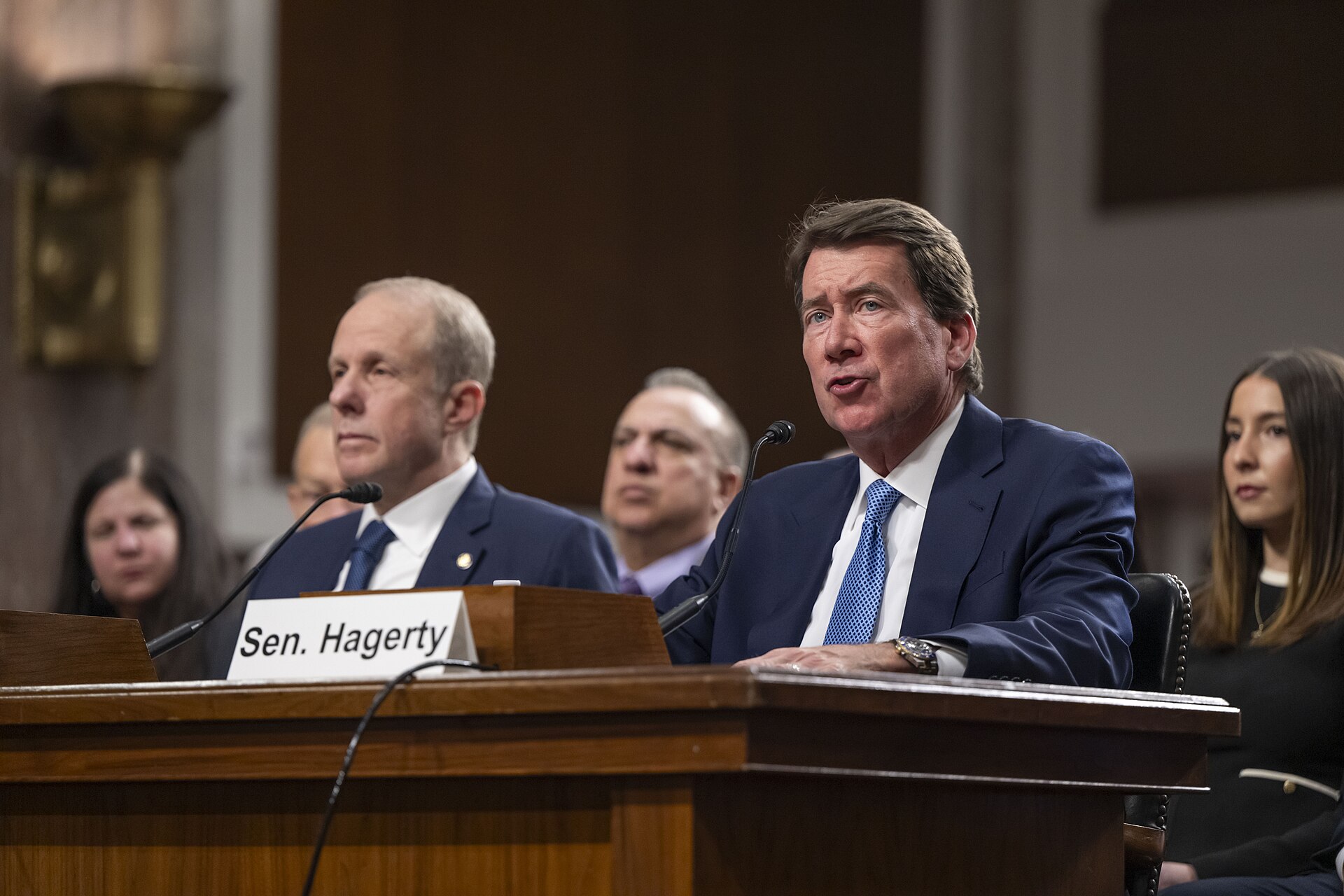
The strikes have produced a familiar but high-stakes divide in Washington. NBC reported that most Republicans praised Trump’s decision to strike Iran, while most Democrats criticized the move as lacking congressional authorization.
Sen. Lindsey Graham, R-S.C., defended the operation on NBC’s "Meet the Press," saying, "It’s in America’s interest to make sure that Iran can no longer be the largest state sponsor of terrorism."
Rep. Ro Khanna, D-Calif., rejected that framing on the same program. "Khamenei was a brutal dictator, but Americans are not safer today," Khanna said.
Sen. Mark Kelly, D-Ariz., a former Navy pilot and astronaut, questioned the administration’s goals. "Hope is not a strategy," Kelly said, adding, "We got to have a plan here. I mean, what is the strategic goal, and how do we achieve it?"
Why tone matters in war
Casualty statements are among the most sensitive moments of any presidency. They are not just policy messages. They are signals to military families, deployed troops, allies and adversaries about how the commander in chief weighs human cost.
That is why Trump’s "we expect casualties" comment hit a nerve. In a purely strategic sense, the sentence is true: combat operations can kill or wound U.S. troops. In a moral and political sense, the issue is whether the president appeared to move too quickly from loss to justification.
The White House may argue that Trump was emphasizing resolve and the scale of the operation’s intended benefits. Critics argue that a president should first honor the dead clearly and personally before talking about the operation as a global success.
Both readings can exist at once. A president can believe an operation is necessary and still face scrutiny for how he talks about the Americans killed carrying it out.
What remains unclear
Several major facts are still unresolved. NBC reported that Trump said Iranian officials "are talking" with the U.S., but he did not name the officials or explain what those talks were about.
Trump also said he did not know whether he would stop striking Iran during negotiations, saying he would consider it "if they can satisfy us" but adding that "they haven’t been able to." That leaves unclear what conditions would end the operation.
Congress is expected to take up a war powers resolution when lawmakers return to Washington, according to NBC. That fight could become the next major test of the Iran campaign: whether Trump can maintain political support as casualties, retaliation and questions about strategy mount.
For now, the backlash over his casualty remarks has become a proxy for a larger debate. The central question is not only whether Trump sounded flippant. It is whether the administration has explained the mission clearly enough to justify the cost already being paid by U.S. service members.






Leave a Reply