
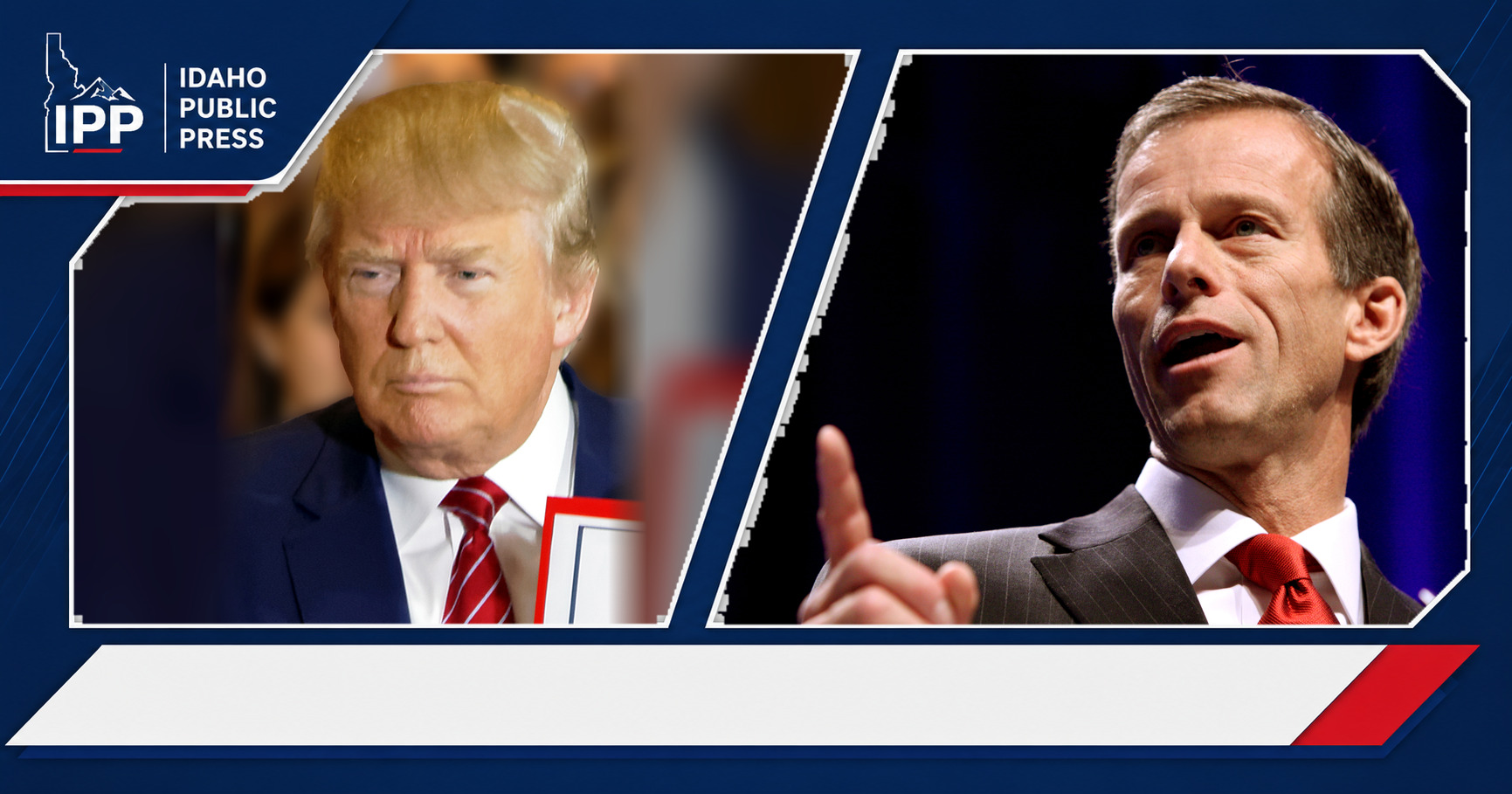
The fight is exposing a familiar Republican split: Trump wants a high-profile voting bill before the midterms, while Senate leaders say procedure and vote math are blocking the path.
Donald Trump warned the Senate that this could be the end if it does not comply, turning the fight over the filibuster and the SAVE America Act into a direct test for Senate Majority Leader John Thune and Senate Republicans. On Monday, Trump pressed the Senate to act, demanding changes to Senate procedure or a workaround to force the voting bill through.
By Tuesday, the obstacle was the same one Thune has cited for months: the 60 votes needed to beat the legislative filibuster. Republicans hold a 53-47 majority, and GOP leaders say the votes are not there.
Trump targets the Senate calendar
Trump’s latest demand was blunt: do not let senators leave Washington for the August break until they pass the SAVE America Act, a proof-of-citizenship voting bill that has become a priority for him and a rallying point for parts of the Republican base.
According to the Associated Press, Trump wrote on social media that Thune should not allow the Senate to “leave town” until it passes the bill or, as Trump put it, “TERMINATES THE FILIBUSTER.” He later told reporters that he has a good relationship with Thune but said the majority leader has “got to get his job done.”
That is the pressure point. Trump is not only asking for a vote. He is asking Thune to deliver an outcome that Senate Republican leaders say current rules and current vote counts do not allow.
The warning lands at an awkward moment for the Senate. Thune had been trying to manage a final pre-recess push on other priorities, including government funding, cryptocurrency legislation and Russia sanctions. Trump’s demand shifts attention back to a voting bill that has already stalled repeatedly.
The filibuster is the wall
The legislative filibuster effectively requires 60 votes for most bills to advance in the 100-member Senate. With a 53-47 Republican majority, Thune would need support from at least seven Democrats unless the rules change or the bill moves through a different process.
Trump’s preferred solution is simple in political terms and explosive in Senate terms: end the filibuster, or find a way around it. Thune’s answer has been equally consistent: Republicans do not have the votes to pass the bill, and they do not have the votes to change the rules to pass it.
That distinction matters. Trump can make the fight sound like a test of will. Thune is describing it as a test of arithmetic.
Thune told reporters he would support canceling the break if there were a clear path to victory. But he also pointed to the repeated failed efforts to move the legislation, saying Republicans had voted on it multiple times already and asking, “Show me how this ends.”
What the SAVE Act would do
The SAVE America Act, short for Safeguard American Voter Eligibility, would set new national requirements for voter registration and voting. It would require Americans to prove citizenship when registering to vote, generally through documents such as a U.S. passport or birth certificate. It would also require valid photo identification before casting a ballot.
Supporters argue the bill is needed to secure elections and reassure voters who believe the system is vulnerable. Trump has made the legislation a major 2026 priority and has claimed it would help “guarantee” the midterms.
Voting experts and critics warn the measure could create barriers for eligible voters who do not have easy access to the required documents. The AP reported that experts have said roughly 20 million Americans may lack birth certificates or other documents readily available.
There is also a factual dispute at the center of the debate. Trump has repeatedly claimed election cheating is “rampant,” but broad claims of widespread noncitizen voting or mass election fraud have not been supported by evidence on the scale he suggests.
Thune faces pressure from inside
The pressure on Thune is not coming only from Trump. A group of Republican senators aligned with the push for the SAVE America Act has urged GOP leaders to find a route forward.
Utah Sen. Mike Lee has been among the most vocal advocates for the bill in the Senate. He warned that the way Republicans handle the legislation could affect not only the midterm elections but also Senate GOP leadership races, according to the AP. Louisiana Sen. John Kennedy said Thune was being “a bit too cautious” and argued that at some point senators have to vote.
Other Republicans have backed Thune’s caution. Texas Sen. John Cornyn said keeping senators in Washington indefinitely would not change the vote math, warning that Republicans risk “overpromising and underdelivering.” North Carolina Sen. Thom Tillis said the majority of Senate Republicans support Thune’s position.
That divide is the core of the story. One wing wants a confrontation that shows Republicans are fighting. Another wing fears a doomed fight could expose weakness, consume time and leave the party with nothing to show for it.
A workaround is uncertain
House Republicans have tried to create another path by using the budget reconciliation process, which can allow certain measures to pass the Senate with a simple majority. The House approved a budget framework that included $10 billion for voting-related changes tied to the SAVE America Act.
But reconciliation has strict rules about what can be included, and Thune has said Republicans do not currently have the votes for that approach either. That leaves Trump’s demand hanging over a process with no obvious exit.
The calendar makes the standoff sharper. The August break is not just a vacation period. It is when senators return home, hold events, raise money and prepare for midterm campaigns. Several Republican senators face competitive races, making a prolonged Washington fight politically complicated.
Trump’s allies see the break as leverage: force senators to stay until they act. Thune’s defenders see that as symbolic unless someone can produce the missing votes.
The takeaway for voters
The Senate showdown is about election law, but it is also about power inside the Republican Party. Trump is testing whether a public threat can move Senate procedure. Thune is testing whether institutional limits still hold when the party’s dominant figure demands action.
For voters, the immediate question is not whether the SAVE America Act has Republican support. It clearly does. The question is whether that support can become law under Senate rules, with a narrow 53-47 majority and a 60-vote threshold still in place.
What remains unclear is whether Trump will keep escalating against Thune, whether enough Republican senators will join calls to weaken or bypass the filibuster, and whether any compromise version of the voting measure can move before the midterm campaign intensifies.
For now, Trump’s warning has made the Senate’s problem more visible without solving it. The votes are still the votes, the filibuster is still the barrier, and Thune is still asking the question Trump has not answered: what is the actual path to victory?








Leave a Reply