
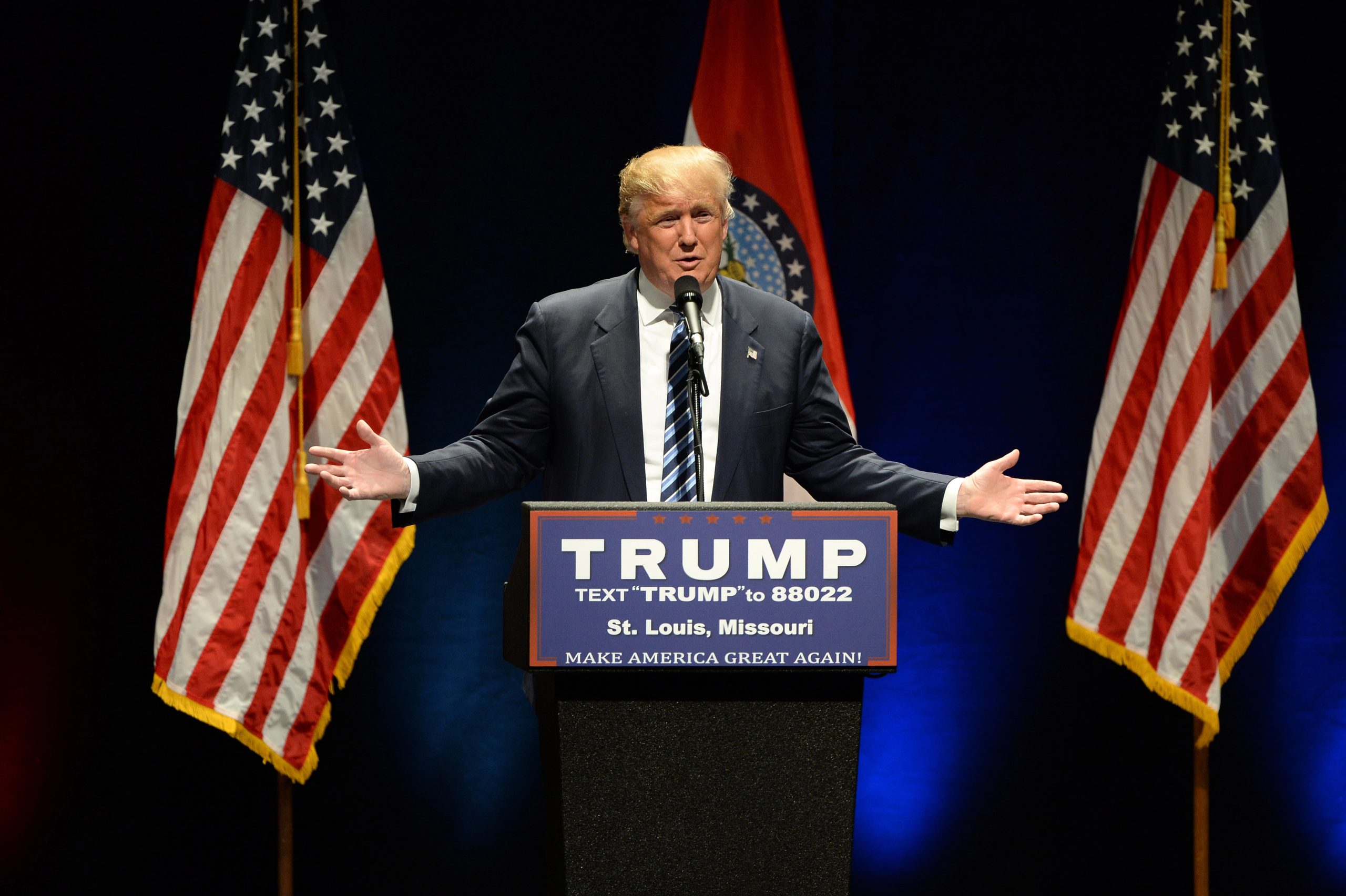
The apparent verbal slips landed in a charged moment for Trump’s diplomacy. The reaction says as much about Ukraine, Russia and Iran as it does about one clip.
Two apparent verbal stumbles by Donald Trump are drawing outsized attention because they touched some of the most sensitive names in world politics.
Newsweek reported that Trump appeared to refer to Ukrainian President Volodymyr Zelensky as “Putin” and to Iran as “Japan.” On their own, slips of the tongue happen in politics. In this case, the names involved made the moment harder to shrug off.
The names were the story
The reported mix-ups were not random substitutions. Zelensky is the wartime leader of Ukraine. Vladimir Putin is the Russian president who launched the full-scale invasion of Ukraine in 2022. Iran is a major U.S. adversary in the Middle East. Japan is a close American ally in Asia.

That is why the reaction moved quickly beyond jokes about a misplaced word. Each name sits inside a different foreign policy argument that has followed Trump for years.
For critics, appearing to confuse Zelensky with Putin plays into long-running concerns about Trump’s posture toward Russia and his skepticism of open-ended U.S. support for Ukraine. For supporters, it is likely to be dismissed as another media fixation on a fleeting misstatement.
The political problem is that verbal errors rarely stay small when they land on preexisting doubts. In Washington, a gaffe becomes durable when it seems to confirm what opponents already believe.
Ukraine is already a pressure point
The Ukraine war has been one of the defining tests of U.S. foreign policy. Zelensky has pressed Western governments for weapons, air defenses and security guarantees. Putin has tried to grind down Ukraine militarily while testing the patience of its backers.
Trump has repeatedly argued that he could bring the war to an end, a claim that has fueled both interest and anxiety. His allies have framed him as a dealmaker capable of forcing negotiations. His critics have warned that a rushed agreement could favor Moscow or pressure Kyiv into concessions it cannot accept.
A White House release from August 2025, highlighting Trump administration officials on Sunday shows, captured that argument clearly. Secretary of State Marco Rubio was quoted saying the administration was seeking “a full peace deal” rather than only a ceasefire, and that “you’re not going to end a war between Russia and Ukraine without dealing with Putin.”
The same White House release quoted Rubio rejecting what he called a “stupid media narrative” that Trump would “bully Zelensky into a bad deal.” That line matters now because it shows how sensitive the administration already was to the perception that Kyiv might be pressured more than Moscow.
Why a slip can travel fast
Political speech is judged differently from ordinary conversation. Presidents and presidential candidates are not only heard for meaning; they are watched for command, discipline and signals about priorities.
That standard can be unforgiving. A single confused name may be replayed because audiences are not just asking, “Did he misspeak?” They are asking, “Does this reveal something about how he sees the issue?”
That is especially true with Trump, whose public speaking style often moves rapidly between topics, boasts, attacks and digressions. Supporters see that as unscripted and authentic. Opponents see it as evidence of looseness on matters that require precision.
The Zelensky-Putin contrast is particularly loaded. One is the leader of the invaded country. The other is the leader of the invading power. Mixing the two, even accidentally, creates an image that travels faster than any careful clarification.
Iran and Japan carry different stakes
The reported Iran-Japan mix-up has a different character, but it also carries diplomatic weight. Iran is a central focus of U.S. security policy because of its nuclear program, its regional alliances and its hostility toward Israel and the United States. Japan is a treaty ally and one of Washington’s most important partners in the Indo-Pacific.
Those two countries occupy almost opposite places in American strategy. Iran is typically discussed in terms of sanctions, deterrence, nuclear limits and regional conflict. Japan is discussed in terms of alliance commitments, trade, technology and shared security concerns involving China and North Korea.
That contrast is why the apparent substitution drew attention. It was not simply a geography mistake. It was a swap between an adversary and an ally.
To be clear, public figures across parties have misspoken about countries, leaders and dates. The issue is not whether verbal errors are unique to Trump. They are not. The issue is whether a pattern of high-profile misstatements affects voter perceptions of steadiness at a time of global conflict.
The campaign lens is unavoidable
Every presidential cycle turns age, stamina and verbal sharpness into political ammunition. Trump has used that line of attack against opponents, especially when questioning whether they are fit for office. That makes his own misstatements more likely to be scrutinized aggressively.
The same dynamic has played out across modern politics. When candidates make a gaffe, their rivals rarely treat it as harmless. They frame it as evidence of confusion, weakness or bad judgment. The harsher a politician has been toward others, the less room opponents give him when he stumbles.
That does not mean every verbal slip deserves days of coverage. It does mean this one arrived with built-in political fuel. Trump’s views on Putin, his approach to Ukraine aid and his broader claims about personal diplomatic skill are already central to how many voters judge him.
The report also comes in a media environment where short clips often outrun full context. A few seconds can become the dominant version of an event before transcripts, explanations or campaign responses catch up.
What remains unclear now
The key unanswered questions are straightforward: what was the full context of the remarks, whether Trump or his team will address the reported wording, and whether the moment sticks beyond a short news cycle.
Some gaffes vanish quickly because they do not connect to a larger concern. Others linger because they sharpen an existing debate. This one has a chance to linger because it touches Trump’s foreign policy brand at two vulnerable points: Russia’s war in Ukraine and U.S. tensions with Iran.
For readers, the useful takeaway is not that one apparent misspeak proves a sweeping conclusion. It does not. The takeaway is that in presidential politics, names are never just names when they represent wars, alliances and adversaries.
That is why a report about two apparent word swaps became a top political story. The words were small. The geopolitical baggage behind them was not.



Leave a Reply