
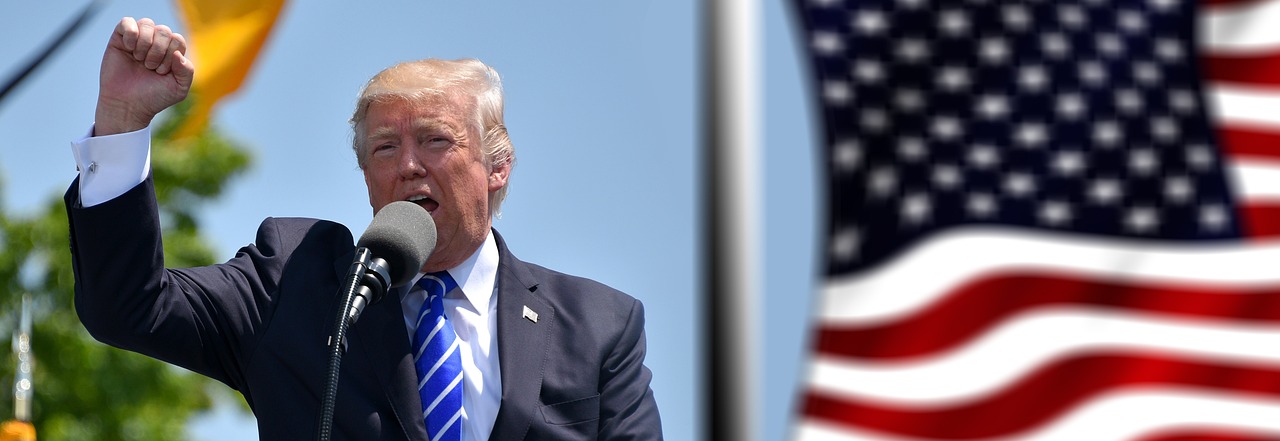
The event was framed as a national celebration with Trump at the center. Early coverage has instead turned it into a case study in how political spectacle can unravel in public view.
The Great American State Fair was supposed to be the kind of patriotic set piece Donald Trump has long favored: big visuals, flags, music, crowds and a sense that the country itself had been turned into a stage.
Instead, the early story around the event has been dominated by a different set of images: thin attendance, weather trouble, performer complications, steep concession prices and an event that critics say looked less like a national celebration than a strained political production.
A celebration turned awkward fast
The White House promoted Trump’s appearance at the Great American State Fair kick-off rally with official photos and framing that presented the event as a major public moment. That part is not unusual for a president who has often leaned on spectacle as a political tool.
But the event’s rollout has been met with notably harsh coverage. The Guardian described the fair as troubled from its opening stretch, pointing to low visible attendance, problems with the fair’s signature Ferris wheel and a series of logistical and public-relations headaches.
That contrast is the story. The administration’s version was a patriotic showcase. The press narrative that followed has focused on whether the showcase could actually deliver the energy it promised.
The crowd optics cut deepest
For any political event built around mass enthusiasm, crowd size is more than a footnote. It becomes part of the message. A packed fair suggests momentum and broad appeal. Empty space suggests the opposite, even if organizers can argue about timing, weather or camera angles.
The Guardian reported that very few people appeared to be attending at points during the fair. It also noted that a Fox News broadcast from the event, intended to spotlight it positively, ended up drawing attention from critics who said the background looked sparse.
That matters because Trump’s political brand has always treated crowds as proof. From rallies to motorcades to televised entrances, turnout is often presented not just as attendance but as validation.
When a fair is designed to look like a national gathering and then gets discussed as underattended, the optics become hard to separate from the politics.
The entertainment plan unraveled
The opening ceremony was expected to carry a concert-style feel. According to The Guardian, the planned lineup included names such as Martina McBride, Bret Michaels, the Commodores, Morris Day and the Time, Young MC and Flo Rida.
But the paper reported that most of those performers pulled out, with several saying they had not realized the event would carry a political undertone. That kind of confusion is especially damaging for an event trying to blur the line between civic festival and Trump-branded rally.
Celebrity bookings can lend mainstream polish to a political gathering. They can also create problems when artists, managers or fans see the event differently than organizers do.
In the end, The Guardian wrote, opening-night attendees got a Trump performance of a more familiar kind: a campaign-style rally, including his claim that the United States is the hottest country anywhere in the world.
Weather made the symbolism worse
Bad weather can damage any outdoor event. At a politically charged fair, it can become metaphor almost instantly.
The Guardian reported that the Ferris wheel, described as one of the fair’s signature attractions, was hit by power cuts on the first day. The fair also reportedly closed early on its second day because of a storm, while the Virginia booth was closed at one point because of extreme heat.
None of those issues alone would necessarily define a large public event. Together, they fed a broader narrative that the fair was struggling to function as the smooth, family-friendly national celebration it had been presented to be.
There was also a separate controversy after a Confederate flag was removed from a booth, according to The Guardian, followed by a sponsor dropping out. For an event pitched around national unity and patriotic celebration, that was another avoidable flashpoint.
Sticker shock joined the pileup
Then came the prices. The Guardian cited complaints and examples including a 25 dollar pretzel, a 23 dollar turkey leg and a 9 dollar lemonade.
Fair food is rarely cheap, especially at major tourist-heavy events. But those numbers landed awkwardly against a backdrop of populist messaging and an event styled as a broad American celebration.
For readers who may not care about the politics, the pricing details are the part that travels. They are concrete, easy to repeat and instantly relatable. A struggling Ferris wheel is one thing. A 25 dollar pretzel is the kind of detail that can define a news cycle.
- Attendance: critics focused on thin-looking crowds.
- Programming: several expected performers reportedly withdrew.
- Logistics: weather and power issues disrupted the fair.
- Cost: concession prices drew their own backlash.
Why this fair became political
A normal state fair is judged by rides, food, crowds and whether families had a decent day out. This one was never going to be judged that simply.
Because Trump was central to the launch and because the White House promoted the kick-off rally, the fair carried political meaning from the start. The Guardian also noted that organizers had claimed 56 states and territories would be represented, but several declined to participate because of cost.
That created a built-in tension. The event wanted the sweep of a national showcase, but participation and turnout became measurable tests of whether the showcase matched the branding.
The takeaway is not that one rough fair will change the political landscape. It is that spectacle is risky when it depends on visible proof. If the crowds, artists, weather and logistics do not cooperate, the stage can make weakness look bigger, not smaller.


Leave a Reply