
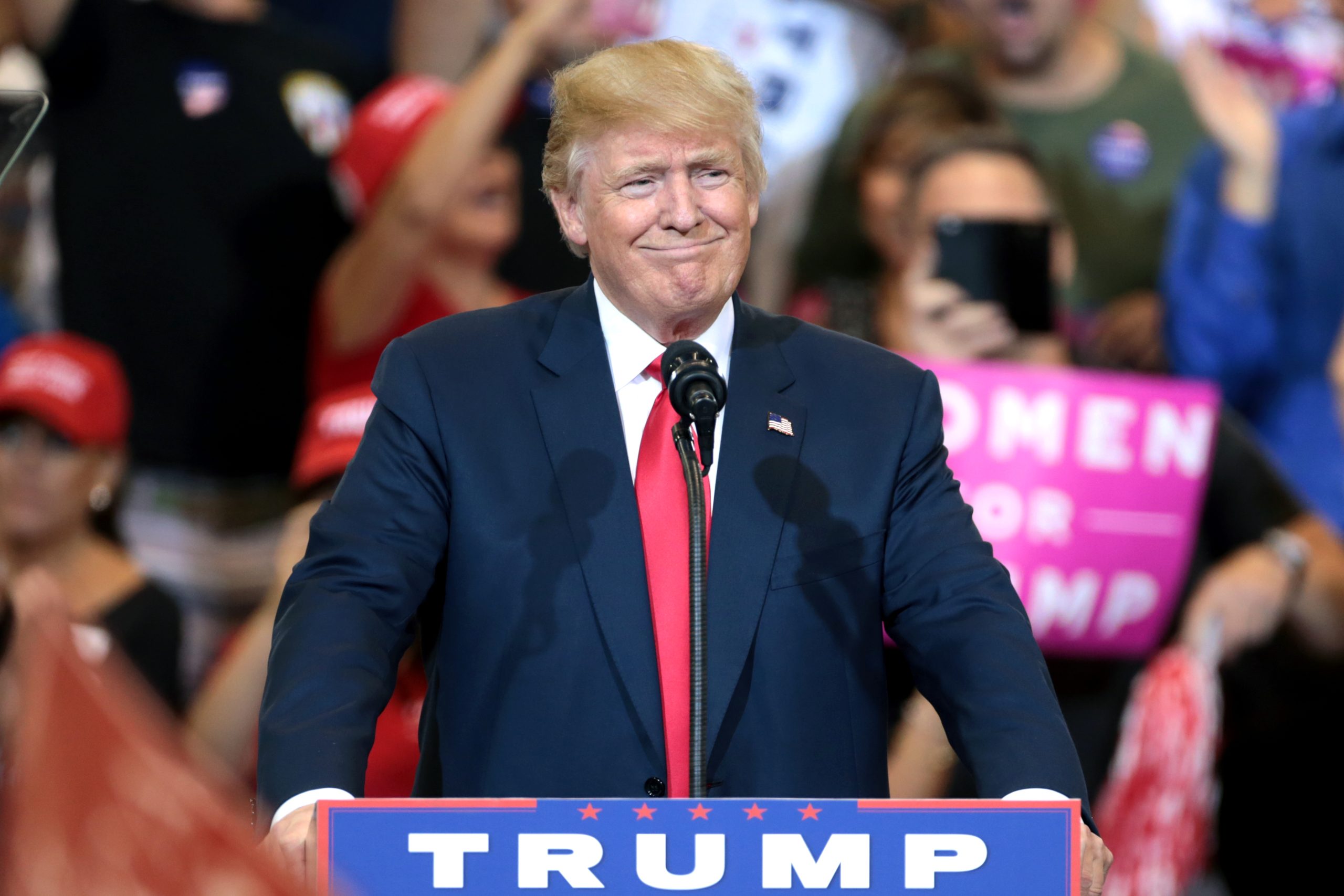
The warning sign for Trump is not just that voters dislike the economy. It is that better inflation and market news have not yet changed how many households feel.
Donald Trump’s approval rating on the economy has fallen to an all-time low, and two polls found historic lows on Trump’s economic approval as voters are pessimistic about Trump’s handling of the economy. The July CNBC All-America Economic Survey and Washington Post–Ipsos poll show a president facing deep skepticism on the issue that often decides midterms.
That matters now because the economy remains Trump’s central political promise and the most direct test of whether voters feel his agenda is working. The numbers suggest many do not, even as the White House argues progress is already underway.
Two polls, one warning sign
The two surveys point in the same direction: Trump’s overall approval is underwater, and his marks on the economy are worse.
In CNBC’s All-America Economic Survey, conducted July 8–12 among 1,000 registered voters, Trump’s overall approval stood at 40 percent, while 59 percent disapproved. On the economy, 38 percent approved and 60 percent disapproved, according to the poll.
The Washington Post–Ipsos poll, conducted July 8–13 among 2,648 U.S. adults, was even tougher. It put Trump’s overall approval at 37 percent, with 61 percent disapproving. On the economy, 33 percent approved and 65 percent disapproved.
Both polls describe those economic approval ratings as new lows in their respective polling series or measures. That is the central political problem: the issue Trump wants to own is currently one of his weakest.
Prices still shape the mood
The numbers are not just abstract approval ratings. They reflect a deeper frustration with the cost of living, household budgets and doubts about whether the economy is improving for ordinary Americans.
CNBC found 61 percent of respondents pessimistic about the current state of the economy and its future, compared with 25 percent who were optimistic. That was described as the highest level of pessimism in the survey since late 2023.
The same survey found signs of financial strain in daily behavior. Forty-seven percent of Americans said they were cutting back on essentials such as food and medical care, up from CNBC’s April survey. Roughly two-thirds said they were trimming non-essential spending such as dining out and entertainment.
Those findings help explain why easing inflation or strong stock-market performance may not be enough to shift public opinion quickly. Voters do not experience the economy as a chart. They experience it as rent, groceries, insurance, gas, credit-card bills and whether a paycheck lasts until the next one.
The White House pushes back
The White House is not accepting the premise that the economy is failing under Trump. Newsweek reported that White House spokesman Davis Ingle defended the president’s record, saying no president had accomplished more for Americans than Trump.
Ingle said Trump was working to create jobs, lower inflation and improve housing affordability, and argued that the administration’s progress was only beginning to take effect.
That argument is politically important because administrations often face a lag between economic policy and public perception. Even when some indicators improve, voters may remain skeptical if they believe prices rose too far too fast or if wage gains have not kept pace with household costs.
There is also a partisan reality. Many voters enter surveys with fixed views of Trump, positive or negative. That can limit how much any single economic data point moves public opinion, especially in a polarized election environment.
Why Democrats are not celebrating yet
Bad economic approval numbers for Trump do not automatically mean Democrats are cruising toward a midterm advantage. The CNBC poll found Democrats ahead of Republicans by only 49 percent to 45 percent in preference for control of Congress.
That small edge suggests dissatisfaction with Trump’s economic management has not yet turned into a broad anti-Republican wave. Voters can disapprove of the president and still distrust the opposition, split their tickets or stay home.
For Democrats, the opening is clear: cost of living, affordability and economic anxiety remain potent issues. But the challenge is also clear. They need to convince voters not only that Trump is mishandling the economy, but that Democrats would do better.
For Republicans, the risk is that economic pessimism becomes the frame through which voters judge everything else. If households keep feeling squeezed, arguments about future gains may sound less persuasive than the bill arriving today.
The midterm pressure point
Midterm elections often punish the president’s party, especially when approval ratings are low. Economic approval can be particularly damaging because it touches nearly every voter, regardless of ideology.
That does not mean the 2026 outcome is set. Polls are snapshots, not forecasts. CNBC’s poll has a margin of error of plus or minus 3.1 percentage points. The Washington Post–Ipsos poll has a margin of error of plus or minus 1.9 percentage points. The surveys also differ in sample type, with CNBC polling registered voters and Washington Post–Ipsos polling adults.
Still, the consistency across the two polls is what makes the numbers harder for the White House to dismiss. When separate surveys taken during the same July window show similar economic weakness, it points to a durable mood rather than a one-day reaction.
The unanswered question is whether that mood changes before voters cast ballots. If inflation keeps cooling, wages improve and household confidence rebounds, Trump’s numbers could recover. If voters continue to feel that everyday life is unaffordable, the all-time low may become more than a polling headline. It may become the defining vulnerability of the midterm year.
The real problem for Trump
The sharpest takeaway is not simply that Trump’s approval rating is low. It is that the economy, long treated as his political strength, is now producing some of his weakest marks.
That creates a messaging trap. Trump can point to jobs, markets, inflation trends or legislation, but voters judging their own finances may not hear those claims as relief. If people are cutting back on groceries, medical care or family outings, macroeconomic wins can feel distant.
The two July polls show an electorate still in a sour mood, with many Americans unconvinced that the country’s financial future is getting better. For Trump, that is a serious political warning. For Democrats, it is an opportunity but not a guarantee. For voters, it is a reminder that the 2026 campaign may be fought less over abstract ideology than over the stubborn question of whether life feels affordable.








Leave a Reply