
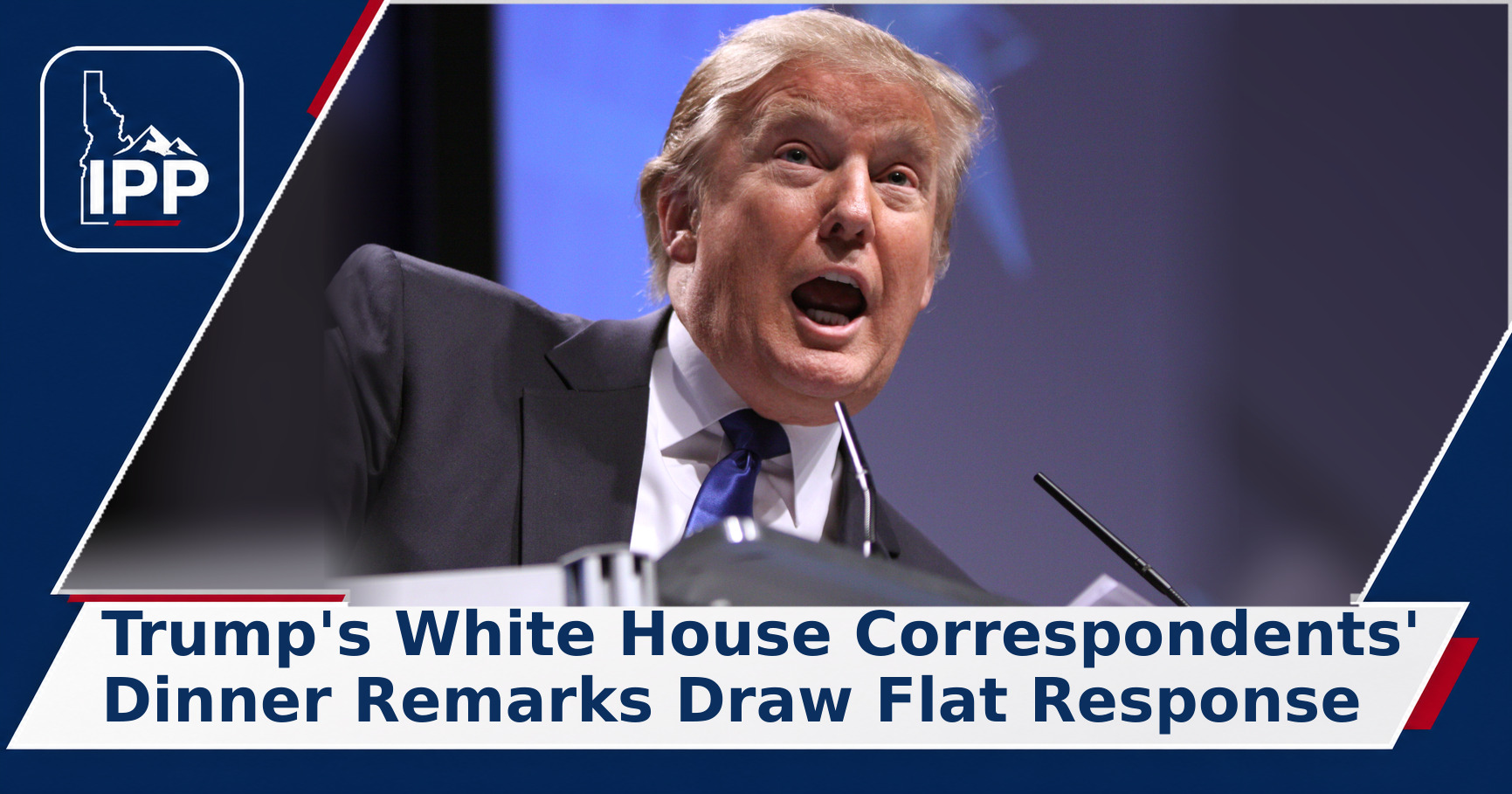
The rescheduled dinner was supposed to show resilience after a disrupted spring event. Instead, Trump’s hourlong remarks became another measure of how strained the president’s relationship with journalists remains.
Donald Trump bombed at the White House Correspondents’ Dinner Friday night in Washington, D.C., where Trump returned to the rescheduled dinner before the White House Correspondents’ Association, journalists and invited guests. His rambling, insult-filled speech drew polite applause, then thinner laughs, and the article explains why his reception and remarks mattered: the annual dinner is a public test of whether presidents can tolerate a free press while sitting in a room built to scrutinize them.
The White House was not the venue, but it was the shadow over the room. The event unfolded at the Waldorf Astoria hotel, formerly the Trump International Hotel, and it came after an April dinner was postponed following a gunman’s disruption, according to the Associated Press.
A roast that curdled quickly
Trump’s speech lasted just over an hour, AP reported, and moved from praise for some journalists to potshots at others, as well as jokes about political rivals, entertainers and public figures. The early reaction was not hostile so much as cautious: polite applause, a few laughs, then the sound every performer dreads — the room getting quieter.

CNN described the appearance as a bomb, and AP’s account helps explain why. The crowd was heavy with reporters, editors and media executives, including people Trump has attacked, sued or sought to freeze out of official access. That audience was never going to be easy, but the speech appeared to lose even some of the goodwill that came with his decision to show up.
Trump seemed aware of the dynamic. He told the crowd he had discarded the harsher version of remarks he had planned before the original April dinner was upended. “That was going to be a doozy,” he said, according to AP.
But the toned-down version still included enough personal insults and grievance politics to shift the mood. AP reported that some comments “flirted with racism,” and that the laughter faded as the targets piled up.
Why this dinner carries weight
The White House Correspondents’ Dinner is often treated as a Washington vanity show, but its symbolic job is more serious than the red-carpet jokes suggest. It puts the president and the press corps in the same room, then asks both sides to endure being laughed at.
That ritual matters more when the relationship is already strained. Trump has long cast major news organizations as adversaries, and AP noted that his second term has included attacks, lawsuits and administrative action against media coverage he dislikes.
The dinner also came with journalism awards handed out earlier in the evening. AP reported that many honored stories challenged Trump or his administration. Trump acknowledged that tension from the stage, asking with a grimace whether he had a say in the awards.
That line landed because it exposed the core conflict. The press corps was celebrating work that scrutinized power. The president was standing before the same room suggesting, even as a joke, that he wanted influence over the praise.
The rescheduled night changed the mood
This was not the splashy Washington dinner many viewers remember. AP reported that the rescheduled event was smaller, with about 700 attendees, tighter security, a single entrance, ID checks, a detection dog, armed officers and no red carpet or separate cocktail receptions.
Outgoing White House Correspondents’ Association president Weijia Jiang of CBS News opened the night with a pointed line: “Let’s try this again.” She also referred to the trauma and confusion around the April disruption and said the press corps would not be intimidated.
That framing gave the night a second purpose. It was not only a dinner; it was a statement that the association intended to keep holding a public event around journalism, access and accountability despite security fears and political hostility.
Trump leaned into that resilience at first, saying “the show must go on,” according to AP. Then the speech drifted back toward the familiar Trump mix of score-settling, teasing and dominance politics.
Trump played to conflict
Among the targets of Trump’s humor, AP listed late-night hosts Jimmy Fallon and Jimmy Kimmel, Rep. Ilhan Omar, California Gov. Gavin Newsom, former New Jersey Gov. Chris Christie, Jane Fonda, Bruce Springsteen and former President Barack Obama. He also jabbed at his own speechwriters while delivering their material.
Supporters may see that as vintage Trump: unscripted, combative and willing to walk into a hostile room. In that view, the fact that he attended at all — after years of bitter media fights and after the dinner was disrupted months earlier — was the point.
Critics saw something different. To them, the speech showed a president unable to resist turning a press-freedom ritual into another rally-style airing of grievances. The more the room cooled, the clearer the contrast became between the dinner’s ideal — power taking a joke — and Trump’s instinct to reassert control.
That is why the flat reception mattered. It was not just that jokes failed. It was that the failures seemed to illustrate the very media-criticism cycle that has defined Trump’s public life: attack the press, complain about the press, then use the press’s own stage to repeat the argument.
The third-term joke stood out
Trump also joked about serving a third term, a possibility barred by the 22nd Amendment. “Just like my presidency, the second time is always better,” he said, according to AP. “And the third time will be better yet.”
He added that he was kidding. Near the end, AP reported, he put on a red “Trump 2028” cap and presented it as a “scoop” that he was running again.
For Trump’s allies, the bit may read as trolling — a familiar way to provoke journalists and critics who treat his norm-breaking language as serious. For opponents, the joke lands differently because it plays with constitutional limits at a moment when the administration’s treatment of the press is already under scrutiny.
That gap in interpretation is central to Trump’s political method. The same remark can be defended as humor, consumed as defiance and criticized as a warning sign, all at once.
What remains unresolved
The dinner did not settle the relationship between Trump and the journalists who cover him. It clarified it. Even in a room organized around professional ritual, scholarships, awards and jokes, the deeper fight over access, scrutiny and legitimacy kept breaking through.
AP reported that one award winner, New York Times reporter Tyler Pager, had been subpoenaed by Trump’s Justice Department over reporting about a Qatari-gifted Air Force One jet, and that the subpoenas were withdrawn Thursday in a New York courtroom. That detail underscored why the room was not merely reacting to punchlines.
The open question is whether future dinners can still function as a pressure valve. Trump promised to come back next year, AP reported. The White House Correspondents’ Association, meanwhile, must keep balancing tradition, security and the reality that the dinner itself has become another battlefield in the politics of media trust.
The clean takeaway from Friday night is not that Trump failed as a stand-up comic. It is that the dinner exposed how hard it has become for Washington’s old rituals to contain a presidency built on conflict with the press.


Leave a Reply