

Tommy John’s message to Yankees fans was more than a ceremonial reunion appearance. It put a personal farewell beside the extraordinary baseball legacy attached to his name.
Tommy John shared an emotional goodbye message on Yankees Old-Timers’ Day on Saturday, Aug. 8, 2026, thanking the New York Yankees organization and Yankees fans while acknowledging the health issues he has been facing. John, 83, used the occasion to say farewell to a club and fan base tied to an important chapter of his 26-year major league career.
The moment matters beyond a familiar Old-Timers’ Day tribute. John is the former All-Star pitcher whose name became inseparable from the elbow reconstruction that has altered the course of thousands of pitching careers, making his message a poignant meeting point of baseball history, illness and gratitude.
A farewell framed by gratitude
John’s message, shared during the Yankees’ Old-Timers’ Day festivities, centered on thanks rather than a review of statistics or old highlights. He thanked the Yankees organization and the Steinbrenner family for giving him a chance to say goodbye, and he recognized the friends and fans who followed him through his long career.
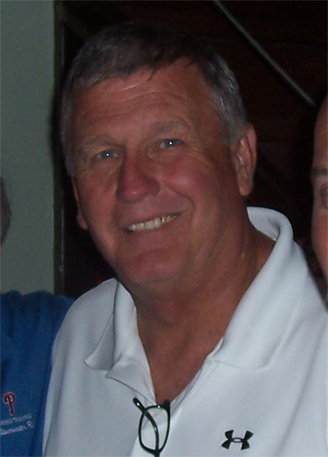
That wording gave the appearance meaning beyond a routine alumni salute. Old-Timers’ Day is designed to reconnect generations of Yankees figures and fans, but John’s note made clear that he was treating the moment as a personal farewell.
He also thanked Dr. Frank Jobe, the orthopedic surgeon whose work became forever linked to John’s career, as well as the late Yankees owner George Steinbrenner. Those names reflect the two worlds that define John’s public legacy: the game he played and the medical breakthrough that followed him long after retirement.
Health concerns shape the moment
USA TODAY Sports reported that John has battled bladder cancer and other ailments in recent years. In his message, he acknowledged his declining health, placing an understandably different emotional weight on a day usually built around nostalgia and celebration.
There was no announcement of a new medical development in the message, and the available reporting does not offer a detailed update on his current condition. What is clear is that John chose to address the reality of his health directly while speaking to a baseball community that has known his name for decades.
That candor is likely why the farewell resonated. Fans were not simply hearing from a former pitcher remembered for a famous procedure; they were hearing from an 83-year-old man reflecting on the people, opportunities and relationships that shaped his life.
Why the Yankees connection endures
John did not spend his entire career in pinstripes, but his Yankees tenure remains a major part of his story. He pitched for New York from 1979 through 1982, helping the club reach the World Series in 1981 and becoming a familiar figure during a high-profile period for the franchise.
His broader career stretched 26 seasons and included 288 victories, a total that places him among the most durable and successful pitchers of his era. He also pitched for Cleveland, the Chicago White Sox, the Los Angeles Dodgers, California Angels and Oakland Athletics.
For Yankees fans, the farewell carried the added pull of a player who arrived after the surgery that bears his name and proved he could still thrive at the highest level. His time in New York was not the beginning of his story, but it helped establish that his comeback was not merely medical survival.
The surgery changed baseball
John underwent the then-experimental operation on Sept. 25, 1974, after damaging the ulnar collateral ligament in his left elbow. Jobe reconstructed the ligament using a tendon taken from John’s wrist, a procedure that later became widely known as Tommy John surgery.
The name has endured so completely that many fans know the phrase before they know the player. The operation is now a common reference point whenever a pitcher suffers a serious elbow injury, even though the innovation, technical work and medical credit belong centrally to Jobe and the specialists who refined the procedure over time.
John returned to the majors and pitched another 14 years after the operation, winning 164 more games. That comeback helped turn a risky medical experiment into a powerful proof of concept, though modern recoveries are never automatic and outcomes vary from player to player.
- Before the surgery: A damaged pitching elbow could be career-ending.
- After John’s return: Elbow reconstruction became a viable, though demanding, path back to professional pitching.
- Today: The procedure is widespread, but it still requires lengthy rehabilitation and does not eliminate concerns about pitcher workloads or injuries.
A legacy bigger than one name
John himself has expressed mixed feelings about how often the surgery is needed. In comments to USA TODAY Sports two years earlier, he said he was grateful the procedure had saved careers but saddened that modern pitchers still require it so frequently despite advances in training and conditioning.
That tension remains part of the discussion around his legacy. The surgery has helped preserve careers and expanded what is possible after a devastating injury. At the same time, its prevalence has become shorthand for baseball’s continuing concern about hard-throwing pitchers, workloads and the demands placed on young arms.
There is also a fair point in the recurring debate over the name. Calling it Tommy John surgery honors the player whose recovery made the procedure famous, while it can obscure Jobe’s surgical achievement. John has previously said Jobe accepted the nickname because the formal medical terminology was cumbersome, not because he sought to minimize his own role.
The meaning of an Old-Timers’ Day goodbye
John closed his farewell by recalling advice from his father: whatever happened in the major leagues, he would always be Tommy John from Terre Haute, Indiana. It was a simple note of identity from a player whose name became unusually large in the sport’s vocabulary.
That contrast is what made the Yankees occasion memorable. Baseball fans use “Tommy John” as a diagnosis, a rehab timeline and a looming fear whenever a pitcher grabs his elbow. On Old-Timers’ Day, John returned the phrase to the person behind it: a former pitcher offering thanks, confronting health challenges and saying goodbye on his own terms.
The message did not settle questions about John’s health, nor was it meant to. It did offer a graceful acknowledgement of the people who shared his baseball life—and a reminder that one of the sport’s most famous names belongs to a man whose impact reaches well beyond the operation associated with him.










Leave a Reply