
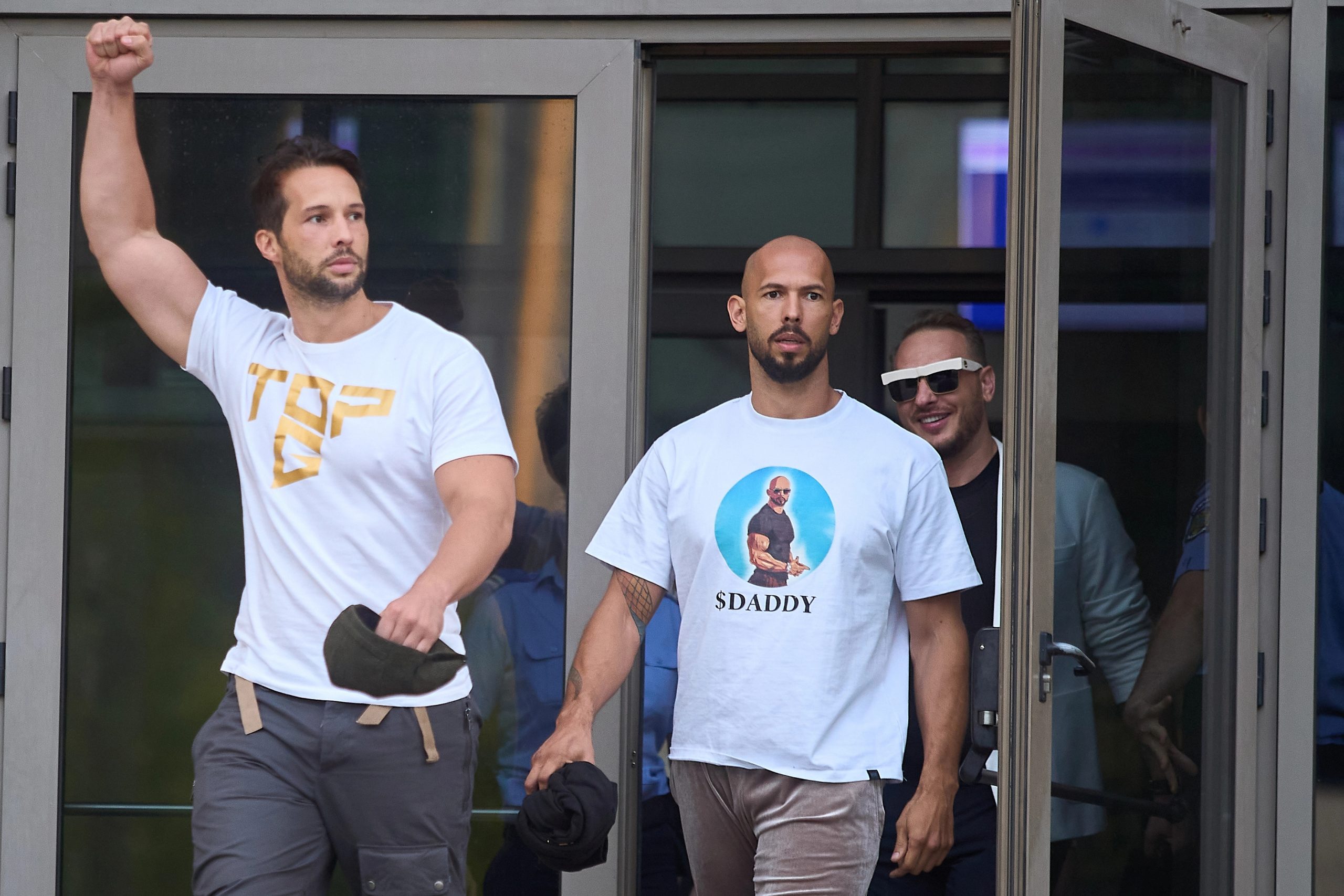
The brothers deny wrongdoing, but their legal problems now span the United States, the United Kingdom and Romania. The next fight is over whether they will be sent to the UK to face a large slate of charges.
More bad news for the Tate brothers: Andrew Tate and Tristan Tate face extradition proceedings after appearing in a federal courtroom in Miami, where U.S. authorities began weighing a request tied to new charges in the United Kingdom. Andrew Tate and Tristan Tate are in legal trouble in multiple countries, with extradition to the United Kingdom looming while their long-running Romania case remains unresolved before Romanian authorities and Romanian courts.
The brothers deny wrongdoing, and their lawyer says they will fight extradition. But the Miami hearing puts a new legal clock on a case that already stretches across Romania, the UK and the United States.
Miami hearing raises the stakes
BBC reported that the brothers appeared in federal court in Miami to begin extradition proceedings to the UK. The hearing followed their arrest in Florida after the Crown Prosecution Service, which handles criminal prosecutions in England and Wales, announced 38 new charges against them.
The charges include allegations of rape and sex trafficking, according to the BBC report. Prosecutors said the latest file of evidence came from Bedfordshire Police and raised the number of alleged victims in the UK case to seven.
The brothers, who are dual British-U.S. citizens, have repeatedly denied any wrongdoing. Their defense is now fighting on two fronts: contesting extradition in the U.S. while the separate Romanian case continues to move through procedural stages.
The UK case expanded sharply
The most immediate reason extradition is looming is the size and scope of the UK charging decision. Police said the brothers now face a total of 59 charges, with the latest allegations said to cover conduct between July 2010 and August 2017.
That does not mean a U.S. court is deciding whether the brothers are guilty of the UK allegations. Extradition hearings generally focus on whether the legal requirements for sending someone to another country have been met, not on trying the underlying case in full.
That distinction matters. A successful UK extradition request would move the brothers into another court system, where prosecutors would seek to prove the charges. A failed request would not automatically erase the allegations or end the other legal matters surrounding them.
The Romania case is still alive
The UK proceedings are not happening in a vacuum. Andrew and Tristan Tate became internationally associated with legal trouble after Romanian authorities accused them of human trafficking and forming an organized group to sexually exploit women. Andrew Tate has also been accused of rape in that case.
The brothers deny the Romanian allegations as well. According to the BBC, they left Romania for the United States in 2025 after Romanian prosecutors lifted a travel ban, but they are still required to check in with Romanian authorities while that case winds through procedural hurdles.
That unresolved Romania case is one reason the Miami hearing carries unusual complexity. The brothers are not simply facing a single national prosecution. They are dealing with overlapping legal exposure in countries with different courts, prosecutors and timelines.
The defense calls it political
Outside court, defense attorney Joe McBride told reporters that his clients are innocent and should not be extradited for crimes they did not commit, according to the BBC. He described the case as a stitch-up and compared the proceedings to political attacks on Donald Trump.
That argument is likely to resonate with the brothers’ online supporters, who have long framed the cases against them as targeted or politicized. Prosecutors, by contrast, are pointing to formal charging decisions and evidence gathered by police.
The public fight around the brothers is part of what makes the case so charged. Andrew Tate built a massive online profile around wealth, masculinity and inflammatory comments about women. He has called himself a misogynist, was banned by major social platforms after controversial remarks, and was later reinstated on some platforms.
That notoriety does not determine the legal outcome. It does help explain why each court appearance becomes a spectacle, and why claims about prosecution, persecution and celebrity influence travel faster than the procedural details.
What U.S. officials must decide
The Miami court process is only one step. The BBC reported that a judge set the brothers’ next court hearing for 27 July, citing AP News. McBride estimated before the hearing that extradition proceedings could take around 60 days.
Even if a court finds that extradition requirements are satisfied, the final decision would rest with the U.S. administration, according to the BBC report. That makes the case legal and diplomatic at the same time.
For now, the key question is not whether Andrew and Tristan Tate will be convicted anywhere. It is whether the United States will send them to the United Kingdom to face the newly expanded case.
- In the U.S.: they are in extradition proceedings tied to the UK charges.
- In the UK: prosecutors have announced new charges involving multiple alleged victims.
- In Romania: they still face a separate criminal case that they deny.
The unanswered questions now
Several points remain unclear. It is not yet known how aggressively U.S. authorities will push the timetable, whether the defense can slow the process, or how the unresolved Romania obligations might affect the brothers if the UK request is granted.
There is also a separate U.S. civil case. The BBC reported that a woman has alleged the brothers coerced her into sex work and then defamed her after she gave evidence to Romanian authorities. The brothers’ broader legal position could therefore remain complicated even apart from the UK extradition fight.
The clean takeaway is that extradition is looming because the UK case has grown, the brothers are physically in the United States, and Romania’s case has not disappeared. For Andrew Tate and Tristan Tate, the Miami hearing did not settle anything. It opened another front.





Leave a Reply