
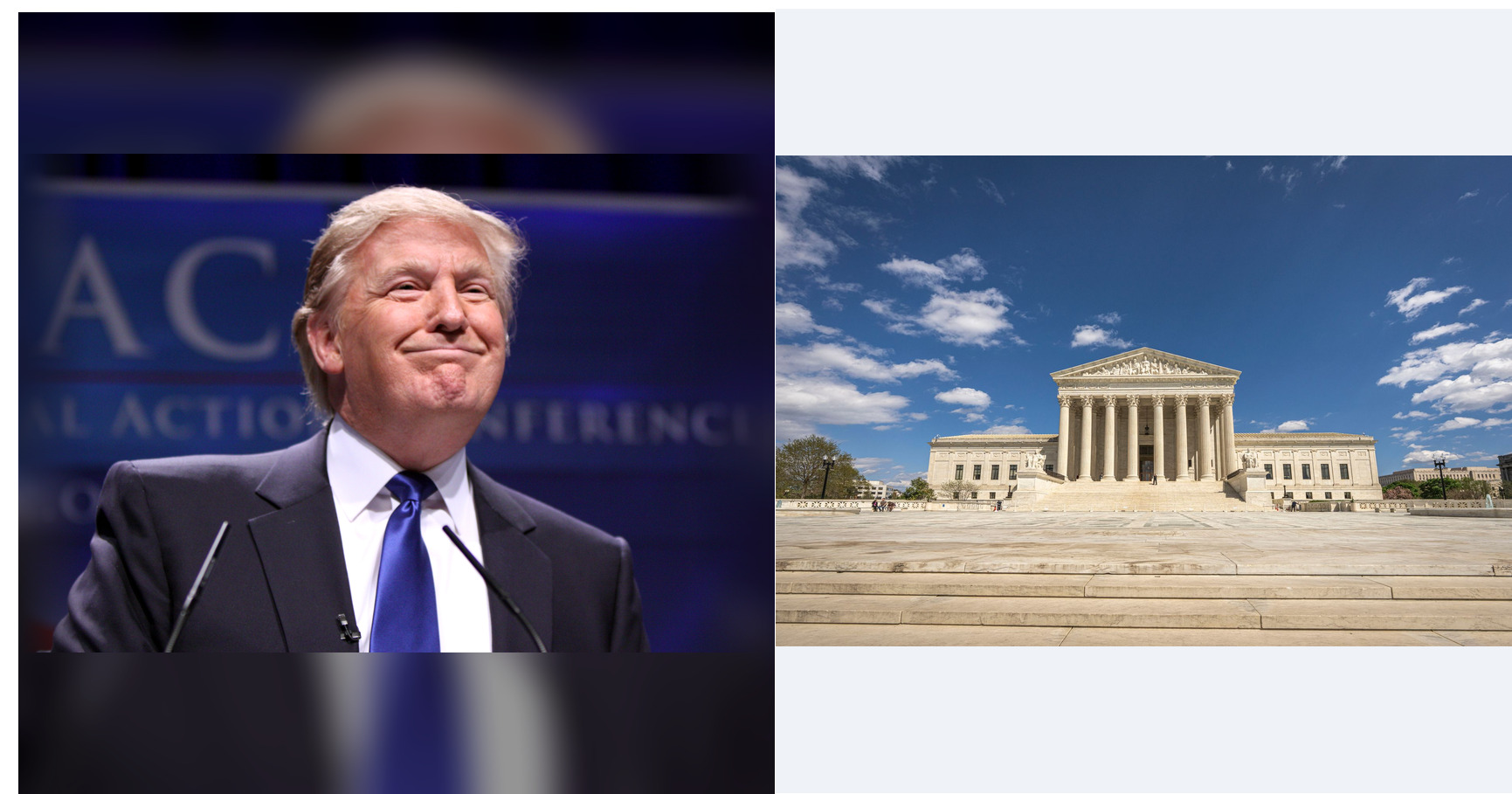
The order is a significant near-term win for President Donald Trump’s effort to restrict mail-in voting before the midterms. It does not settle the broader constitutional dispute, which remains active after a lower-court judge blocked parts of the directive.
The Supreme Court on Monday allowed Donald Trump to implement parts of his mail-in voting executive order, giving the Trump administration room to move forward with plans to restrict mail-in voting before the midterms. The action matters because a lower-court judge had ruled some parts of Trump’s order unconstitutional, and the Supreme Court has now lifted at least some of the barriers to enforcement.
The court’s move is a major procedural victory for Trump, but it is not the same as a final declaration that the entire mail-in voting executive order is constitutional. The central fight over federal power, state control of elections and access to mail ballots is still unresolved.
A temporary win with real effects
The Supreme Court’s intervention changes the immediate legal landscape. By allowing portions of the order to take effect, the justices have enabled the administration to begin acting on policies that had been restricted by the lower court.
That is consequential even if the underlying case is still pending. Election rules are time-sensitive, and administrative changes can require planning by federal agencies, state election officials and voters well before ballots are cast.
The available reporting describes a divided court, though the material provided does not identify the vote count or spell out every provision the justices allowed to proceed. That distinction is important: the order applies to parts of Trump’s directive, not necessarily every provision challenged in court.
Why the lower court intervened
The dispute began after Trump issued an executive order aimed, according to the Supreme Court’s order, at maintaining public confidence in federal elections. The White House has characterized the directive as an effort to limit mail-in voting.
A lower-court judge ruled that some parts of the order were unconstitutional. That ruling put limits on what the administration could enforce while the legal challenge moved ahead.
The Supreme Court has now altered that interim arrangement. Its action means the administration does not have to wait for the full case to be resolved before implementing the portions covered by the stay.
Mail ballots are the central fault line
Mail-in voting has become one of the country’s most politically charged election issues. Supporters say it gives eligible voters a practical way to cast ballots when work, health, travel, disability, caregiving duties or distance from polling places make in-person voting harder.
Critics, including Trump, have argued for tighter limits and have raised concerns about the practice. Trump has vowed to end the use of mail-in ballots, according to Reuters.
Those competing views often obscure a basic legal question at the heart of this case: how much authority can a president exercise over rules that are commonly administered by states and local election offices? The answer could affect far more than one executive order.
Federal authority meets state elections
American elections are conducted through a layered system. Congress has constitutional authority to regulate aspects of federal elections, while states generally set and administer many of the practical rules governing registration, voting methods and ballot processing.
Presidential executive orders can direct federal agencies and set federal policy, but they cannot simply erase constitutional limits or override valid state authority. That is why the lower court’s constitutional ruling remains central despite the Supreme Court’s temporary intervention.
For the Trump administration, the case tests whether executive action can be used to reshape national election practices. For California and the other challengers, it raises concerns that federal action could disrupt state-run systems and place new burdens on voters or election administrators.
What the Supreme Court did not decide
The justices’ Monday action should not be read as a final ruling on every claim in the case. Emergency orders and stays often address what should happen while litigation continues; they do not always resolve the merits of the constitutional questions.
That leaves several major issues open. The public materials summarized here do not specify the full list of provisions that may now be enforced, how quickly agencies will act, or whether additional lower-court proceedings could change the practical effect.
It is also unclear how any permitted federal action will interact with the rules already in place in individual states. Election administration depends on detailed timelines, staffing, ballot design, voter education and state law, so even a limited federal shift may produce uneven results.
The next legal and political test
Trump’s administration can treat the order as an important step toward its stated goal of restricting mail-in voting. Opponents can still challenge the directive’s legality as the case proceeds, and the lower court’s constitutional concerns have not disappeared.
The practical stakes rise as the midterms approach. A policy that is legally permitted to operate for months can affect election preparation even if it is later narrowed or struck down.
For now, the clearest takeaway is narrow but meaningful: the Supreme Court has allowed Trump to enforce some parts of his mail-in voting executive order. The final boundaries of that power—and the lasting consequences for mail ballots—remain to be decided.

![Marine Corps Major in dress white uniform, W[orld] W[ar] II (LOC)](https://idahopublicpress.com/wp-content/uploads/2026/08/trendwire-rqctqy63-featured-tn5nyr2x.jpg)


Leave a Reply