
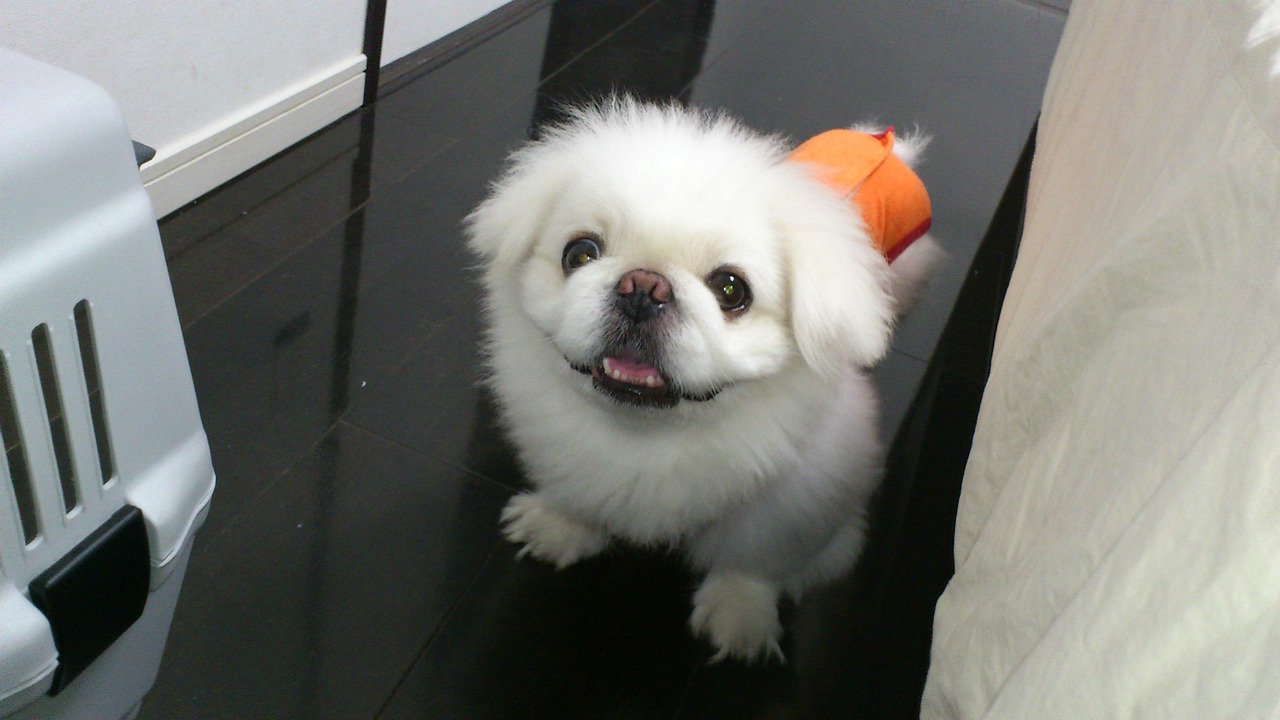
The buzz around bigger dog brains is real, but the story is more complicated than it sounds. Scientists are seeing signs that breeding may have changed which parts of the canine brain get emphasized.
The internet-friendly version is irresistible: dogs today may be growing bigger brains. But the more interesting story is not a sudden canine genius wave.
New research points to a subtler shift in modern breeds, one that may say as much about human breeding choices as it does about dogs themselves. The brains of today’s pets appear to carry traces of what people have rewarded for generations: attention, trainability and life alongside us.
The finding behind the buzz
A 2025 study indexed by PubMed Central, titled Brain–Behavior Differences in Premodern and Modern Dogs, reported that modern breed dogs showed significant cortical expansion linked to trainability. The same research found that premodern dogs showed relatively greater amygdala enlargement.
That is the key detail often lost in the viral shorthand. The study is not simply saying every modern dog has a larger brain than its ancestors. It is pointing to differences in brain regions and how those differences may relate to behavior.
The cortex is associated with higher-order processing, learning and flexible behavior. The amygdala is involved in emotion, threat detection and arousal. Those are broad descriptions, not personality tests, but they help explain why scientists are interested.
If modern breeds show more cortical development tied to trainability, it raises a provocative possibility: human preferences may have pushed dog brains in a different direction during the relatively recent era of formal breed creation.
Bigger does not mean smarter
The word expansion can make the finding sound like a simple upgrade. It is not. Brain size alone is a blunt tool, and it does not translate neatly into intelligence, obedience or emotional sensitivity.
A border collie that learns commands quickly is not automatically a better thinker than a husky that ignores them. Trainability is a specific trait, shaped by motivation, attention, temperament and the kind of tasks humans value.
That matters because many modern breeds were developed for jobs that required close coordination with people. Herding dogs, retrievers and companion breeds often had to track human cues, work in structured environments or tolerate dense social life.
The study’s reported link between cortical expansion and trainability fits that pattern. It suggests modern breeding may have favored neural systems useful for responding to people, not a general increase in dog brilliance.
Domestication first shrank the brain
The new finding also sits inside a much older story. Dogs did not begin their partnership with humans by becoming big-brained super-wolves.
A 2026 paper in Royal Society Open Science reported that brain-size reduction in dogs was already established at least 5,000 years ago in Late Neolithic Western Europe. The paper noted that among domestic mammals, dogs have shown one of the most pronounced brain-size reductions, with average decreases estimated around 20 to 30 percent.
That sounds contradictory only if brain evolution is treated like a scoreboard. Domestication can reduce some costly survival demands while increasing other social or task-related pressures.
A wild canid must solve problems tied to hunting, territory, danger and independent survival. A domestic dog lives in a human-built niche, where food, shelter and reproduction have often been mediated by people. Over time, the brain may shrink in some respects while certain regions or networks become more specialized.
Modern breeding changed the pressure
The sharpest twist is timing. Many recognizable dog breeds are not ancient in the way people often imagine. A large share of modern breed standards were formalized in the last few centuries, especially as kennel clubs, dog shows and specialized breeding programs became more influential.
That recent history may have created new selection pressure. People were no longer only choosing dogs that could survive near settlements or perform broad working roles. They were selecting for narrower traits: appearance, temperament, task performance and responsiveness to training.
That could help explain why the 2025 study separates modern breeds from premodern dogs. Premodern lineages are often closer to older working or village-dog patterns, while modern breeds can reflect intense, recent human preference.
The result is not a single ladder from primitive to advanced. It is more like a map of trade-offs. One lineage may retain stronger threat-response or independence-linked tendencies. Another may show traits that make it easier to train in a human-controlled setting.
Dog brains are already surprising
Separate work has shown that dogs are not just furry command receivers. Emory University researchers reported in 2019 that dogs process numerical quantities in a brain region similar to humans, offering evidence that basic number sense is a shared mammalian mechanism.
In that Emory study, researchers observed dogs’ brains directly while the animals viewed changing quantities of dots. The team said the results supported the idea that numerosity, the ability to perceive quantity, reaches far back in mammalian evolution.
That research does not prove modern dogs have expanding brains. It adds context: canine cognition is rich, old and not limited to tricks or obedience.
Put together, the studies point to a more nuanced picture. Dogs inherited deep mammalian brain capacities, lost some brain volume during domestication, and may have experienced more recent shifts in brain regions tied to life with humans.
What owners should take away
For pet owners, the biggest takeaway is practical: do not read brain-expansion headlines as a ranking system for breeds. A so-called trainable brain is not the same as an easy dog, a happier dog or a more loving dog.
Trainability often means a dog is responsive to reinforcement, repetition and human cues. It can also mean the dog needs more mental work, not less.
- High-trainability dogs may thrive with structured games, cue practice and problem-solving toys.
- More independent dogs may need motivation that fits their instincts, not louder commands.
- Anxious or reactive dogs should not be judged as unintelligent; stress can block learning.
- Breed tendencies are useful clues, but individual history and environment matter heavily.
The research also raises welfare questions. If humans have shaped brains toward responsiveness, owners have a responsibility to provide clear communication, enrichment and humane training.
A dog bred to pay close attention to people can suffer in a home where it gets little guidance or stimulation. The same traits that make a dog brilliant in training can become frustration in a boring environment.
The mystery is not solved
The most interesting part of the brain-expansion story is that it is still unsettled. Scientists need more data across breeds, lineages, environments and life histories to understand how anatomy maps onto behavior.
There is also a chicken-and-egg problem. Did humans select dogs with brain differences that made them easier to train, or did sustained training and human-centered environments help shape development over generations? The answer may be both.
For now, the safer reading is this: modern dogs are not simply becoming smarter. Their brains may be reflecting the world humans built for them.
That is a stranger and more revealing story than a bigger-brain headline. The dog on the couch is not just a descendant of wolves. It is a living record of thousands of years of partnership, pressure and preference, with the newest chapters written by modern breeding.











Leave a Reply