
Reported Saudi access for U.S. forces would mark a sharp shift for Riyadh, which had tried to keep its territory from becoming a launchpad against Iran. The move raises the risk that a widening U.S.-Iran fight becomes a broader Gulf conflict.
Saudi Arabia is moving toward joining the war against Iran after Iran attacked U.S. bases, a shift that could pull one of the Middle East’s most important powers deeper into the conflict. The Saudis and the United Arab Emirates have taken steps toward active involvement, according to a Wall Street Journal report cited by Bloomberg.
The stark shorthand — “Saudis join war” — may overstate what is publicly confirmed. What is clear is that the conflict is escalating, U.S. forces have been hit on Saudi soil, and Riyadh is now reportedly giving Washington military access it had previously resisted.
A reported Saudi reversal
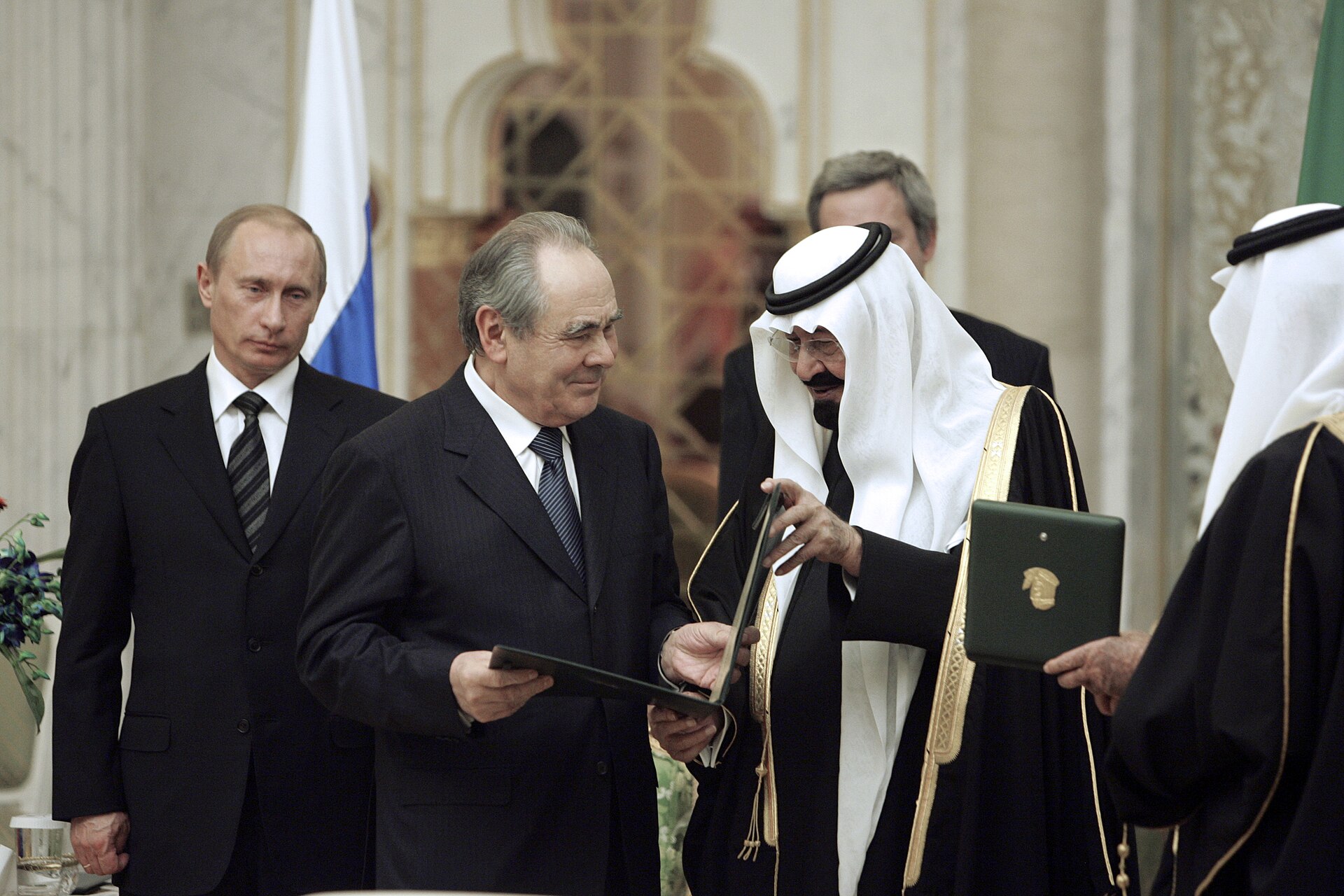
Saudi Arabia has agreed to give the U.S. military access to King Fahd Air Base, Bloomberg reported, citing the Wall Street Journal’s account based on people familiar with the matter. If confirmed, that would be a notable reversal from Riyadh’s earlier position that its bases could not be used to attack Iran, its longtime regional rival.
The United Arab Emirates has also taken steps toward joining the Iran war, according to the same report, though the public details are thinner. Neither development necessarily means Saudi or Emirati pilots are already flying combat missions, or that either government has formally declared war.
But in a regional war, base access is not a small gesture. It can allow refueling, staging, air defense coordination, intelligence support, emergency landings and faster U.S. operations across the Gulf. Those are the kinds of moves that can turn a partner into a participant, even without a dramatic televised announcement.
That is why the Saudi move matters now: Riyadh has spent years trying to balance security ties with Washington against efforts to avoid direct confrontation with Tehran. A decision to open a key air base would suggest that the cost of staying on the sidelines is rising.
Why the attacks changed the calculus
The immediate backdrop is a series of Iranian attacks on U.S. forces and U.S.-used installations in the Gulf. PBS, carrying Associated Press reporting, said Iran fired six ballistic missiles and 29 drones at Saudi Arabia’s Prince Sultan air base in an attack that injured at least 15 troops, including five seriously, according to people briefed on the matter.
Prince Sultan air base is run by the Royal Saudi Air Force but is also used by U.S. troops. The installation sits about 60 miles from Riyadh, making the attack not only a strike on American personnel but also a direct security crisis for the Saudi state.
According to that AP report, the base had come under attack twice earlier in the week. One incident injured 14 U.S. troops, while another caused damage to a U.S. aircraft but no injuries.
For Riyadh, that matters. A country can try to remain formally restrained while a war plays out nearby. It becomes harder when missiles and drones are landing near the capital and injuring foreign troops stationed on its own territory.
The U.S. footprint is growing
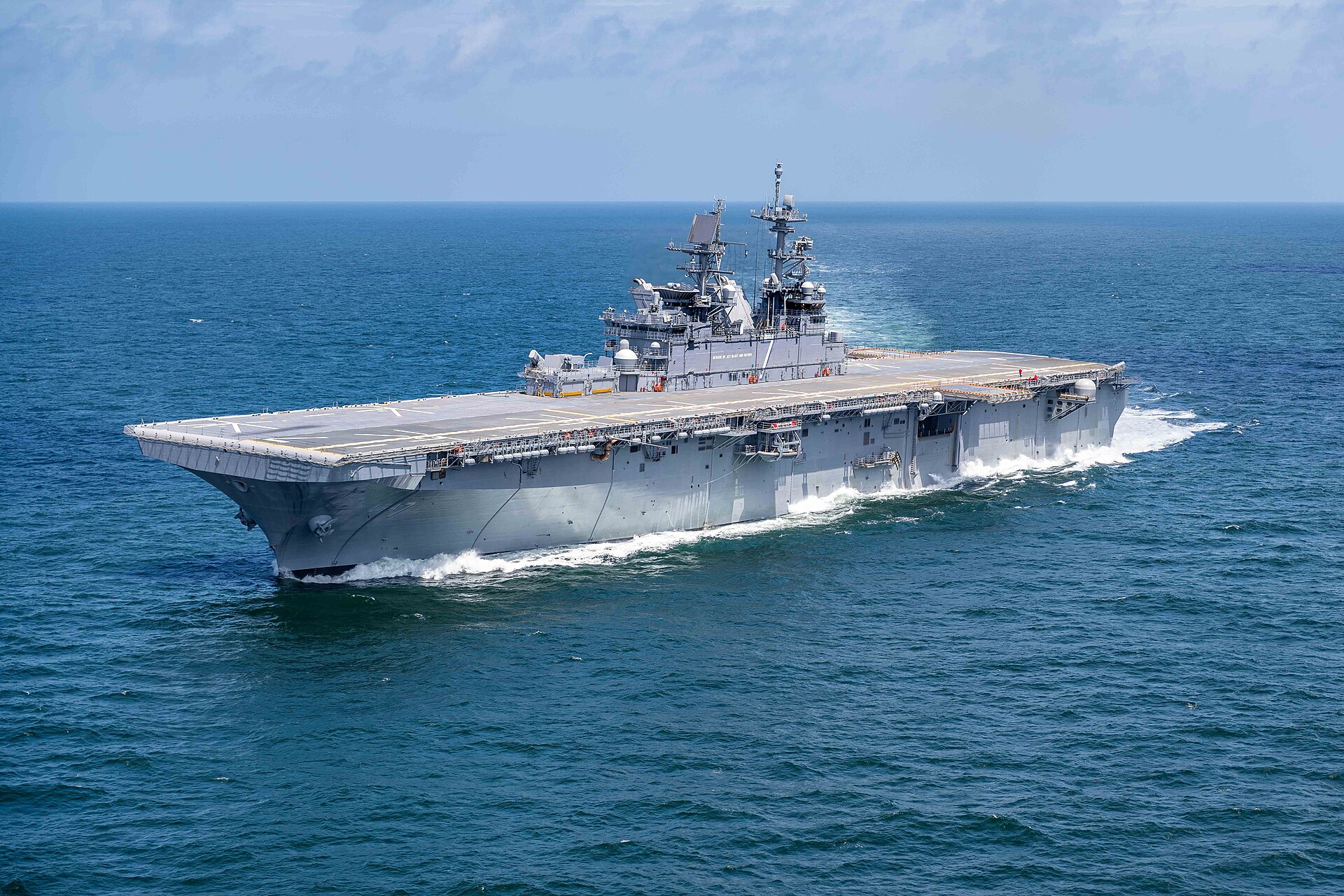
The Saudi shift is happening as the United States has already expanded its military posture in the Middle East. U.S. Central Command said the USS Tripoli, an amphibious assault ship carrying about 2,500 Marines, had arrived in the region, according to the AP report carried by PBS.
The ship brings elements of the 31st Marine Expeditionary Unit, along with transport and strike fighter aircraft and amphibious assault assets. The USS Boxer and two other ships, with another Marine expeditionary unit, had also been ordered from San Diego to the region.
Before those arrivals, the U.S. had already assembled what the AP described as the largest American force in the region in more than 20 years: two aircraft carriers, several warships and roughly 50,000 troops. The USS Gerald R. Ford had recently left the Middle East for repairs and supplies in Europe after a fire in a laundry room affected sleeping quarters.
Secretary of State Marco Rubio said the United States could meet its objectives “without any ground troops,” according to the AP report. He also said President Trump had to be prepared for “multiple contingencies,” with forces available to give him maximum flexibility.
Not yet a formal war entry
The phrase “joining the war” carries a legal and political weight that the public evidence does not fully settle. There is a difference between granting access to a base, helping defend airspace, hosting U.S. troops and launching offensive operations under a national flag.
That distinction matters for Saudi Arabia. Crown Prince Mohammed bin Salman has pursued a foreign policy that blends hard security with economic transformation, including efforts to attract investment and present the kingdom as a hub for tourism, sports and technology. A direct war with Iran could put those plans at risk.
It also matters for the UAE, which has built itself into a commercial and logistics hub while keeping strong defense links with Washington. Abu Dhabi has often acted assertively in regional security matters, but it also has deep incentives to prevent a Gulf-wide economic shock.
Still, Tehran may not view base access as a technicality. If U.S. strikes are launched, supported or sustained from Gulf territory, Iran could treat those host countries as part of the opposing side. That is the escalation risk at the center of the Saudi decision.
Riyadh’s warning to Tehran
The reported shift did not appear out of nowhere. Reuters reported earlier in March that Saudi Arabia had told Iran not to attack it and warned of possible retaliation, citing sources familiar with a call between the two sides. Two Iranian sources confirmed to Reuters that a call had taken place in which Riyadh warned Tehran to halt attacks on Saudi Arabia and neighboring Gulf states.
That warning underscores the narrow path Saudi Arabia has been trying to walk. It does not want Iranian strikes on its soil. It also does not want to be dragged into a grinding regional war that could target energy infrastructure, airports, shipping routes or major cities.
The kingdom has painful experience with that vulnerability. Iranian-backed attacks on Gulf energy facilities in past years exposed how quickly regional tensions can hit oil markets and global supply chains. Even when the current war is framed as a U.S.-Iran confrontation, Gulf monarchies sit inside the blast radius.
That makes Saudi cooperation with Washington both protective and provocative. It strengthens deterrence, but it may also give Iran a clearer reason to widen its target list.
What remains unclear
Several key questions remain unanswered. It is not clear exactly what U.S. forces would be allowed to do from King Fahd Air Base, whether access is limited to defensive or logistical missions, or whether Saudi authorities have set conditions on operations involving Iran.
It is also unclear how far the UAE’s steps go, and whether other Gulf states will follow, hedge or quietly push for de-escalation. Public statements from the governments involved will matter, but so will aircraft movements, air defense deployments and the pattern of U.S. operations over the coming days.
The casualty figures have already sharpened the pressure. U.S. Central Command said more than 300 American service members had been wounded in the war, according to the AP report, with most returned to duty, 30 still out of action and 10 considered seriously wounded.
The cleanest reading is this: Saudi Arabia has not simply flipped a switch from neutrality to full combatant status. But after Iranian attacks on U.S. forces in the kingdom, Riyadh appears to be moving from caution toward military alignment with Washington. In the Middle East’s current war, that may be enough to change the map of the conflict.








Leave a Reply