
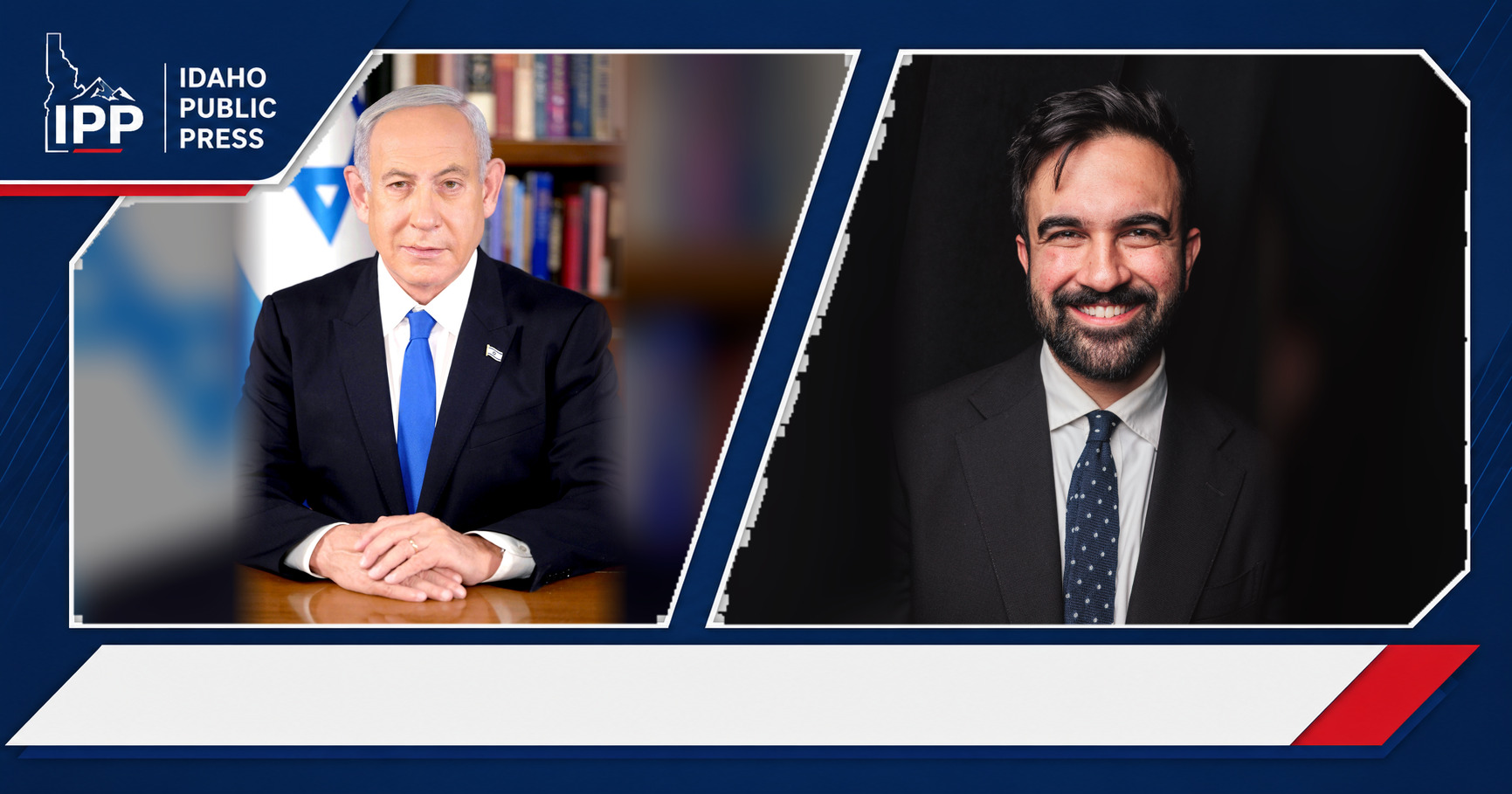
The survey shows how the ICC warrant against Israel’s prime minister has moved from international law into U.S. politics. The harder question is whether any American official could or would act on it.
On July 29, 2026, a new poll found many Americans support arresting Benjamin Netanyahu if he visits the United States, with almost half — 49% — saying U.S. officials should detain him based on an International Criminal Court arrest warrant, while 27% disagreed. The result echoes New York City Mayor Zohran Mamdani’s position and sharpens a dispute over whether the United States should enforce an ICC warrant against the Israeli prime minister.
The question is not just theoretical. Netanyahu is expected to travel to New York City in September for the United Nations General Assembly, and Mamdani has argued he is not welcome unless federal officials act.
The poll behind the flashpoint
The Economist/YouGov poll released this week found that support for arresting Netanyahu is substantial, but not uniform. The topline number — 49% in favor and 27% opposed — suggests the issue has moved beyond activist circles and into broader public debate.
The wording matters. The survey asked about arresting Netanyahu if he visited the U.S. based on the ICC warrant. That ties public opinion directly to a legal instrument Washington does not recognize, rather than to a general judgment about Israel, Gaza or Netanyahu’s leadership.
The partisan split is sharp. About 68% of Democrats said Netanyahu should be arrested by the U.S., compared with about 24% of Republicans, according to the poll summary. That gap helps explain why Mamdani’s position resonates with some voters while provoking strong pushback from others.
It also shows the risk for national Democrats. A position that is popular among many Democratic voters can still collide with federal law, foreign policy practice and the U.S.-Israel alliance.
Mamdani ran into legal limits
Mamdani’s stance has shifted from a city-level pledge to a call for federal action. According to USA TODAY and the BBC, he had said New York City officials were exploring whether they could carry out the ICC warrant if Netanyahu came to the city.
After officials could not identify a legal path for New York City to make that arrest, Mamdani said the federal government should detain Netanyahu instead. That distinction is central: a mayor can make a political argument, but immigration, diplomacy and international arrest obligations sit largely with Washington.
The BBC reported that Mamdani acknowledged he did not have the authority to carry out the arrest himself. That admission did not end the argument. It changed the target from City Hall to the federal government.
For Mamdani, the poll gives his position a broader public-opinion frame. For critics, it does not solve the legal question. A survey can show support for an action without making that action available under U.S. law.
The ICC warrant at issue
The International Criminal Court issued an arrest warrant for Netanyahu in November 2024. The warrant accuses him of war crimes and crimes against humanity tied to Israel’s military actions in Gaza. Netanyahu and Israel have rejected accusations that portray Israel’s war conduct as criminal.
The U.S. complication is straightforward and significant: the United States is not a member of the ICC and does not recognize the court’s authority over it. That means the warrant does not operate in the U.S. the way it could in an ICC member state.
In an ICC member country, a visit by a person subject to a warrant could trigger an obligation to arrest and transfer that person to the court. In the United States, the path is far murkier, and in Netanyahu’s case, political resistance from the White House appears decisive.
President Donald Trump, described in the reporting as an ally of Netanyahu, has previously said Netanyahu would not be arrested in the United States. The BBC reported Trump saying Netanyahu would not be arrested ‘in any way, shape or form.’
Why September raises the stakes
The debate is gaining urgency because Netanyahu is expected to attend the United Nations General Assembly in New York City in September. That puts the ICC warrant, Mamdani’s position and U.S. foreign policy on a collision course in one of the most visible diplomatic settings in the world.
There is another legal wrinkle: leaders visiting the United Nations’ New York headquarters have protections tied to the U.N. host arrangement. The reporting notes that those protections would complicate any attempt to detain a foreign leader attending U.N. business.
Netanyahu has said he still intends to go, despite Mamdani saying he is not welcome in New York City. He has framed the trip as a chance to speak for Israel and the Israeli-American alliance from the U.N. podium.
That sets up a familiar but volatile split. Netanyahu’s supporters see a visiting allied leader who should be protected. Mamdani’s supporters see a leader facing an international warrant who should not receive normal diplomatic treatment.
What the split reveals
The poll does not prove that Americans agree on Gaza, Israel or the ICC. It shows that a large share of the public is open to a dramatic step against Netanyahu under a specific condition: if he comes to the United States while an ICC warrant is pending.
That is politically meaningful because U.S. elected officials often treat the ICC as distant from domestic politics. This poll suggests that, at least for many voters, international accountability claims are no longer abstract.
At the same time, the 27% opposed and the partisan divide point to a hard ceiling. Republicans remain far less likely to support a U.S. arrest, and Trump’s position makes federal action highly unlikely under his administration.
The result leaves Mamdani in an unusual position. His legal authority may be limited, but his political argument is not isolated. The poll gives him evidence that many Americans, especially Democrats, share the basic view that the warrant should matter on U.S. soil.
What remains unresolved now
The biggest unanswered question is practical: even if public support grows, who in the U.S. government would have the power and willingness to act? The current reporting points in the opposite direction, with Trump saying Netanyahu would not be detained.
There is also a diplomatic question. Arresting a sitting Israeli prime minister during a U.N. visit would be an extraordinary rupture in U.S.-Israel relations and in the way the United States handles foreign leaders attending the General Assembly.
For now, the poll is less a forecast than a pressure gauge. It shows that the ICC warrant has become part of U.S. political debate, not just an international legal proceeding.
The immediate takeaway is clear: Mamdani’s call is legally constrained, federally dependent and politically divisive. But the new polling shows it is also in line with a sizable share of American opinion, which is why the September visit could keep this fight alive.





Leave a Reply