

The longtime Washington observer is describing more than partisan tension. Her argument is that power in Trump-era Washington has become less socially reassuring, even for some who aligned with it.
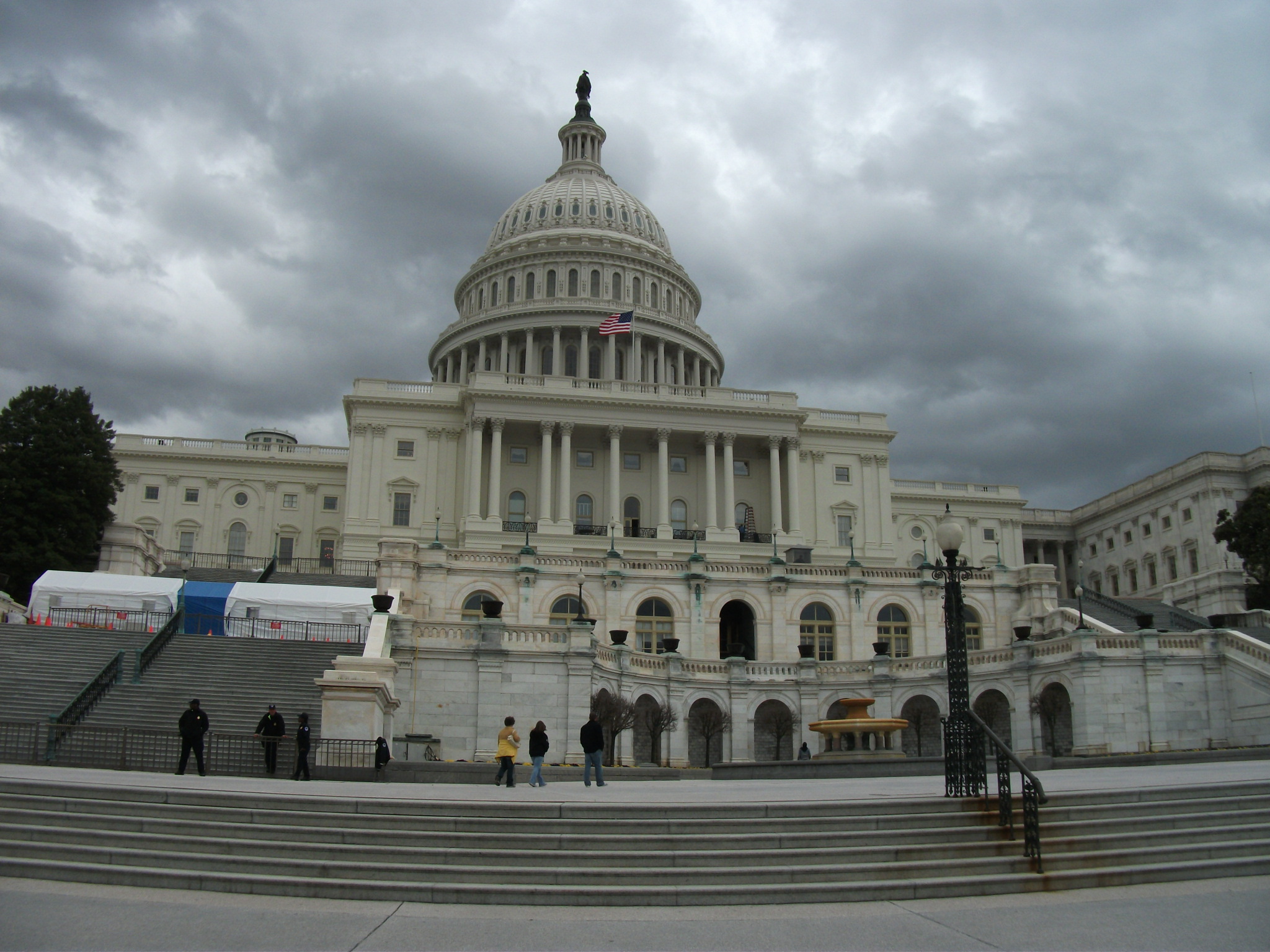
Sally Quinn says Washington’s MAGA mood is growing bleaker, with Washington, D.C., the setting for her commentary on Trump-era Washington. In a July 19, 2026, New York Times opinion essay titled It’s No Longer So Much Fun to Be MAGA in Washington, the longtime Washington writer casts the capital’s pro-Trump atmosphere as darker and more brittle.
The argument matters because Washington is not just another political town. It is the place where loyalty to President Donald Trump is supposed to buy influence, invitations and protection. Quinn’s warning is that, for some MAGA supporters in the city, that bargain is starting to feel less comfortable.
Quinn reads the room
Quinn is not approaching Washington as a pollster measuring MAGA enthusiasm by precinct or fundraising total. Her authority comes from a different place: decades inside the capital’s political and social circles.
The New York Times has identified Quinn as a journalist and novelist who has written for The Washington Post since 1969. That history matters because her subject is not only policy or electoral math. It is atmosphere: who feels secure, who feels watched, who still talks across lines, and who has stopped.
A Daily Beast item republished through MSN summarized her view bluntly: Sally Quinn says the Washington MAGA mood is growing bleaker. That framing points to a narrower but revealing claim. The story is less about whether Trump’s base still supports him nationally, and more about how pro-Trump identity feels inside the capital’s closed, status-conscious ecosystem.
A mood, not a mandate
There is an obvious limit to Quinn’s read: Washington, D.C., is not America. A sour mood among insiders does not prove a national backlash, and it does not tell us how MAGA voters in rural counties, suburbs or swing states are feeling.
That distinction is important. MAGA has always drawn strength from attacking Washington’s establishment. For many Trump supporters, discomfort inside elite D.C. circles may look less like a warning sign and more like confirmation that Trumpism is still disrupting the right people.
But Quinn’s point lands because Washington runs on proximity. The city’s culture rewards access, discretion and the ability to move between rooms. If even people aligned with power begin to feel isolated or exposed, that says something about the emotional cost of the current political order.
Fear replaced insider swagger
Quinn developed a similar theme in a May 2025 New York Times guest essay, where she described Washington as a city in crisis and wrote that the dominant emotion around town was fear. She placed that fear not only in government offices but also in restaurants, shops, streets and dinner tables.
One of the most striking lines from that essay was direct: Quinn wrote that “Nobody feels safe. Nobody feels protected.” She argued that people who had or once had power were often among the most frightened, precisely because they understood how quickly power can turn.
She also pointed to Republicans who feared political retaliation. In that essay, she cited Alaska Republican Lisa Murkowski saying, “We are all afraid,” and, “Retaliation is real. And that’s not right.” The quote captured the pressure many Republicans have described in the Trump era: loyalty is not a preference but a survival strategy.
That earlier argument helps explain the bleaker MAGA mood Quinn is now highlighting. In her telling, the problem is not merely that Washington is divided. It is that the price of belonging has gone up.
The loyalty economy tightens
Trump-era Washington has always had two competing moods. One is triumphal: allies celebrate influence, appointments, access and the sense that the old guard has been humbled. The other is anxious: people watch firings, feuds, investigations, social media attacks and shifting alliances, then calculate what can safely be said out loud.
That tension is especially sharp for MAGA supporters in Washington. Outside the capital, MAGA can function as a broad cultural identity. Inside the capital, it can become a daily test of loyalty, usefulness and proximity to Trump’s orbit.
Quinn’s bleak read suggests that swagger alone does not sustain a political community. If people are afraid to speak candidly, afraid of being seen with the wrong person, or afraid of becoming the next target, the social rewards of being on the winning side begin to shrink.
That does not mean MAGA has lost power. It may mean something more complicated: power can feel strongest in public and most fragile in private.
The dinner table test
Quinn’s Washington has long been a place where politics and social life overlap. In her 2025 essay, she recalled sitting next to Lindsey Graham during Barack Obama’s second term and discussing the widening gap between Republicans and Democrats. Graham, she wrote, suggested small dinner parties where people from both parties could talk.
That anecdote can sound nostalgic, and critics may fairly roll their eyes at the idea that Washington’s problem is a shortage of bipartisan dinner parties. Millions of Americans care less about Georgetown manners than grocery prices, immigration, crime, taxes or war.
Still, the dinner table matters as a symbol. In Washington, informal conversation is part of how information moves and how people test ideas before they become public positions. When those spaces collapse, politics becomes more performative and less correctable.
Quinn’s commentary is strongest when read this way: not as a plea for elite comfort, but as a warning about a capital where fear narrows the range of honest speech.
What remains unclear
Several things are still hard to measure. Quinn’s observations do not establish how many MAGA supporters in Washington feel this gloom, whether the mood is temporary, or whether it will matter outside the Beltway.
It is also possible that some Trump allies see the bleakness as a necessary phase. If they believe Washington institutions are hostile to their movement, then social isolation may be interpreted as proof of seriousness rather than failure.
The bigger question is whether a politics built on constant pressure can create durable loyalty. Fear can discipline a party, but it rarely creates trust. It can keep people in line, but it can also make them quieter, colder and more transactional.
That is the real force of Quinn’s latest read on MAGA Washington. The capital may still be full of people chasing power. Her argument is that, for some on the pro-Trump side, winning no longer feels like much fun.





Leave a Reply