
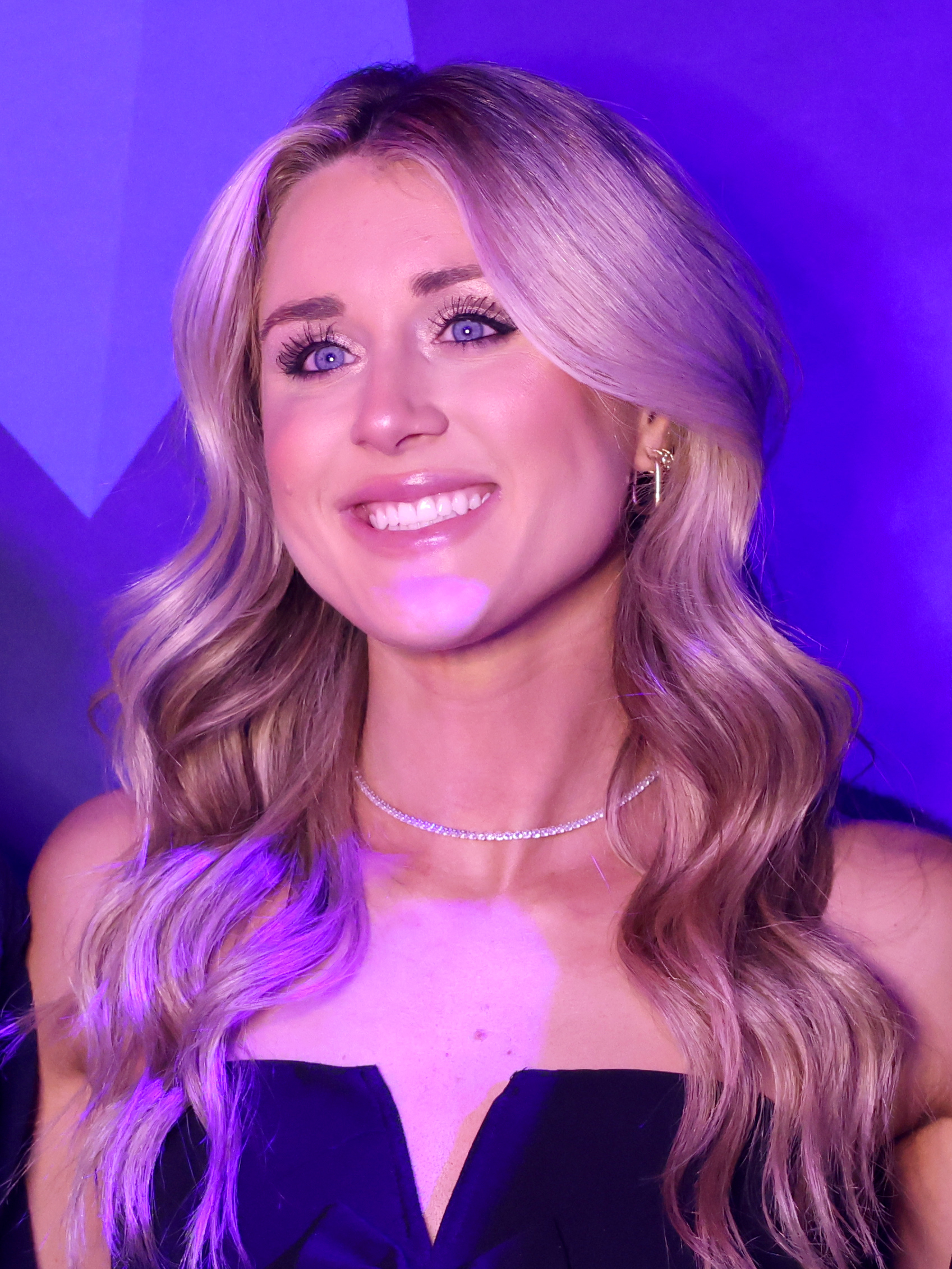
Clark’s rise has brought record attention, but also a bitter public debate over race, sexuality, resentment and fame. Gaines’s argument cuts through one part of that fight while leaving plenty unresolved.
Riley Gaines is stepping into the Caitlin Clark debate with a simple, combustible claim: the hostility around Clark is not mainly about race or sexuality. In Gaines’s view, it is jealousy.
That argument lands because Clark has become more than a basketball star. She is now a pressure point for the WNBA, a ratings engine, a culture-war symbol and, depending on who is talking, either proof of the league’s breakthrough or proof of its unresolved tensions.
Gaines points to envy
Gaines, the former University of Kentucky swimmer who has built a national profile as an advocate in women’s sports debates, has argued that the abuse directed at Clark is rooted in jealousy rather than Clark’s race or sexuality.

The point is not subtle. Gaines is saying the backlash is less about identity and more about resentment toward a player who arrived with extraordinary attention, major endorsements and a fan base that instantly changed the scale of WNBA conversation.
It is a provocative diagnosis because it pushes against a broader public debate that has followed Clark since her college career exploded at Iowa and carried into the pros with the Indiana Fever. The debate has never been only about jump shots.
Still, Gaines’s claim should be read as an argument, not a settled fact. Jealousy may explain some of the tone around Clark. It does not explain every criticism, every hard foul, every social media fight or every uncomfortable conversation the league is now having in public.
Clark became the league’s pressure point
Clark entered the WNBA with a level of fame most rookies never touch. Her deep shooting range, NCAA scoring records and tournament runs at Iowa made her a mainstream sports name before she played a professional game.
That fame followed her to Indiana. Fever games became appointment viewing for viewers who had rarely watched the WNBA before. Arenas filled. Television numbers jumped. Clips of Clark’s passes, threes, fouls and facial expressions traveled faster than game recaps.
The upside for the league was obvious: more attention, more ticket demand, more sponsorship interest and more people arguing about women’s basketball in places that had ignored it for years.
The downside was just as clear. Every bump became a referendum. Every defensive possession could become a viral controversy. Every player who challenged Clark risked being painted as jealous, dirty, political or worse by online audiences that often had no patience for nuance.
Race and sexuality did not vanish
Gaines’s argument rejects race and sexuality as the root cause of Clark’s treatment. But those subjects did not appear out of nowhere, and they have not disappeared because one commentator says envy is the real driver.
The WNBA has long been powered by Black stars, LGBTQ+ players and fan communities, and athletes in the league have often argued that their excellence did not receive the same mainstream attention Clark brought with her. That history matters when people discuss why one player’s rise was treated as a national sports event.
At the same time, Clark has also been used by some fans and commentators as a weapon in arguments that go far beyond basketball. She has publicly pushed back on the idea that her name should be used to demean other players, saying people in the sport deserve respect.
That is where the conversation gets messy. Clark can be a generational talent who earned her spotlight. Other players can be frustrated by how the spotlight has been distributed. And bad-faith fans can turn a basketball rivalry into something uglier than competition.
The jealousy theory has pull
There is a reason Gaines’s explanation will resonate with many readers. Sports history is full of resentment toward the athlete who gets famous first, fastest or loudest.
Veterans often believe rookies should have to earn every inch. Opponents do not usually celebrate a newcomer being treated as the face of a league before she has won at that level. Teammates and rivals can respect a player’s talent while still bristling at the machine around her.
Clark’s rise also created an attention gap. A hard screen involving Clark became national content. A brilliant performance by another WNBA star could be treated as secondary. That imbalance can breed resentment even when the resentment is not personal.
Jealousy, in that sense, may not mean players hate Clark. It may mean the ecosystem around Clark — the cameras, the sponsorships, the nonstop discourse, the new fans who arrived with strong opinions — has made her success feel like a judgment on everyone else.
Gaines brings her own lens
Gaines is not a neutral sports pundit drifting into a random WNBA argument. She is a public activist whose name is strongly tied to debates over women’s sports, fairness and sex-based categories.
Fox News Digital has profiled Gaines in the context of the broader “Save Women’s Sports” movement, including her appearances at major political and legal flashpoints. In that coverage, Gaines described hostile protest crowds and framed her activism around what she sees as defending female athletes.
That background matters because her comments about Clark will not be heard in a vacuum. Supporters will see her jealousy argument as plainspoken and obvious. Critics will see it as another attempt to steer a complicated sports conversation away from race, sexuality and representation.
Both reactions are predictable. Gaines has a defined audience and a defined worldview. When she enters the Clark debate, she does not just analyze the story — she changes the temperature around it.
The WNBA’s harder task
The league’s challenge is bigger than deciding whether Gaines is right. The WNBA has to absorb a surge of attention without letting its players be flattened into symbols.
That means making room for real basketball analysis. Clark should be praised for the things she does brilliantly and criticized for the things every young guard has to improve. Her rivals should be allowed to compete hard without being automatically cast as villains.
It also means drawing a sharper line between rivalry and harassment. Fans can argue about fouls, officiating, media coverage and star treatment. They do not need to flood players with racist, sexist or homophobic abuse to prove they care.
Gaines’s jealousy theory captures one real piece of the Caitlin Clark phenomenon: sudden fame often produces backlash. But the full story is larger than envy. Clark’s rise has exposed how much opportunity is now in front of the WNBA — and how quickly that opportunity can turn toxic when a sport becomes a culture-war battlefield.






Leave a Reply