

The entries show early uncertainty, private tension with Donald Trump and Fauci’s discomfort with sudden fame. They also land in the middle of a long-running fight over how the pandemic began.
In Washington, Sen. Rand Paul released more than a thousand pages of Anthony Fauci’s private journal entries ahead of a Wednesday Senate hearing, and the Fauci diaries released by Sen. Paul touch on COVID-19 origins and Donald Trump. The entries matter now because Paul is using them to press Fauci, the former top U.S. infectious disease official, over what he said privately and publicly as the pandemic began.
The documents, reported by CBS News, do not settle the origins fight. They show a more complicated record: early uncertainty, evolving public messaging, a tense but sometimes cordial relationship with Trump, and a public health official suddenly turned into a political symbol.
Paul turns diaries into evidence
Paul, a Kentucky Republican who heads the Senate Homeland Security Committee, released the journal entries as his panel investigates the origins of the coronavirus. He subpoenaed Fauci to appear before the committee for a hearing expected to be contentious.
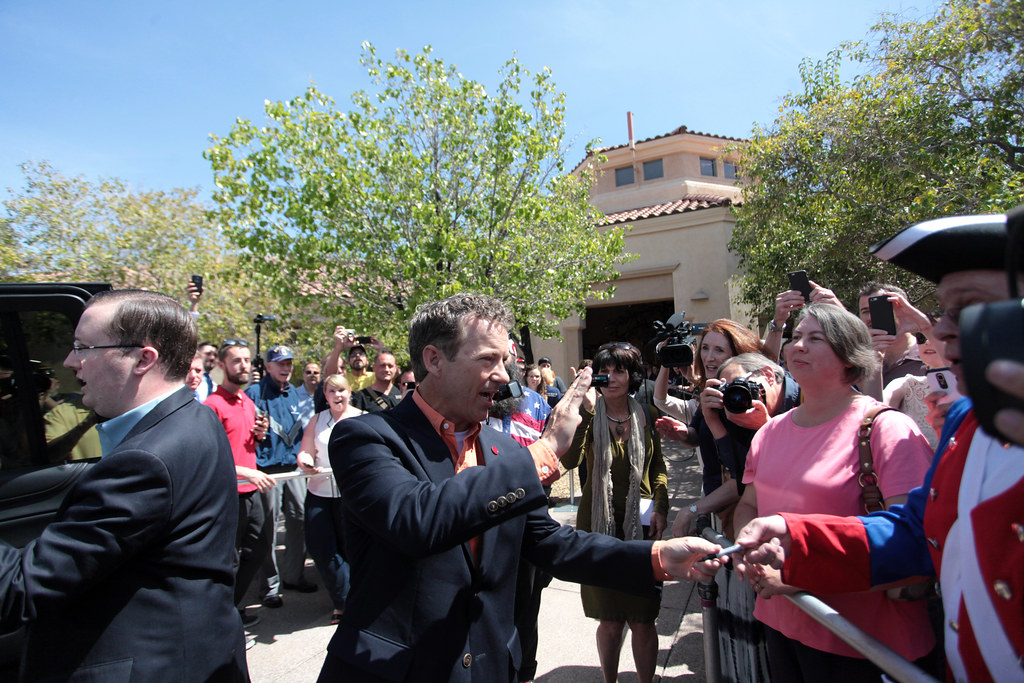
The release covers entries from December 2019 through December 2022, according to CBS News. That span begins just before the United States declared a public health emergency and ends when Fauci stepped down as director of the National Institute of Allergy and Infectious Diseases, a job he held for nearly four decades.
Paul has long argued that the virus may have emerged from a laboratory incident at the Wuhan Institute of Virology in China, rather than through natural spillover from animals to humans. He has accused Fauci and other officials of misleading Congress and the public about the outbreak’s source.
Fauci declined to comment to CBS News about the release. Paul’s office did not respond to CBS News on how it obtained the journal.
What the entries say on origins
The most politically explosive passages are not declarations of certainty. They are snapshots of uncertainty at moments when scientists, intelligence officials and policymakers were still trying to understand a new virus.
In one January 2020 entry cited by CBS News, Fauci wrote that “we know the market was not the source, it was the amplifier,” while also saying that “somewhere the virus jumped from animals to humans.” About a week later, he referred to a conference call in which several leading infectious disease experts thought the coronavirus might not have originated in nature.
Paul seized on those private notes Monday, accusing Fauci of saying one thing to “Dear Diary” while telling the public that a lab origin was implausible and that officials were convinced the virus came from wild animals at a marketplace.
Fauci’s later notes complicate that attack. In a May 26, 2021, entry, he wrote that he had always said the virus was “very highly” likely to have originated naturally from an animal reservoir, but that no one, including him, was “100% certain” and that he supported a thorough investigation.
The origins debate remains unsettled
The diary release lands in a debate that remains scientifically and politically unresolved. Many scientists have argued that available evidence points to a natural origin, with the virus emerging from infected bats, moving through other species and reaching humans connected to a market in Wuhan, where early cases appeared in late 2019.
That is not the only official view. The FBI has assessed that the coronavirus “most likely” emerged from a lab incident in Wuhan. In January 2025, the CIA issued an assessment favoring the lab leak hypothesis, while saying that conclusion was made with “low confidence,” according to CBS News.
Those qualifiers matter. “Most likely” and “low confidence” are not proof. They are assessments based on incomplete information, and they sit alongside competing scientific interpretations.
That ambiguity is exactly why the diaries are politically powerful. They offer private language that can be framed as contradiction, caution or evidence of a fast-moving crisis, depending on the reader’s priors.
Fauci’s Trump notes cut both ways
The entries also give a close-up view of Fauci’s relationship with Donald Trump during the pandemic’s early months. They do not show a simple feud from the start.
At times, Fauci described positive interactions and discomfort with press coverage that cast him and Trump as enemies. He wrote that a viral image that appeared to show him facepalming during a Trump briefing was “not my intention,” according to CBS News.
At other points, the notes show frustration. Fauci described some of Trump’s news conferences as “painfully rambling” and “laborious.” He also recounted arguments in which Trump accused him of undermining the administration.
One striking entry involved a May 2020 event tied to Operation Warp Speed, the vaccine initiative. Fauci wrote that Trump pulled him aside and said, “Tony, you are losing me trillions of f***ing dollars,” then later said the two were “OK” and that he respected him. Fauci also wrote that Trump opposed officials wearing masks at the event because it “sends the wrong signal,” while Fauci pushed back.
A reluctant celebrity in real time
The diaries also capture an aspect of the pandemic that is easy to forget after years of partisan battles: Fauci became famous almost overnight.
Some entries show him tracking interviews, media coverage and pop-culture references. CBS News reported that he noted Brad Pitt playing him on “Saturday Night Live,” a Billy Crystal spoof, an email from Barbra Streisand and other signs of a surreal public profile.
In a May 21, 2020, entry, Fauci wrote that his “national and international fame” was “explosive and really unimaginable.” He said it was not hyperbole to call himself one of the most talked-about people in the country and one of the most recognizable in the world, while also noting that Trump appeared “enamored” of him even though Fauci was taking attention away from the president.
That self-awareness may fuel more criticism from opponents who saw Fauci as too media-facing. It may also support a different reading: that he understood fame was becoming a liability during a national emergency where trust, messaging and presidential politics were colliding.
What Wednesday may clarify
The Senate hearing is likely to focus less on diary tone than on whether Fauci’s private notes conflict with his public testimony and public statements. Paul’s strategy is clear: use the entries to argue that officials closed ranks around a natural-origin explanation while privately entertaining a lab-origin possibility.
Fauci’s likely defense, based on the entries cited so far, is also clear: early uncertainty was real, scientific judgments evolved, and saying natural spillover was likely was not the same as ruling out every other possibility.
Several questions remain unanswered. It is not clear how Paul’s office obtained the journal. It is also unclear whether the entries were complete, selectively released or accompanied by enough surrounding material to fully interpret them.
For readers, the practical takeaway is to separate three issues that are often blended together: what caused the pandemic, what officials believed at different points, and whether public messaging accurately reflected private uncertainty. The diaries add evidence to the second and third questions. They do not, by themselves, solve the first.






Leave a Reply