

The survey puts a number on a debate that has become about more than architecture. It also shows that the intensity of opposition and support differs sharply across party lines.
Polls show broad dissatisfaction with Donald Trump’s Washington, D.C., renovation projects: nearly 2 in 3 Americans are dissatisfied or upset with the White House ballroom, Lincoln Memorial Reflecting Pool and proposed triumphal arch projects, while about 1 in 3 are enthusiastic or satisfied.
The Washington Post-Ipsos survey found 65% of adults viewed the three projects negatively, compared with 32% who viewed them positively. The result matters because Trump has made reshaping prominent federal landmarks part of his public vision for Washington—and the reaction extends beyond a routine disagreement over design.
The topline is firmly negative
The poll asked more than 2,600 U.S. adults how they felt about the three Washington projects as a group. The answers were divided into four descriptions: enthusiastic, satisfied, dissatisfied and upset.
Just 12% said they were enthusiastic and 19% said satisfied, for a combined positive total of 32%. On the other side, 27% said dissatisfied and 38% said upset, producing the 65% negative figure.
That distinction in intensity is notable. Americans were more than three times as likely to say they were upset as to say they were enthusiastic: 38% versus 12%.
Polling measures sentiment at a particular moment, not a final verdict on a project or a prediction of what will be built. Still, the distribution suggests these plans are drawing more than mild skepticism among the public at large.
Three projects drive the debate
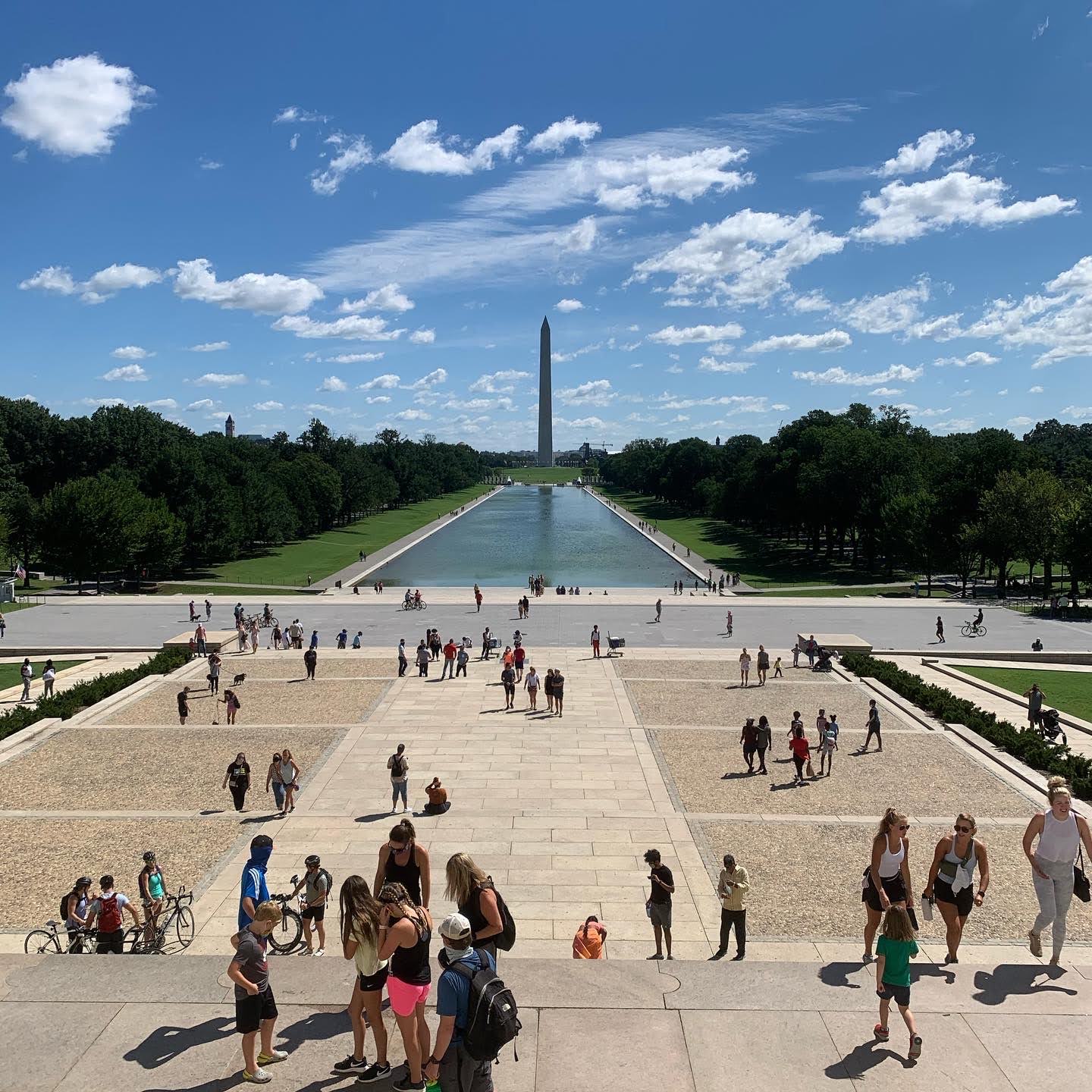
The poll grouped together a large White House ballroom, a renovation of the Lincoln Memorial Reflecting Pool and Trump’s proposed 250-foot triumphal arch in Washington. Each project involves a different site and purpose, but all are tied to Trump’s stated interest in changing the capital’s visual landscape.
That grouping is useful for understanding the broad political response, but it also has limits. The Washington Post noted that surveys evaluating the efforts separately have found more opposition to the White House ballroom than to the proposed arch or the Reflecting Pool renovation.
In other words, the 65% figure should not be read as proof that every project is viewed identically. Some respondents may object to one proposal, support another or simply dislike the overall push to alter highly recognizable civic spaces.
The common thread is visibility. These are not obscure federal construction projects. The White House, Lincoln Memorial and surrounding National Mall area carry symbolic weight for people far beyond Washington.
Partisans agree on little
The strongest split in the survey runs along party lines. Nearly 7 in 10 Republicans expressed a positive view of the projects, while roughly 9 in 10 Democrats had a negative view.
But the intensity was not symmetrical. Among Democrats, 67% said they were upset by the projects. Among Republicans, 31% said they were enthusiastic. The poll found a similar gap at the parties’ ideological edges: 79% of liberal Democrats said they were upset, compared with 43% of self-identified MAGA Republicans who said they were enthusiastic.
Independents were much closer to Democrats than Republicans on the topline. The survey found 73% of independents and other nonaligned respondents viewed the projects negatively, including 39% who said they were upset.
That does not mean every voter is judging the projects through a purely partisan lens. Architecture, preservation, cost and the role of presidential influence in public spaces can all shape views. Yet the survey indicates that the proposals have become bound up with wider opinions of Trump and his approach to governing.
The motive question looms large
The Post-Ipsos poll also asked Americans what they believed Trump was trying to accomplish. Only 26% said his goal was to make Washington more beautiful.
A larger share, 51%, said they believed he had a different goal. Another 22% said they were not sure.
That finding helps explain why the debate is harder than a straightforward argument over aesthetics. For supporters, ambitious construction and renovation can signal confidence, grandeur and a willingness to leave a visible mark on the capital. For critics, the same projects can raise concerns about priorities, historical stewardship or the use of public symbols for political image-making.
The survey does not establish which interpretation is correct. It does show that Trump has not persuaded most Americans that beautifying Washington is the central purpose of the projects.
Public landmarks bring higher stakes
Federal buildings and monuments are often subject to review, preservation rules, planning processes and overlapping authorities. That can make even broadly supported changes slow and contentious. Projects associated with the White House or the National Mall invite especially close attention because the sites are national symbols.
The ballroom, pool renovation and arch proposal also arrive in a political climate where visible projects can become shorthand for larger arguments: government spending, executive power, historic preservation and whose idea of America is reflected in public space.
Supporters may argue that leaders should not be prevented from updating aging facilities or pursuing bold civic design because opponents dislike the president. Critics may counter that landmark changes require an unusually strong public case, transparent planning and respect for places that do not belong to one administration alone.
The poll cannot resolve those competing views. It does make clear that the projects are being received as a national political issue, not merely a local construction story.
What the numbers do—and do not—settle
The clearest takeaway is the overall imbalance: 65% negative, 32% positive, with a 3% share that skipped the question. For Trump, that is a difficult national starting point for a set of projects intended to be highly visible.
At the same time, the survey asked about the three plans together. Future polling on individual projects could produce different results, particularly if details about design, cost, approvals or timing become clearer.
The projects’ eventual political effect will also depend on whether they move forward, how they are financed and whether supporters can shift the conversation toward preservation, improvement or civic pride. Opponents, meanwhile, have a broad pool of negative sentiment to draw on.
For now, the Washington Post-Ipsos findings suggest that Trump’s effort to remake parts of Washington has a built-in challenge: a sizable majority of Americans say the plans leave them dissatisfied or upset rather than enthusiastic.





Leave a Reply