
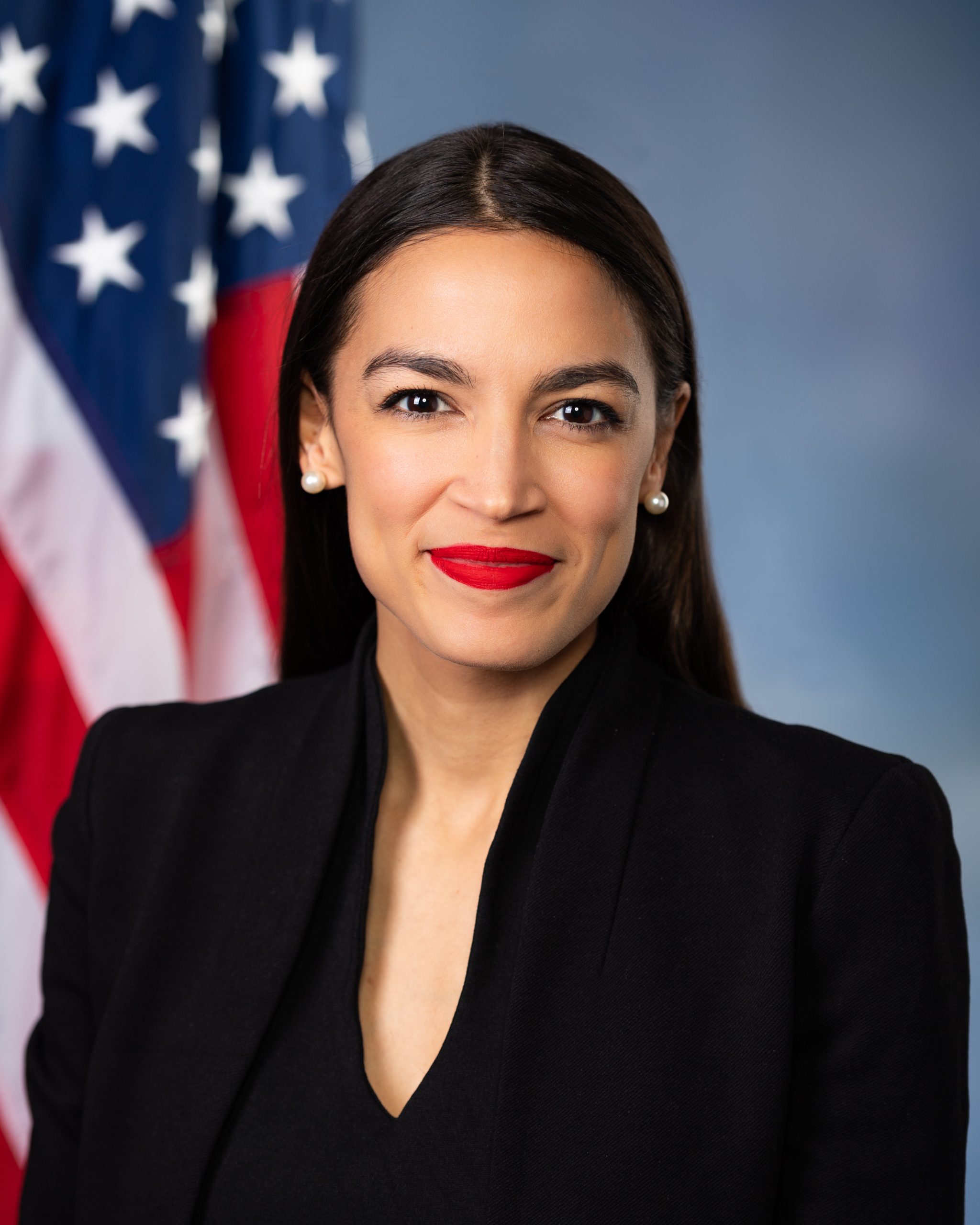
The Kentucky Republican’s absence has become more than a personal health matter because Congress is operating on thin margins. Ocasio-Cortez’s comments sharpen a larger fight over privacy, transparency and power in Washington.
Alexandria Ocasio-Cortez said Mitch McConnell should provide a health update or resign, sharply criticizing the Kentucky Republican senator’s continued absence from Congress on Tuesday outside the U.S. Capitol. The issue centers on concerns about McConnell’s health, transparency and whether voters are getting enough information while a sitting senator remains away from Washington.
Her remarks turned a long-running whisper campaign about McConnell’s condition into a blunt public challenge: if an elected official cannot appear, vote or explain when he will return, Ocasio-Cortez argued, the public deserves more than silence.
A blunt demand at the Capitol
Ocasio-Cortez, a New York Democrat, told a reporter she was shocked by how normalized McConnell’s absence had become, according to The Hill. She described the situation as “not normal” and questioned how a sitting member of Congress could be gone for an extended period without clearer public accountability.

The Independent framed her demand more directly: McConnell should provide a health update or resign. That formulation captures the pressure now building around the former Senate Republican leader, whose health has been under scrutiny after a hospitalization and weeks away from Senate votes.
Ocasio-Cortez also pointed to the broader problem of members of Congress being absent for months at a time, especially when both chambers are closely divided. She did not present the issue as only a partisan complaint. Her argument was that absences by elected officials can change national outcomes.
“Every single person’s absence here has country-altering implications,” she said, according to The Hill.
McConnell cited a fall and pneumonia
McConnell, 84, addressed public concern on Sunday with a statement and a photograph from the hospital with his wife, according to The Hill. He said his absence followed a fall and a minor case of pneumonia.
“As much as it frustrates me, this process takes time,” McConnell wrote in the statement shared with The Hill. “And on the advice of my doctors, I won’t be able to return to the Senate floor to vote quite yet.”
That statement answered some basic questions, but it did not end the scrutiny. It did not provide a firm return date, a detailed medical timeline or a clear explanation of how long he may remain unable to vote.
For McConnell’s defenders, that may be enough. Elected officials do not surrender all medical privacy simply because they hold office. For critics, the problem is not that McConnell became ill; it is that voters and colleagues are left guessing about his capacity to perform the job.
Why the absence matters politically
McConnell is not just another senator. He is a Kentucky Republican with decades of institutional power, and his presence can affect whether major legislation moves through the Senate.
The Hill reported that he has not cast a vote in the upper chamber in more than a month. In a narrowly divided Congress, that kind of absence is not procedural background noise. It can alter strategy, delay votes and force leaders to hunt for support they might not otherwise need.
Ocasio-Cortez’s criticism landed because it connects a personal health question to a public governance problem. Members of Congress vote on spending, judges, national security and the rules that shape everyday life. When one seat effectively goes quiet, the consequences do not stay private.
The stakes are especially high around defense spending. McConnell chairs the Senate Appropriations Subcommittee on Defense, which controls Pentagon spending, and The Hill noted that his absence complicates the path for a $1.5 trillion defense spending package tied to the Trump administration’s agenda.
The transparency line is messy
There is no simple rule for how much medical information a member of Congress must disclose. Serious illness, recovery from an accident and age-related health concerns all sit in a gray area between personal privacy and public responsibility.
Ocasio-Cortez acknowledged that medical situations happen, but said she believes “there’s a line here” and that it has been crossed, according to The Hill. That is the core of the dispute: not whether someone is allowed to be sick, but whether prolonged absence without fuller information is acceptable.
The public has seen this tension before with presidents, senators, representatives and judges. Officials often release limited statements, sometimes through aides or physicians, while opponents argue that voters deserve a clearer account of fitness for office.
McConnell’s case is particularly sensitive because speculation has already filled the information gap. Sen. Ron Johnson, a Wisconsin Republican, questioned how recent McConnell’s hospital photograph was before later backing away from the remark, according to The Hill. That episode shows how quickly uncertainty becomes its own political problem.
Ocasio-Cortez widens the target
Although McConnell is the name driving the headlines, Ocasio-Cortez also raised concerns about other members being away from Congress for long stretches. The Hill reported that she referred to the months-long absence of Rep. Tom Kean Jr., a New Jersey Republican, without naming him.
That broader critique matters because it keeps the issue from being only about one senator’s health or one party’s inconvenience. Her message was that elected office carries a duty of presence, or at least a duty to explain absence in a way that respects voters.
Republicans may see the comments as political opportunism from a prominent progressive who has often clashed with GOP leadership. Democrats may see them as a legitimate demand for accountability from a senator whose absence affects national business.
Both reactions can be true at once. The timing and partisan target are political, but the underlying question is real: Congress has no easy mechanism for handling long absences by members who retain power, seniority and committee responsibilities.
What remains unanswered
McConnell’s statement established that he is recovering from a fall and pneumonia, and that doctors have advised him not to return to the Senate floor yet. It did not say when he will be back, whether he is working remotely in any formal capacity or what benchmarks doctors are using to clear him.
It is also unclear whether additional information will be released. Ocasio-Cortez wants a public update or resignation. McConnell’s office has offered a limited explanation. Senate leaders must now operate around the gap between those positions.
The immediate political question is whether McConnell’s absence blocks or reshapes legislation. The longer-term question is whether Congress needs clearer expectations for disclosure when elected officials miss extended time.
For now, Ocasio-Cortez has put the issue in stark terms: a senator can recover, but the seat still belongs to the public. If McConnell cannot return soon, pressure for more transparency is unlikely to fade.






Leave a Reply