
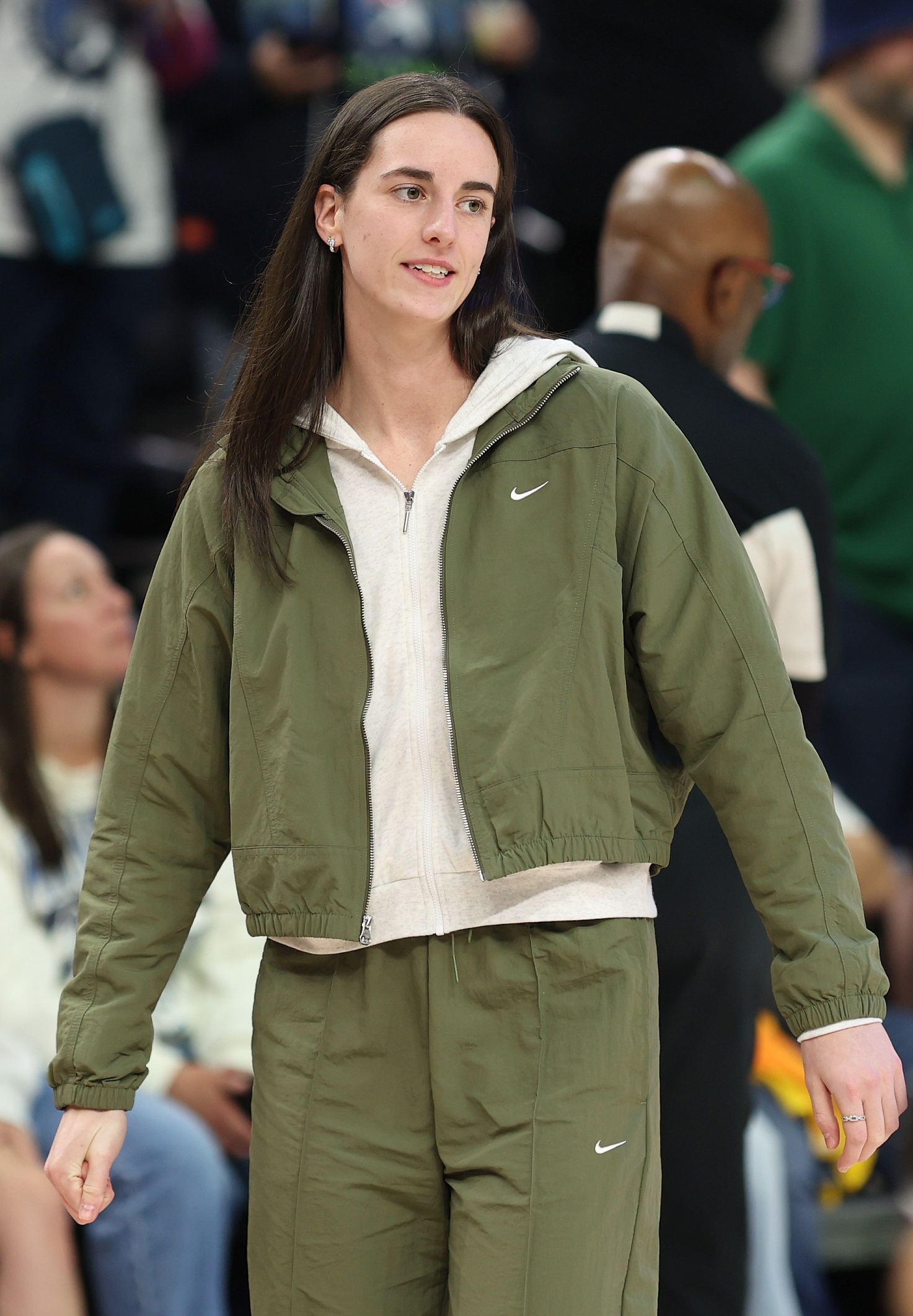
The former president’s brief exchange with the Indiana Fever guard stood out because it named the burden around her without making basketball feel secondary. Clark’s response showed how much that reminder landed.
Barack Obama gave Caitlin Clark advice to hold on to her joy in basketball during a surprise visit with WNBA All-Stars in Chicago on Friday, July 24, 2026, at the Obama Presidential Center. Clark, the Indiana Fever guard whose pro career began in 2024, was named an All-Star for the third time while carrying heavy media and social media scrutiny.
That is why Caitlin Clark needed the former president’s message: Obama acknowledged the pressure around her, then steered the moment back to the simplest part of the job. She still gets to hoop.
Obama cut through the noise
Sports Illustrated reported that Obama surprised 22 WNBA All-Stars during practice at the newly opened gym inside his Presidential Center in Jackson Park. The visit came during All-Star Weekend, with the WNBA becoming the first professional sports league to hold an official event at the venue, according to the report.
Obama greeted players around the court, shook hands and posed for photos. When he reached Clark, the exchange became more than a celebrity meet-and-greet.
He complimented her, told her not to let “all this nonsense” get her down and drew a contrast between his own experience with fame and hers. Obama noted that he did not become nationally famous until his 40s, while Clark is navigating the glare in her 20s.
The heart of the message was simple: do not lose the joy. The game is still the game. Clark is still, as Obama put it, a hooper.
Why Clark said it mattered
Clark later told reporters the moment was “super cool” and said Obama complimented how she has handled everything around her. She also pointed to the age gap Obama mentioned, saying people do not always realize she is 24 years old and trying to manage a lot while still playing basketball.
That part matters because Clark’s rise has not looked like a normal star ascent. Since entering the WNBA in 2024, she has been treated as an athlete, a television ratings driver, a cultural symbol and, too often, a proxy in arguments she did not start.
There is a difference between criticism of a player’s game and turning that player into a public battleground. Clark has drawn both. Her turnovers, shot selection, physicality and leadership are fair topics in a professional league. The harder part is the extra layer: strangers assigning motives, politics and identity to nearly every moment around her.
Obama’s advice did not pretend that layer does not exist. It named the distraction, then refused to let it define her.
The scrutiny has become its own story
Clark’s WNBA career has unfolded in a league already wrestling with explosive growth, uneven attention and long-running conversations about race, media coverage and respect for players. Her popularity has brought new viewers, but it has also brought louder fights about who gets credited, who gets criticized and who gets protected.
Sports Illustrated pointed to a recent stretch in which Clark was pulled into several toxic narratives. One involved a flagrant foul by Alyssa Thomas during a Fever-Mercury game in late June. Thomas was suspended for one game, and she later said she received death threats after the video spread online.
That episode showed the danger of the current atmosphere. A hard foul, a league ruling and fan outrage can become something uglier very quickly. Players other than Clark are also living with the fallout when basketball clips are turned into culture-war evidence.
NBA commissioner Adam Silver has also described Clark as a “political football,” a phrase that captured the strange position she occupies. Her name can be used by people who care deeply about the WNBA and by people who mainly care about winning arguments outside it.
Joy is not a small ask
For elite athletes, joy can sound like a soft concept. It is not. It is often the thing that lets a player keep working when the schedule is brutal, the criticism is constant and every mistake becomes content.
Clark’s game was built on visible freedom: deep threes, hit-ahead passes, quick reads and a willingness to try plays most players would not. That style is part of why she became a college phenomenon at Iowa and why her arrival in Indiana changed the scale of attention around the Fever.
The risk for a young star is that scrutiny can make the game smaller. A player can start managing optics instead of reading the floor, answering narratives instead of trusting instincts. Obama’s message was not technical advice, but it touched the competitive core of Clark’s job.
Clark said later that basketball is her profession and that she plays because she loves competing between the lines. Nobody, she said in an ESPN interview with Malika Andrews, should try to take that away from her.
There are fair critiques, too
None of this means Clark should be covered gently or praised automatically. She is a franchise player in a professional league. The Fever’s ambitions, her decision-making and her performance in big games are all fair subjects.
Some critics argue that the intense coverage is simply the price of superstardom. Every transcendent player attracts hot takes, hard fouls and resentment. Michael Jordan, LeBron James, Serena Williams and countless others lived under microscopes long before Clark.
But Clark’s case is different in one important way: the WNBA is growing in real time around her. The league’s established stars, younger players, media members and new fans are all trying to define the terms of attention at once. That makes normal sports criticism harder to separate from broader fights over race, gender, popularity and power.
The best coverage can hold more than one truth. Clark can be an extraordinary player. Other WNBA stars can deserve more attention. Fans can celebrate her without attacking opponents. Media can critique her without inventing her character.
The takeaway from Chicago
Obama’s visit will be remembered partly because of the photo and partly because of the novelty: a former president surprising WNBA All-Stars at his Presidential Center in Chicago. But the Clark exchange stood out because it gave a public answer to a private problem.
How does a 24-year-old athlete keep loving the game when the conversation around her keeps drifting away from basketball?
Obama’s answer was not to ignore the noise. It was to recognize it, shrink it and put the ball back in Clark’s hands. Don’t let it get you down. Don’t lose the joy. Keep hooping.
That advice will not end the debates around Clark or the WNBA. It may not even quiet them for a week. But it offered a cleaner frame for the season ahead: the league’s biggest attention magnet is still a young guard trying to play, improve and enjoy the sport that made everyone watch.





Leave a Reply