
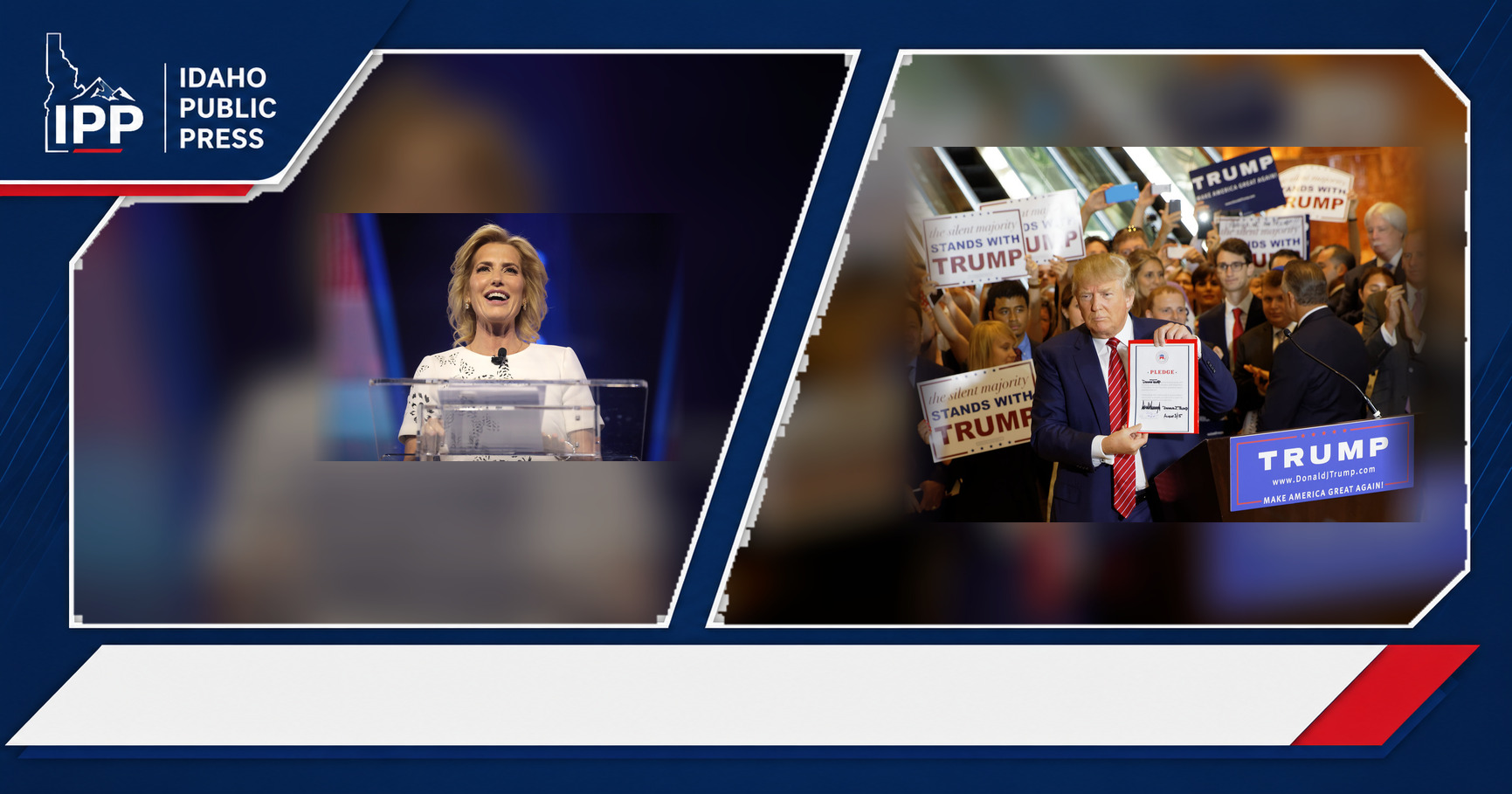
A pointed Fox News exchange drew attention because direct challenges to Donald Trump are relatively uncommon on the network's high-profile interviews. The available reporting leaves key details unresolved, but the clash underscores the stakes of live political questioning.
Donald Trump responded with a hostile rant after a Fox News host challenged Trump’s major claims during an interview. CNN identified the host as Laura Ingraham, making the exchange notable not simply for Trump’s reaction, but because Ingraham’s questions represented direct pushback from one of the network’s best-known conservative personalities.
The source reporting characterizes Trump’s response as a scorched-earth outburst, but the material available does not establish a complete transcript, the precise claims at issue or the full sequence of the interview. That distinction matters: the central confirmed development is the clash between Trump and a Fox News host, not every interpretation circulating around it.
Laura Ingraham’s unusual pushback
CNN’s coverage framed Ingraham’s interview as an instance in which she challenged Trump more directly than many Fox News hosts do. That alone helps explain why the exchange traveled quickly: viewers accustomed to friendlier conversations between Trump and the network’s opinion hosts saw a more confrontational dynamic.
Fox News is not a monolith. Its journalists, anchors and commentators have different roles, audiences and editorial approaches. Still, Trump has long treated appearances on the network as an important way to reach Republican voters and defend his political agenda.
When a host from that ecosystem disputes or tests a major assertion in real time, it changes the tone of the interview. The guest is no longer simply delivering a message; he is being asked to account for it before an audience that may otherwise be receptive.
What the available reporting establishes
The available source material supports a narrow account: Trump appeared in a Fox News interview, Ingraham challenged significant claims, and Trump reacted angrily afterward or in response to the confrontation. CNN’s headline identifies Ingraham as the host and emphasizes the rarity of the challenge.
It does not provide enough verified detail to responsibly reconstruct every disputed statement, quote Trump’s response at length or assign a definitive motive to either side. Those omissions are important in a political story, where edited clips and secondhand descriptions can quickly harden into broader claims.
Calling a response “hostile” or “scorched-earth” reflects the framing of the original reporting. Readers should separate that description from the underlying, checkable questions: What did the host ask? What evidence was presented? Did Trump answer the substance of the challenge?
Why Fox interviews carry weight
Trump’s relationship with Fox News has been central to his political communications for years. The network has offered him a large platform, while its programming has also contained periodic disagreements, skeptical reporting and interviews that have tested his assertions.
A 2020 PBS NewsHour report examined the close relationship between Trump and parts of Fox News programming while noting occasions when Fox journalists challenged him. The report included an exchange in which then-host Chris Wallace disputed Trump’s characterization of U.S. COVID-19 mortality figures.
That history provides useful context without proving that every Fox interview follows the same pattern. The more relevant point is that even a brief challenge can become a story when it occurs within a media relationship widely viewed as politically consequential.
For Trump, such moments can carry a built-in tension. A forceful response may reassure supporters who see hostile media scrutiny as unfair. It may also put greater attention on the underlying claim if the interviewer’s question is specific and evidence-based.
The argument is also about standards
Supporters of Trump often argue that interviewers and news organizations apply an unfairly adversarial standard to him, particularly when they interrupt, fact-check or press for direct answers. From that perspective, a combative response can be presented as resistance to a biased premise.
Critics take the opposite view: that political interviews should confront powerful figures with clear evidence and follow-up questions, especially when their claims could influence public understanding or policy debates. They argue that an interviewer’s ideological proximity to a guest should not eliminate the need for scrutiny.
Neither view makes the facts of a disputed claim disappear. The quality of the exchange ultimately rests on whether the host’s challenge was accurate, whether Trump addressed it and whether viewers can see enough of the conversation to judge both for themselves.
- For interviewers: Precision matters more than theatrical confrontation.
- For political figures: A rebuttal is strongest when it directly addresses the evidence raised.
- For viewers: Short clips can show conflict, but not always the full factual context.
What remains unclear from the clip
Without a full transcript or complete video verified in the reporting supplied here, several questions remain open. It is unclear exactly which claims Ingraham challenged, whether Trump’s harshest remarks occurred during the interview or afterward, and how much of the exchange may have been amplified through excerpts.
Those details are not minor. They determine whether this was a sustained fact-checking confrontation, a single tense disagreement or a broader dispute between Trump and a media figure who is often seen as aligned with his political coalition.
The most defensible takeaway is also the simplest: a Fox News interview became news because Laura Ingraham challenged Donald Trump’s major claims and Trump answered with a strongly negative reaction. Until fuller primary material is available, broader conclusions about the substance of the dispute should remain cautious.
A test of political media habits
The exchange illustrates how much political-media stories can hinge on expectations. Trump’s appearances on Fox News are watched not only for what he says, but for whether anyone in the interview chair will press him when a claim is contested.
That makes the Ingraham moment meaningful even amid unanswered factual questions. It is a reminder that the dynamics of an interview—who asks, who resists and whether the evidence gets a hearing—can shape public debate as much as the headline-grabbing reaction that follows.










Leave a Reply