
The decision affects exercises built around readiness for a North Korean threat just days after Pyongyang resumed ballistic missile testing. It also puts a renewed spotlight on how Trump weighs military deterrence against diplomacy with Kim Jong Un.
President Donald Trump ordered the Pentagon on Sunday, August 16, 2026, to scale back planned joint military exercises involving the United States and South Korea. The drills, identified as Ulchi Freedom Shield, are scheduled to begin this week, so the reduction will come before the exercise starts.
Trump said the training is costly and sends an inappropriate and hostile signal to North Korea. The exercises are designed to prepare the two allies for a potential North Korean threat. His order came days after Pyongyang resumed ballistic missile testing and as Trump pointed to his relationship with North Korean leader Kim Jong Un. The move puts a renewed focus on the balance between maintaining military readiness with Seoul and pursuing diplomacy with Pyongyang.
Trump’s order changes this week’s drills
Trump announced the decision in a social-media post, saying it was too late to cancel the exercises outright. He said he had instructed Defense Secretary Pete Hegseth to substantially reduce them.
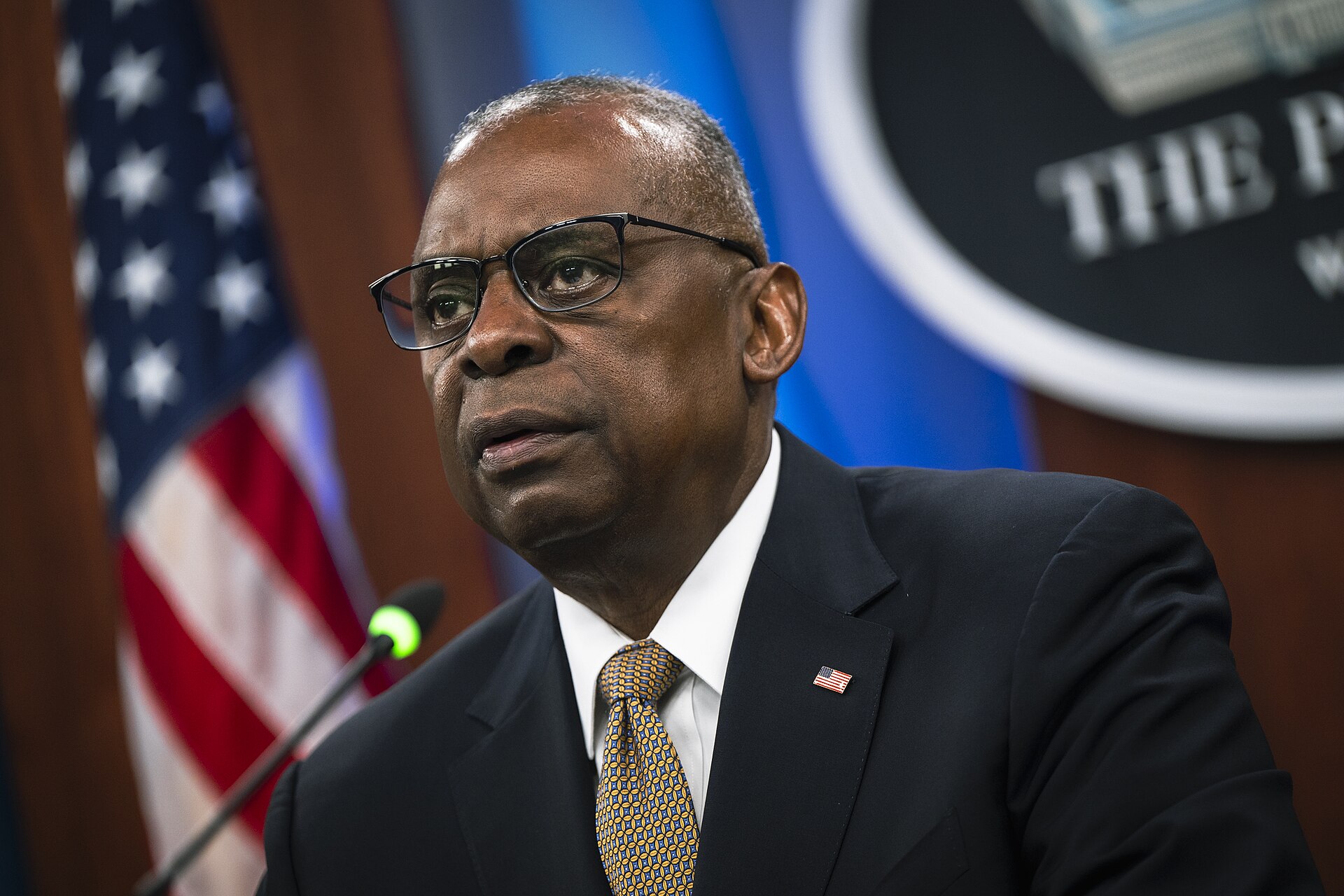
The president described the drills as expensive and said they conveyed a signal that was “totally inappropriate and hostile” toward North Korea. He also characterized North Korea as “unthreatening and respectful” during his time in the White House.
Trump tied his frustration with South Korea to a separate issue: he said he had asked Seoul to join U.S. efforts to denuclearize Iran and that South Korea declined. The precise changes the Pentagon will make to the exercise schedule, personnel levels or planned events were not immediately clear.
Ulchi Freedom Shield has a deterrence role
The scheduled summertime Ulchi Freedom Shield exercises were expected to run for 11 days and involve 18,000 South Korean soldiers, according to the Associated Press. The training is intended to strengthen readiness against North Korean threats.
U.S. and South Korean forces were expected to rehearse joint operations under complex conditions. Planned events included a live-fire exercise focused on joint precision targeting and maneuver, a wet-gap crossing, and the distribution of prepositioned military equipment.
The U.S. military has described the exercises as reinforcing the alliance’s role in regional peace and security and reaffirming the countries’ commitment to defend their homelands. For military planners, drills are not simply displays of force; they are a way to test whether units from two countries can communicate, move equipment and operate together in a crisis.
That practical function is at the center of the debate. Reducing an exercise may lower the visible footprint of the training, but the operational effect depends on which parts of the program are cut and whether they can be replaced later.
North Korea’s missile activity sharpens stakes
The scaled-back exercise is set to begin after North Korea resumed ballistic missile testing, activity barred by U.N. resolutions. Earlier this month, South Korea, the United States and Japan detected a North Korean short-range ballistic missile launch that landed in waters off the country’s east coast.
Pyongyang has long denounced U.S.-South Korean drills as rehearsals for invasion or aggressive war. On Friday, North Korea threatened unspecified strong steps in response to the coming exercises, using language typical of its messaging before major allied training events.
Experts cited by the AP say North Korea has often used the exercises as a pretext to increase weapons testing, expand its arsenal and strengthen domestic support for Kim. The North has pushed to enlarge its nuclear and missile capabilities since Kim’s diplomacy with Trump broke down in 2019.
Trump’s view is different: reducing drills could lower tensions and create space for renewed engagement. Whether North Korea treats the move as an opening for diplomacy, or simply as an opportunity to press its military advantage, remains unanswered.
A familiar split over alliance policy
The decision recalls Trump’s first term, when he surprised U.S. allies after his 2018 summit with Kim in Singapore by saying he would stop what he called “war games.” At that time, he said the move would save money unless negotiations failed to progress.
Trump and Kim met three times during Trump’s first presidency, but the talks did not produce an agreement on North Korea’s nuclear program. Since returning to office, Trump has expressed interest in continuing discussions with Kim.
His latest announcement followed a post showing Trump alongside Kim, in which Trump said the two leaders get along well. That personal relationship is now clearly part of Trump’s public rationale for changing a major alliance activity.
Yet the administration’s approach toward Seoul has not been uniformly skeptical. In May, Hegseth praised South Korea’s increased defense spending and its willingness to assume greater responsibility for security on the Korean Peninsula, calling it an example of alliance burden-sharing.
Critics see readiness risks
Democratic Sen. Mark Kelly of Arizona, a former Navy pilot, condemned the decision shortly after Trump announced it. Kelly said that “hollowing out these joint exercises is shortsighted and a mistake.”
That criticism reflects a broader deterrence argument: regular joint training signals that the United States can rapidly operate beside South Korean forces if North Korea escalates. Supporters of the drills contend that credibility rests not only on weapons and troop numbers, but on demonstrated preparedness.
Trump’s supporters may view the order through a different lens. They can argue that allies should carry more of their own defense burden, that expensive exercises deserve scrutiny, and that military signaling should not foreclose negotiations.
The policy tension is especially stark because Washington is balancing several goals that do not always align neatly: maintaining a strong alliance with Seoul, deterring Kim’s government, limiting the cost of overseas military activity and pursuing an opening for diplomacy.
What the Pentagon still must define
The immediate question is how “substantially reduce” will be translated into military planning. The AP report did not specify which components of Ulchi Freedom Shield will be curtailed, whether any exercises will be postponed, or how South Korean officials responded to the directive.
Those details will shape the real-world consequence. Cutting a symbolic public-facing component is different from eliminating the field training that helps forces practice targeting, crossings and logistics together.
For now, Trump’s order returns U.S.-South Korea exercises to a familiar fault line. The White House is presenting a reduced military profile as compatible with diplomacy and cost concerns, while critics warn that fewer drills could weaken readiness precisely as North Korea continues to advance its weapons programs.







Leave a Reply