

The dispute over conditions aboard the USS Abraham Lincoln is now colliding with a major carrier movement in the Middle East. Families and lawmakers want answers as the Navy says reports of a broader crisis do not reflect conditions on the ship.
The Navy denied reports of a fresh mental-health crisis aboard the USS Abraham Lincoln, the ship involved in the reported crisis, even as the USS George Washington moved from near Malaysia toward the Middle East to relieve it. About 5,000 sailors and Marines are aboard the Lincoln, which has spent more than 240 days at sea during a nine-month deployment that was initially expected to end in May.
The dispute matters because the Navy has acknowledged supply challenges while rejecting claims that conditions on the carrier amount to a wider mental-health emergency. Families, lawmakers and military officials are offering sharply different accounts of what the extended deployment has meant for the crew.
Lincoln’s deployment has stretched on
The USS Abraham Lincoln has been at sea since Dec. 11, according to ship-tracking analysis cited by the BBC. Its deployment was originally scheduled to conclude in May, putting the carrier well beyond the roughly six-month deployment length cited by a sailor’s family member.
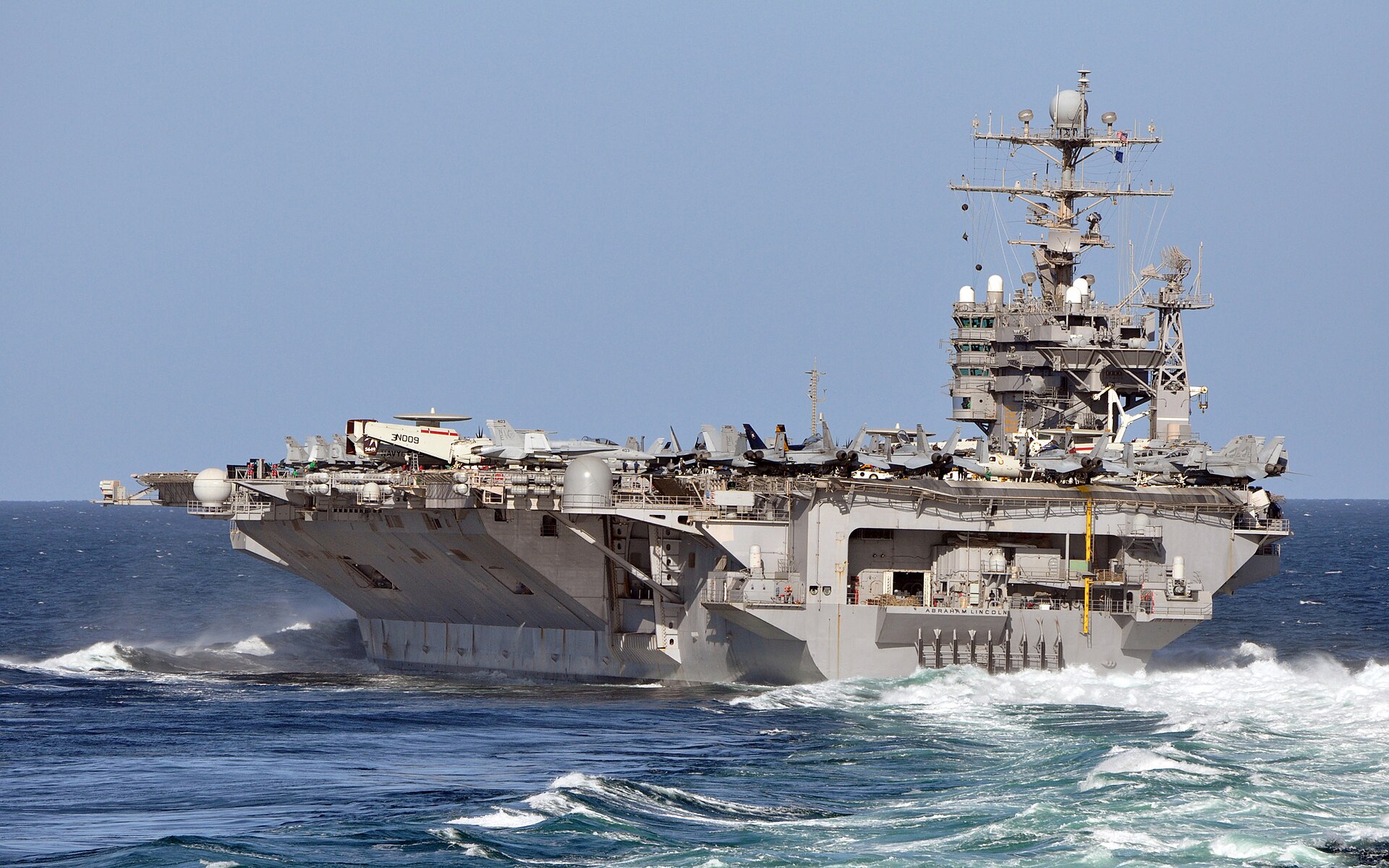
Long deployments are not just a calendar issue. A carrier is a self-contained workplace and living environment where sailors sleep, eat, maintain equipment and conduct flight operations in close quarters, often on demanding schedules.
That makes the reported conditions aboard the Lincoln consequential even while key details remain disputed. The issue is not whether shipboard life is difficult; it is whether reported shortages, maintenance problems and stress have crossed into a broader failure of crew welfare.
Families describe troubling conditions
Family members of Lincoln sailors told reporters they were worried about deteriorating mental health during the extended time at sea. Military Times and Stars & Stripes reported that relatives of multiple sailors said their loved ones had considered jumping overboard, according to the BBC.
Relatives also described poor sanitation, broken plumbing, infrequent port calls, exhaustion and shortages of fresh food. One relative, speaking anonymously to the BBC over fears of retaliation, said their sailor had lost 65 pounds and struggled with exhaustion amid the noise and vibration of carrier operations.
Those accounts are serious allegations, not independently established findings. They nonetheless have raised questions about how concerns from deployed sailors and their families are assessed when operational demands limit what the public can see from a ship at sea.
Jefferson Kelly, whose son Jackson is on the Lincoln, told CBS News that he had become concerned after nearly nine months of deployment. He argued that sailors should not be kept out that long, pointing to the maintenance demands of older ships and the relentless nature of life aboard them.
The Navy rejects a broader crisis
The Navy has denied that there has been an increase in suicidal behavior aboard the Lincoln and has rejected the characterization of events as a mental-health crisis. That distinction is central to the official response: acknowledging difficulties does not mean accepting the conclusion that the crew faces a systemic emergency.
At the same time, the Navy has said supplies were disrupted by combat actions during the war with Iran. Defense Secretary Pete Hegseth said reports had been “completely misrepresented” and said the government was working to ensure every ship, crew and captain had what could be provided.
That leaves an uncomfortable middle ground. The service recognizes logistical strain, while relatives contend that the impact on daily life and morale has been much more severe than official descriptions suggest.
President Donald Trump also dismissed concerns from family members and rejected the idea that the Lincoln deployment had gone on too long. Asked about its length, he said it was “not nearly long enough.”
George Washington is the relief ship
The other U.S. Navy ship at the center of the immediate operational shift is the USS George Washington. The carrier departed Yokosuka, Japan, in May for a Pacific patrol and was near Malaysia before turning west toward the Middle East, according to reporting cited by the BBC.
BBC Verify’s tracking analysis indicated that, at its last recorded speed, the George Washington could reach Duqm, Oman, around Aug. 22. The port is about 500 miles from Iran’s coast.
Its arrival would make it the third U.S. aircraft carrier in the region, alongside the Lincoln and the USS George H.W. Bush. It would also leave no U.S. aircraft carrier in the Pacific, underscoring the tradeoffs involved in shifting naval forces between theaters.
A replacement carrier heading toward the region does not by itself prove that reported conditions aboard the Lincoln caused the move. Carriers rotate for many reasons, including mission requirements, maintenance cycles and broader military planning. Still, the timing has intensified attention on the crew’s situation.
Lawmakers seek accountability
Connecticut Sen. Richard Blumenthal, a Democrat, wrote to Defense Secretary Hegseth and Navy Secretary Hung Cao saying reports of shortages and poor conditions deserved immediate attention. He also raised a wider concern: whether the Navy can sustain the operating tempo being demanded of its carrier force.
That is the larger policy question behind the competing claims. Carrier deployments are designed to project U.S. power and maintain a visible presence in volatile regions, but the readiness of ships ultimately depends on the people who operate them.
The Navy’s denial addresses the most alarming characterization of the Lincoln’s situation. It does not settle every concern about food, sanitation, maintenance, rest or the effects of a prolonged deployment on sailors and Marines.
What remains unclear aboard Lincoln
Public reporting has not established how many sailors, if any, faced acute mental-health emergencies, how the Navy investigated individual concerns, or whether conditions varied across different parts of the ship and its air wing.
It is also unclear when the Lincoln will be fully relieved, whether the George Washington’s arrival will allow its crew to return home promptly, and what lessons the Navy will draw from the deployment.
For now, the official position and the families’ accounts remain in tension. The coming carrier handoff may ease pressure on the Lincoln’s crew, but it will not end scrutiny of how the Navy managed a deployment that lasted far longer than planned.











Leave a Reply