
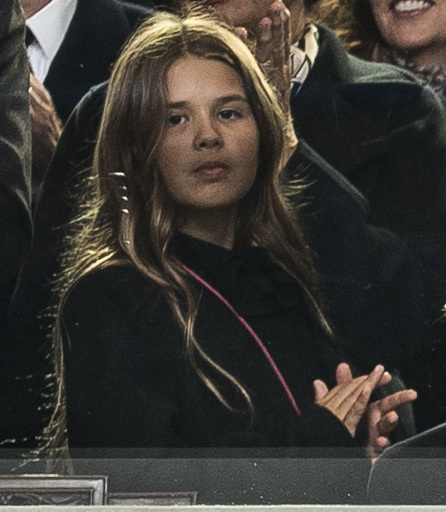
The 19-year-old golfer’s routine is getting attention because it blends celebrity curiosity with a real athlete’s recovery plan. Her approach is disciplined, but the headline protein number needs context.
Kai Trump, 19, is discussing the diet and fitness routine behind her six-pack abs after using recovery from wrist surgery to reshape her training. In a Fox News Digital interview, the competitive golfer and incoming University of Miami women’s golf team member said she weighs 120 pounds, eats about 150 grams of protein a day, favors sustainable carbs and works out regularly.
The appeal is obvious: Trump’s fitness reveal lands as she prepares to move from recovery back into golf and college athletics. Her routine sounds simple on the surface, but it also raises a bigger question about how much of an athlete’s transformation comes from food, training, timing and plain consistency.
The recovery goal became visible
Trump told Fox News Digital that wrist surgery temporarily took her away from golf, but she did not treat the time as a pause from training. Instead, she said she told friends she had seven months before returning to golf and wanted to use the stretch to build a six-pack.

That detail is the center of the story. She credited the result not to a shortcut, but to prioritizing the right foods and working out consistently while she was limited in other parts of her sport.
Reuters reported in January 2026 that Trump announced she had undergone left wrist surgery to address injuries involving stabilizing tissues of the ECU tendon and damage in the wrist. That kind of recovery can limit sport-specific practice, especially for a golfer, but it does not necessarily eliminate lower-body, core or conditioning work if cleared by medical professionals.
Trump’s account fits a familiar athlete pattern: when one part of training is restricted, another becomes the focus. For her, that meant turning a frustrating layoff into a visible fitness target.
What she says she eats
The number drawing the most attention is protein. Trump told Fox News Digital, “I weigh 120 pounds and I probably eat around 150 grams of protein,” adding that she eats sustainable carbs and works out a lot.
She described a routine built around clean, simple meals rather than skipped meals or dramatic restriction. One constant, she said, is getting protein early: about 40 grams in the morning through a shake or something similar so that she has fuel in her system before running, training or a busy day.
Her reported food habits include:
- A protein-heavy diet anchored by meals such as steak, chicken, rice and ground beef bowls.
- Carbohydrates she described as sustainable, including rice with meals.
- A ground beef bowl with rice, avocado and seasoning as a go-to dish.
- A gluten-free and dairy-free approach.
- Avoiding eggs because of what she described as a slight allergy.
She also said her occasional indulgence is not a sweet snack but prosciutto with pesto. That detail is less important nutritionally than it is revealing: her preferences appear to lean savory, protein-forward and repetitive, which can make consistency easier for some athletes.
How she trains for golf
Trump’s workout routine, as she described it, is not built around one magic ab exercise. She said she does core work, squats and cardio on a stair-climbing machine, a mix that targets the trunk, legs and conditioning.
For golfers, that combination makes practical sense. The golf swing depends on rotational control, balance, lower-body stability and repeated power, not just arm strength. A stronger core can support movement patterns, though visible abs still depend heavily on body composition, genetics, lighting, hydration and overall training history.
Before tournaments, Trump said she uses a trainer-designed warm-up that includes foam rolling and muscle activation exercises. That is a more sport-specific detail than the six-pack headline: competitive golfers often use warm-ups to prepare joints and muscles for rotation, speed and repeated swings.
She also said she researches what works and adapts it to her own life. That do-it-yourself approach can be useful, but it has limits after surgery. The safest version of any comeback plan is one that follows medical clearance, physical therapy guidance and sport-specific coaching.
The protein number needs context
Trump’s stated intake — about 150 grams of protein at 120 pounds — is high by general-population standards. It also may not be unusual in strength-focused or performance-focused circles, where athletes often spread protein across the day to support training and recovery.
Still, readers should be careful about copying the number directly. Protein needs vary by body size, training load, age, medical history, goals and total calorie intake. A 150-gram target for one athlete is not automatically the right target for another person.
There is also a difference between “high protein” and a complete performance diet. Trump specifically mentioned carbs, which matters. Golf may look slower than some sports, but tournament weeks, training sessions, travel and gym work require energy. Carbs, fats, micronutrients, hydration and sleep all play roles that a protein total alone cannot cover.
The more useful lesson is the structure: she appears to plan meals, eat early, keep protein available and avoid letting a busy schedule turn into under-fueling. For young athletes, that consistency can matter more than any single food.
Fitness, fame and college pressure
Trump’s comments are getting traction partly because she is Donald Trump’s eldest grandchild and has built a large online following. Fox News Digital noted that she documents her life on YouTube, where she has about 1.5 million subscribers following golf, travel, family moments and public events.
That visibility changes how a fitness routine lands. A college-bound athlete describing meals and workouts is one thing; a political-family celebrity with a major online audience describing six-pack abs is another. The same details can inspire some readers and create unrealistic comparisons for others.
Trump is also about to enter a more demanding athletic environment with the University of Miami women’s golf team. College sports can bring heavier schedules, travel, strength programs, academic pressure and public scrutiny. Her current routine may evolve once coaches, trainers and team nutrition expectations become part of the picture.
She emphasized mental health, too, saying being active clears her head and that the people around you matter. That part of the interview may be the least flashy but most grounded: recovery and performance are rarely just physical.
The practical takeaway
The headline is six-pack abs, but the practical story is more modest: Trump says she used a period away from full golf activity to train consistently, eat protein-rich meals, keep carbs in the plan and build habits that support her sport.
That does not mean her routine should be treated as a universal blueprint. She is a young competitive athlete, recovering from a specific injury, preparing for college golf and likely training with more structure than the average person.
What translates best is the principle, not the exact numbers. Pick a realistic goal, eat enough to support it, train the parts of the body you can safely train, and make the plan repeatable. For Trump, that approach produced visible abs and a stronger runway back to golf. For everyone else, the smarter goal may simply be a routine that holds up when life interrupts training.





Leave a Reply