

Kagan’s remarks land amid growing scrutiny of Trump-related rulings, emergency orders and the court’s conservative majority. Her argument: conservative does not mean automatically aligned with the president.
Justice Elena Kagan rejected the claim that the U.S. Supreme Court is rubber-stamping Donald Trump’s agenda, saying Thursday in Bellevue, Washington, that the criticism was wrong. Speaking in the United States to attorneys and judges at the ninth judicial circuit’s annual gathering, Kagan defended the court while acknowledging its conservative tilt.
Her remarks were made in the context of Supreme Court rulings involving Trump, including decisions and emergency appeals that have both helped and checked his administration. The core of Kagan’s argument: this is a conservative court, but not one that simply does whatever Trump wants.
Kagan draws a sharp distinction
According to The Guardian, Kagan framed the issue in two parts. She accepted that the court is “really conservative,” but rejected the more sweeping charge that it acts as an automatic vehicle for the current administration.
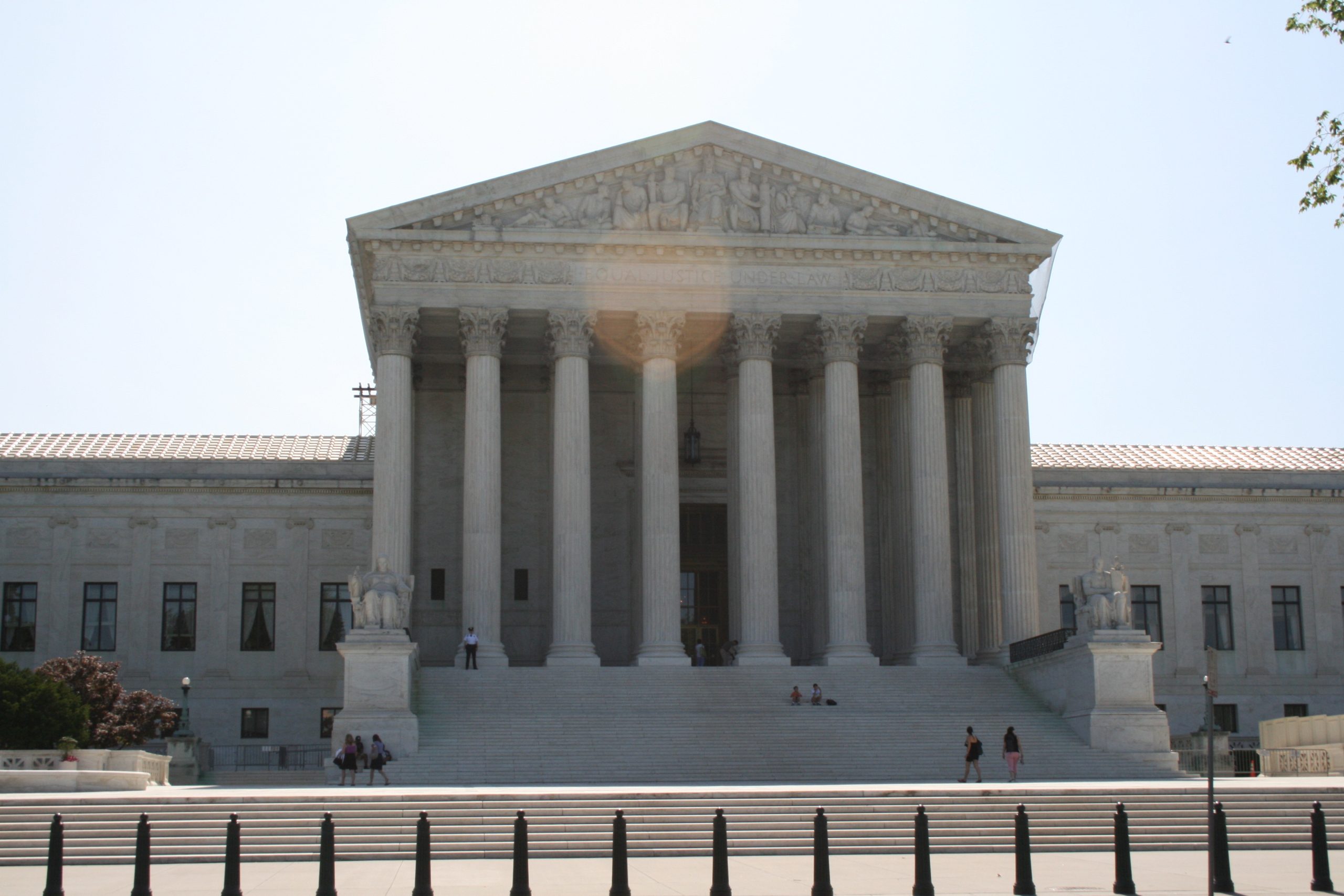
That distinction matters because the Supreme Court’s legitimacy fight is no longer only about outcomes. It is also about whether the public sees the justices as independent legal actors or as political allies wearing robes.
Kagan, one of the court’s three liberal justices, did not argue that critics have no reason to scrutinize the court. Instead, she pointed to major Trump losses as evidence that the institution has not become a presidential rubber stamp.
The rulings behind the criticism
The criticism Kagan addressed did not appear out of nowhere. The court has allowed Trump to prevail in several closely watched disputes, including immigration-related fights and cases involving presidential control over government agencies.
The Guardian reported that the court upheld Trump’s effort to end temporary deportation protections for Haitians and Syrians. It also issued a shadow docket order affecting Venezuelans with similar protections.
Those emergency orders can be especially controversial because they may move quickly, arrive with limited explanation and carry immediate consequences before a full public airing of the legal issues. For critics, that makes Trump-related emergency relief look like a powerful shortcut.
Conservative justices have also backed decisions that expand presidential removal power over independent agency heads, according to the same report. In the political arena, the court has been criticized for rulings that weakened the Voting Rights Act and could help Republicans in House control fights.
Why tariffs became Kagan’s example
Kagan’s clearest counterexample was trade policy. She pointed to a February ruling in which the liberal justices joined three conservative justices to strike down Trump’s use of executive authority to impose tariffs on a host of countries.
That example is important because tariffs have been central to Trump’s economic and political identity. Kagan said tariffs were probably the president’s key policy issue, making the ruling a serious check on a sitting president rather than a symbolic loss.
Her point was not that the court has treated Trump harshly across the board. It was that a court willing to block a president on a signature policy cannot easily be described as doing only what that president wants.
The same pattern, Kagan argued, appeared in other areas. The Guardian reported that the court also blocked Trump’s attempt to fire Federal Reserve governor Lisa Cook and stopped his administration’s effort to end birthright citizenship.
Emergency appeals remain the pressure point
The hardest part of Kagan’s defense is the court’s emergency docket, often called the shadow docket. When the justices act there, they are frequently deciding whether a policy may take effect while litigation continues, not always issuing a final merits ruling.
That distinction can get lost outside legal circles. For people affected by immigration enforcement, deportation protections, agency leadership changes or citizenship rules, an emergency order can feel just as decisive as a final judgment.
Supporters of the court’s approach may argue that emergency appeals are unavoidable when lower-court rulings create nationwide consequences or when the federal government claims immediate harm. Critics counter that the court has used these procedures too often in politically explosive cases, with too little explanation.
Kagan’s remarks implicitly push back against the idea that a string of emergency wins for Trump proves institutional capture. Still, they do not erase the concern that process, not just outcome, shapes public trust.
A conservative court, not a simple one
The current court has a six-justice conservative majority, and three of those justices were appointed by Trump during his first term. That fact alone fuels public suspicion whenever Trump wins a major case.
Kagan’s answer is that ideology and obedience are different things. A conservative justice may favor narrower readings of regulatory power, broader executive authority in some settings or different approaches to voting law without being personally loyal to Trump.
That is a useful distinction, but it is also a difficult one to sell in a polarized country. Most readers encounter the Supreme Court through outcomes: who won, who lost and what changed in daily life.
The court’s challenge is that legal reasoning often arrives after political consequences are already clear. When a ruling lets a president act, critics see permission. When a ruling blocks him, defenders see proof of independence.
What Kagan did not settle
Kagan’s comments give the court’s defenders a concise argument: look at the full record, not only Trump’s wins. The tariff ruling, the Lisa Cook dispute and the birthright citizenship case are all examples she can use to show the court has checked executive power.
But the broader debate remains unresolved. A court can reject some Trump policies while still expanding presidential authority in ways that reshape the federal government. It can be independent in motivation and still consistently conservative in effect.
That is why Kagan’s remarks are likely to be read in two ways. To some, they are a fair warning against flattening every decision into partisan shorthand. To others, they sound like an institutional defense at a moment when the court has earned sharper scrutiny.
The takeaway is not that the Supreme Court is above politics, or that every Trump-related ruling points in the same direction. It is that Kagan is trying to preserve a distinction the court badly needs the public to understand: conservative power is not the same thing as automatic presidential control.








Leave a Reply