
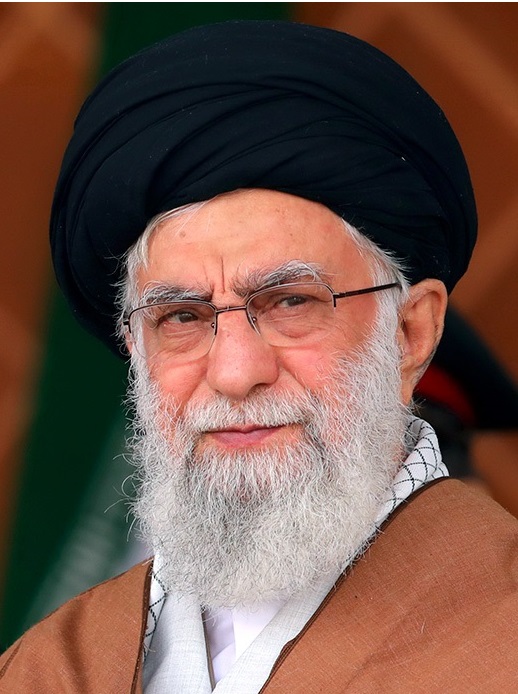
The ceremonies for Iran’s late supreme leader are being used to project stability after his death. The harder question is whether the spectacle reflects national grief or the limits of dissent.
Iran’s leaders wanted the images to be unmistakable: packed streets, solemn rituals and a country rallying around the Islamic Republic after the death of its supreme leader.
But the funeral ceremonies for Ali Khamenei are also revealing what the official pictures cannot easily show: who stayed away, who stayed silent and who may be too wary to say what they really think.
A funeral built for politics
Khamenei’s dayslong funeral proceedings, culminating with burial in Mashhad, were never only about mourning. They were also a national performance staged at a moment of deep uncertainty for the Iranian state.
According to CNN, Iranian officials expected as many as 15 million mourners to attend events across several cities, including Tehran, Qom, Najaf, Karbala and Mashhad. The crowds were real, and many attendees genuinely support the Islamic Republic and Khamenei’s legacy.
That matters. Iran’s ruling system still has a committed base, especially among those tied ideologically, socially or materially to the state. A massive funeral gives that base a chance to show itself to the world.
But mass turnout is not the same as national consensus. In a country of roughly 90 million people, public rituals can be both sincere and selective. They can show strength while also hiding strain.
The absences spoke loudly
One of the most revealing parts of the ceremonies was not who appeared, but who did not.
CNN reported that several former presidents who had clashed with the ruling establishment were missing from Sunday’s funeral prayers. Mohammad Khatami and Hassan Rouhani, both associated with reformist or more pragmatic currents, were absent. Former President Mahmoud Ahmadinejad, once a hardliner but later estranged from Khamenei’s circle, did appear at ceremonies on Monday in a rare public showing.
Arash Azizi, a U.S.-based Iran expert and author of What Iranians Want, told CNN that funeral organizers could have used the moment to project broad regime unity by including former public figures across factions. Instead, he said, they appeared to keep the event tightly centered on core officials.
That choice is telling. A state that feels fully secure often widens the stage. A state that feels exposed narrows it.
Unity is the official message
The official message from Tehran is clear: Khamenei’s death has not shaken the Islamic Republic, and foreign pressure will not bring it down.
That message is aimed outward as much as inward. CNN cited analysts who said the funeral choreography was meant to signal to the United States and Israel that military action had failed to fracture Iran’s governing system or trigger mass dissent.
Ali Vaez, Iran project director at the International Crisis Group, told CNN that Tehran wants to show it can lose a supreme leader without losing continuity of governance. The crowds help reinforce that message. The carefully controlled guest list, however, points to a leadership that still sees vulnerability.
The succession question makes the moment even more delicate. CNN reported that Mojtaba Khamenei, named as his father’s successor, had not appeared publicly since his appointment, fueling speculation about his whereabouts and the shape of the new leadership.
Many Iranians did not mourn
Outside the official frame, CNN reported a very different mood among some Tehran residents: frustration, indifference and a desire to avoid the ceremonies altogether.
Some residents, speaking anonymously because of security fears, said they refused to join the crowds. One man in his 30s told CNN he felt anger over the shutdown of the city for a leader he associated with ruined lives, but also said he had reached a point of exhaustion and apathy.
Another Tehran resident told CNN they planned to ignore the events, spend time with friends and remain unbothered. A woman in her 30s who works as a part-time teacher called the official crowd estimates wildly inflated and criticized the money spent on the commemorations.
Those private reactions do not erase the grief of Khamenei’s supporters. They do complicate the state’s preferred story. Iran is not simply a nation in mourning or a nation in rebellion. It is a country where public emotion is shaped by surveillance, fear, loyalty, fatigue and habit.
Repression shadows the spectacle
The funeral is taking place against a backdrop of intensified security pressure.
Amnesty International said in a May report that Iranian authorities had arbitrarily arrested more than 6,000 people under what the government described as wartime conditions. The group said those detained included protesters, journalists, lawyers, human rights defenders, dissidents and members of ethnic and religious minorities.
Iranian judicial spokesperson Asghar Jahangir said last month that more than 3,000 people had been arrested for collaborating with “the enemy,” according to a statement aired by the semi-official Student News Network, CNN reported.
That context matters when measuring public sentiment. In a repressive environment, silence is not automatically consent. Staying home is not necessarily protest. Attending a funeral may reflect conviction, social pressure, workplace expectation, caution or some mixture of all four.
The real test comes later
For now, Iran’s leadership can point to enormous crowds and claim resilience. That claim has some basis: the Islamic Republic did mobilize supporters, maintain public order and stage a smooth sequence of commemorations after the death of its most powerful figure.
But the ceremonies also exposed a narrower coalition at the top, a wary public mood below and unresolved questions around succession. The missing political figures and the absent new supreme leader may linger longer than the aerial images of mourners.
The next test will not be how many people fill a procession route. It will be whether the new leadership can govern beyond the loyal base, contain elite rivalries and manage a population that includes believers, skeptics, opponents and millions who may simply be tired.
Khamenei’s funeral showed that the Islamic Republic can still command spectacle. It did not prove that it commands the country’s heart.



Leave a Reply