

A short school ceremony clip became a national flashpoint after Trump amplified it on Truth Social. The uproar is less about one video than about what happens when children’s religious identity becomes political content.
Trump did not add a caption when he reshared the video. He did not have to.
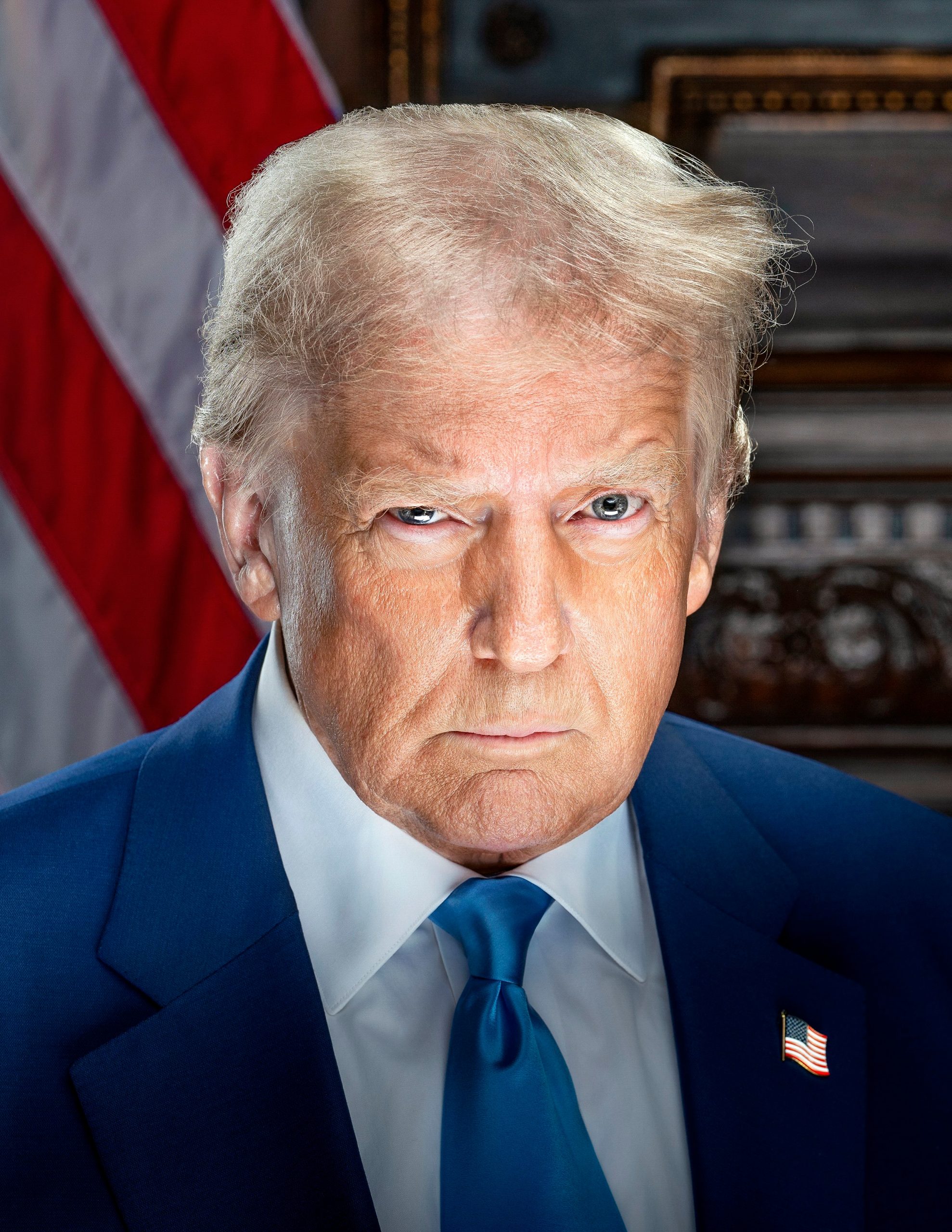
The clip showed young children at a Minnesota kindergarten graduation, many of them Muslim girls wearing hijabs under blue graduation caps. Once Trump amplified it on Truth Social, a local school celebration became national political material — and, according to The Independent, sparked safety fears in Minnesota.
A school ceremony goes national
People reported that Trump reposted the video on Monday, July 6. The footage showed kindergarteners at Gateway STEM Academy in St. Paul, a majority-Black K-8 charter school, standing on stage in caps and gowns during a graduation ceremony.
The children were smiling and singing. Many of the girls could be seen wearing hijabs beneath their graduation caps.
The video had first circulated on X in June from the right-wing account End Wokeness, according to People. The caption on that post read: “Public school in St. Paul, Minnesota. Every girl is in a hijab … in kindergarten.” Trump later reshared the post to his own Truth Social account without additional comment.
That last detail matters. A repost from a president is not a neutral act of scrolling. It takes a clip from one corner of the internet and places it before a much larger, much more politically charged audience.
Why the repost raised alarms
The Independent’s report, distributed through MSN, said the share sparked safety fears in Minnesota. The available reporting does not detail a specific confirmed threat in the extracted material, but the concern is easy to understand: these were children, not elected officials, activists or public figures.
People noted that it blurred the students’ faces in its coverage. That editorial choice points to the core issue. The children’s religious identity was visible, and the video was being used by adults to make a political point about Muslims, schools and belonging in America.
For families, the danger is not only that strangers might recognize a child. It is that the child’s image can be detached from the original moment — a graduation — and recast as evidence in a national culture-war argument.
That shift can happen almost instantly online. A song on a school stage becomes a symbol. A hijab becomes a provocation. A kindergarten class becomes a target for people who were never part of that community.
The Minnesota context matters
This did not land in a vacuum. Minnesota, and especially the Twin Cities area, is home to a large Somali and Muslim community. Public fights over immigration, religion and education there have often been pulled into national politics.
People reported that Trump previously drew criticism after remarks about Minnesota Rep. Ilhan Omar and Somali immigrants during a televised Cabinet meeting. According to that report, he referred to Somali immigrants as “garbage” and said, “I don’t want them in our country.”
That history helps explain why a repost of Muslim children in St. Paul would be seen by critics as more than a stray social media share. For Muslim Minnesotans, it can read as part of a broader pattern: a national political figure spotlighting their community in hostile or suspicious terms.
The school in the video is also not just an abstraction. Gateway STEM Academy is described by People as a majority-Black K-8 charter school. Charter schools are public schools, but they are often chosen by families looking for a particular academic environment, cultural fit or community setting. The original caption’s emphasis on “public school” appeared designed to provoke a reaction about religion and public education.
A familiar internet tactic
The post follows a now-familiar pattern in American politics: take a short video of a local moment, strip away most of the local context, add a suggestive caption, and let the audience fill in the rest.
In this case, the implied message was not subtle. The original caption singled out the girls’ hijabs and their age. It did not allege misconduct by the school. It did not claim the children were doing anything wrong. The visual itself was treated as the argument.
That is why the backlash has centered on shaming and safety. A hijab is a religious garment. For many Muslim women and girls, it is also a personal and family matter. Turning children’s clothing at a graduation into political content makes their faith the spectacle.
There is also an asymmetry here. Trump has one of the largest political megaphones in the country. Kindergarteners have none. Even if he added no words, the act of resharing placed them into a national conversation they could not consent to and could not meaningfully answer.
What has not been answered
There are still gaps in the public record. The extracted reporting does not include a detailed statement from Gateway STEM Academy, the families, local law enforcement or Trump’s team about the safety concerns. It also does not show Trump explaining why he reposted the video.
That uncertainty should make readers careful, not dismissive. It is possible to avoid overstating what has been confirmed while still recognizing the obvious stakes of exposing children to a politically hostile audience.
The most important unanswered question is not only whether a specific threat was made. It is whether national political figures should amplify images of minors from school events when the purpose is to invite outrage about their religion.
That question becomes sharper when the children belong to a minority faith community already facing suspicion, stereotyping and political attacks.
The larger takeaway
This episode is about more than one Truth Social repost. It shows how quickly local school life can be converted into national political content, especially when religion, immigration and education overlap.
For Trump’s supporters, the repost may register as a comment on cultural change or public schools. For critics, it is another example of Muslim Americans — this time children — being singled out for political gain.
Both reactions point to the same reality: online amplification changes the meaning of a moment. A kindergarten graduation that should have belonged to families and teachers became a public test of who gets treated as fully at home in America.
The cleanest takeaway is also the simplest. Children celebrating a school milestone should not have to become symbols in an adult political fight — and communities are right to worry when powerful people make them one.






Leave a Reply