
The dispute is not just about rhetoric. The Strait of Hormuz is a vital energy corridor, and its near-closure is already shaping oil prices, commercial shipping and the prospects for U.S.-Iran diplomacy.
Iran denounced Donald Trump’s proposal to make the Strait of Hormuz a U.S. territory as “delusions,” after Trump said he wanted the waterway to become American territory. Iran calls Trump’s Strait of Hormuz proposal an attempt that cannot settle the central dispute: who can control passage through one of the world’s most important oil routes.
The exchange comes as tanker traffic through the strait has fallen dramatically and U.S.-Iran peace efforts remain stalled. That makes Trump’s comment more than a provocative line: the future of the Strait of Hormuz could affect fuel costs, energy markets and the safety of commercial crews far from the battlefield.
Trump’s claim meets a sharp rebuke
According to NBC News, Trump told an audience at a police academy in Nassau County, New York, on Friday that he would soon declare the Hormuz Strait a “territory of the United States” after what he described as a U.S. victory over Iran.
Iranian Deputy Foreign Minister Kazem Gharibabadi answered in a post on X, saying the waterway could not be seized “with a tweet,” an aircraft carrier, an order or an election speech. He said Iran would continue enforcing its blockade unless Washington accepted what Tehran called the “reality of defeat.”
The two statements reflect radically different accounts of the conflict. Trump presented U.S. territorial control as a prospective outcome of military success. Iran framed the remark as disconnected from the practical reality that ships must still navigate waters where Tehran says it can determine whether passage is open.
A choke point with global reach
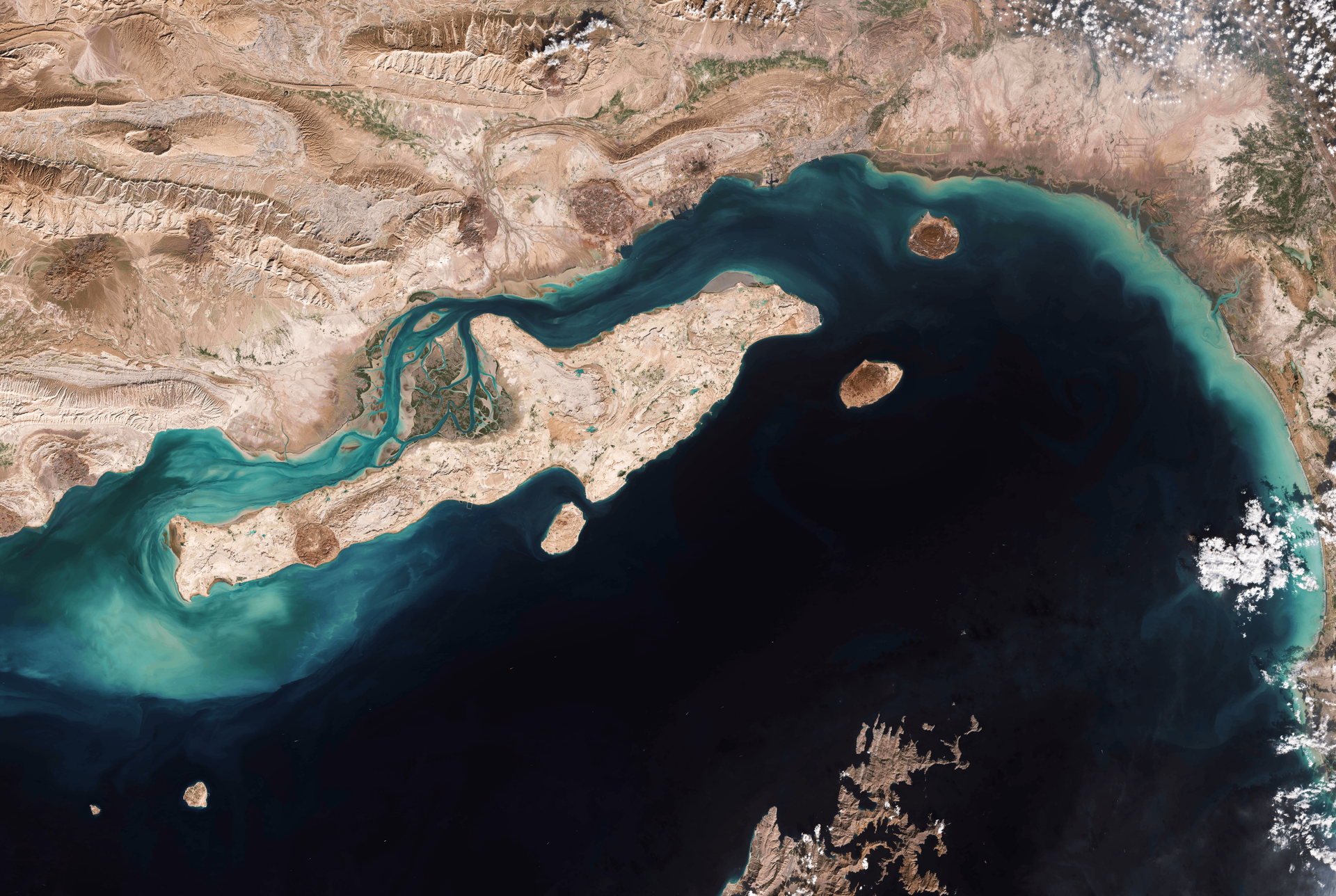
The Strait of Hormuz is a narrow waterway connecting the Persian Gulf with the Gulf of Oman and the wider Indian Ocean. Before the war, it carried roughly one-fifth of the world’s oil, according to NBC News.
That scale explains why even limited interruptions resonate well beyond Iran and the United States. Gulf oil producers depend on the route, while importers in Asia and elsewhere depend on cargoes moving through it. A shipping slowdown can feed quickly into higher freight costs, insurance costs and energy-price anxiety.
Trump acknowledged the consumer dimension in his New York remarks, asking Americans to tolerate somewhat higher gasoline prices as part of the effort against Iran. Vice President JD Vance, who has been tasked with leading negotiations, said in a Fox News interview that keeping oil and gas affordable for Americans was the administration’s top goal.
That creates an awkward tension in the U.S. position. Washington has tied the conflict to preventing Iran from obtaining a nuclear weapon, while also emphasizing that Americans should not face sustained pain at the pump.
Shipping has nearly stopped
The immediate test is not a declaration but whether commercial ships can travel safely. NBC News reported that only two vessels passed through the Strait of Hormuz on Friday, based on analysis by ship-tracking firm Kpler. In peacetime, the usual daily flow is about 130 to 140 vessels.
Some ships may cross without broadcasting their position, which makes a complete picture difficult. Still, the visible decline signals that many operators consider the route too risky or too uncertain for normal traffic.
The United Kingdom Maritime Trade Operations Centre reported that a bulk carrier was hit in the hull by an unidentified projectile in the strait on Friday. It said the crew was safe, but an assessment of damage had not been reported and the environmental effects were unknown.
Iran has continued firing on vessels attempting to transit, NBC reported, despite the U.S. blockade of Iranian ports. For shipping companies, the danger is not only a direct strike. It is also the possibility that an unclear rule, a miscalculation or an encounter between military forces can shut down a voyage with little warning.
Oil markets are calmer, not normal
Global oil and gas markets have eased from the sharp spike at the beginning of the war, but they remain above prewar levels. Reuters reported that crude futures rose by about $1 a barrel Friday and that Brent was heading for a weekly gain of 6%.
Those moves do not mean the market expects an immediate, permanent supply collapse. They do show that traders are still pricing in a meaningful risk that constrained Hormuz traffic will last or worsen.
For consumers, the effect is rarely instant or uniform. Retail gasoline prices depend on refining, regional supply, taxes and other factors as well as crude prices. But a prolonged disruption in a route that normally handles so much oil leaves governments and households exposed to further volatility.
Diplomacy is stuck at a deadline
The territorial rhetoric has arrived as negotiations appear to be going nowhere. NBC News reported that a 60-day period intended to produce an agreement was due to end Monday, with few direct talks taking place.
Iranian Foreign Minister Abbas Araghchi told Shahrara News that no negotiations were under way between Tehran and Washington. He said Qatar and Pakistan were exchanging messages with Iran as mediators, but that those contacts did not amount to negotiations and no decision had been made to restart talks with the United States.
The administration and Tehran also continue to describe the war’s purpose differently. U.S. officials have highlighted Iran’s nuclear program, while Tehran has repeatedly said it does not seek a nuclear weapon. NBC reported that the Trump team’s rationale shifted over time, from supporting anti-government protests to ending Iran’s nuclear program and toppling its hard-line government.
That gap matters because an agreement on shipping access would likely require more than a statement about the strait. It would have to address the broader conflict, security guarantees and each side’s incompatible description of what a settlement should look like.
The dispute is now about leverage
Trump’s stated wish to call the Strait of Hormuz U.S. territory does not itself change control of the waterway, shipping conditions or the military balance. Iran’s rejection does not by itself resolve the risks faced by vessels trying to cross.
What the exchange does reveal is the leverage both sides believe they hold. The United States is signaling that it sees military pressure as a route to reshaping the region’s security order. Iran is signaling that its ability to disrupt a strategic maritime passage remains central to its bargaining power.
The unanswered question is whether either side can turn those claims into a path back to shipping and talks. Until then, the Strait of Hormuz remains both a symbolic prize in the political fight and a practical pressure point for the world economy.







Leave a Reply