
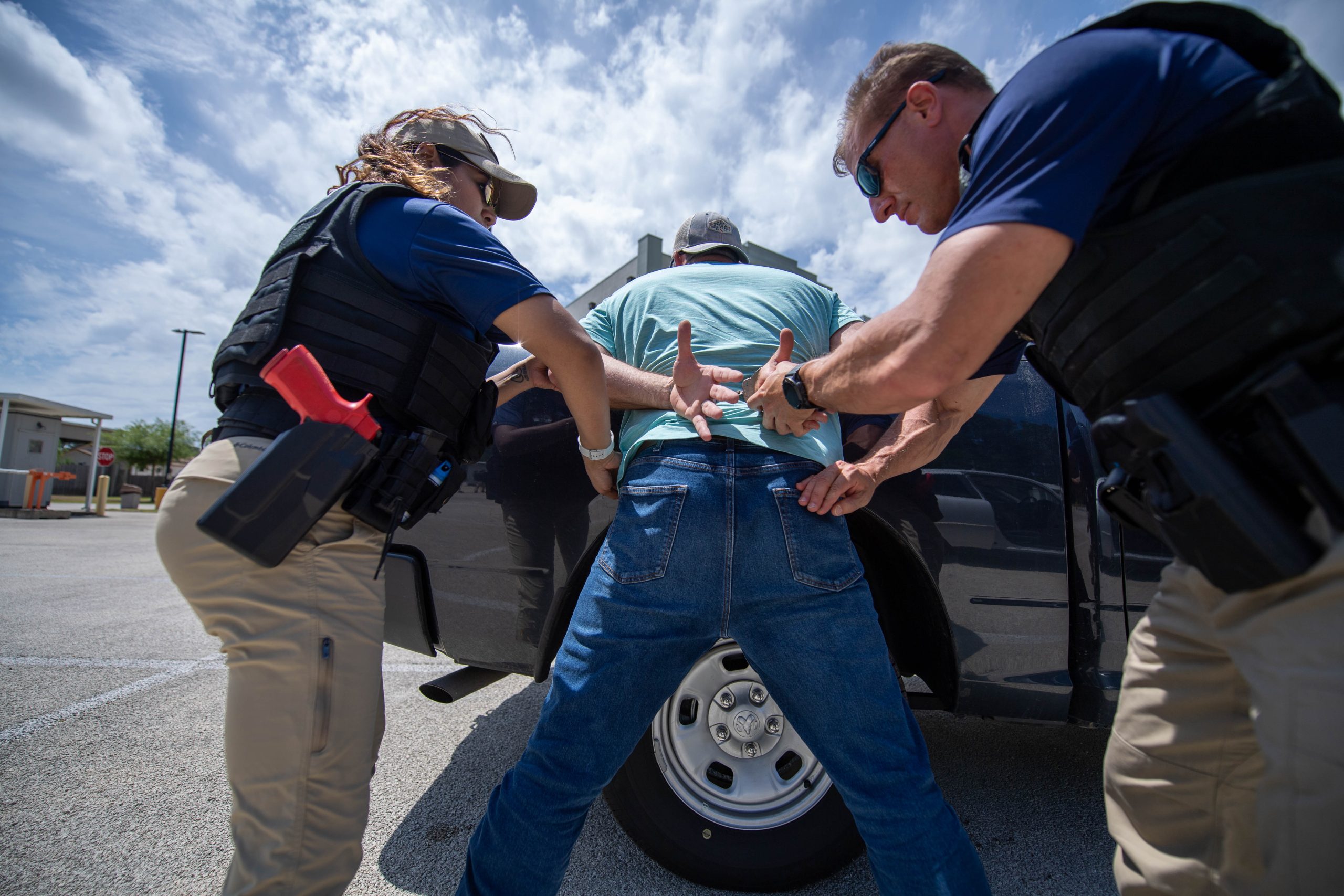
Two fatal shootings in six days have turned a once-limited enforcement tactic into a national flashpoint. The fight now is over whether ICE can use traffic stops safely as deportation pressure rises.
ICE is relying more on vehicle stops for immigration enforcement, and former officials say the tactic is dangerous as traffic stops are under scrutiny after two fatal shootings by federal officers in six days. The Trump administration’s push for more deportations has made a high-risk policing tactic central to a growing fight over safety, training and accountability.
Agency leaders briefly moved to pause most traffic stops after the shootings, according to USA TODAY, but President Donald Trump quickly rejected that retreat. The result is a volatile question: how far should immigration agents go when the target is behind the wheel?
A tactic built for police work
Traffic stops may look routine from the outside. In law enforcement, they are anything but.

Officers are approaching a confined space, often with limited visibility, uncertain information and a driver who may panic, flee or misunderstand commands. Even local police departments that make stops every day train heavily for positioning, communication, pursuit decisions and when not to escalate.
That is why the current shift inside immigration enforcement is drawing concern from former ICE leaders and policing experts. ICE agents are federal immigration officers, not traditional patrol officers. Their core work has historically involved investigations, warrants, jail transfers and planned arrests, not improvised roadside encounters.
David Harris, a University of Pittsburgh law professor who studies police procedure, told USA TODAY that traffic stops require “real in-depth scenario-based training” to do safely. His concern was blunt: it does not appear ICE agents are getting enough of it.
Why ICE is using stops
The pressure point is the Trump administration’s deportation agenda. The administration has promised the largest deportation campaign in U.S. history, and that goal changes the operational math for ICE.
Former officials told USA TODAY that traffic stops were never a main ICE tool. Community arrests were usually planned in advance, often at homes or workplaces, after agents studied where a person was likely to be and how to make the arrest with the least risk.
John Sandweg, who served as acting ICE director under former President Barack Obama, said traffic stops happened but were not central to operations. His explanation was simple: ICE often did not need them.
That appears to be changing. As illegal border crossings have fallen, more federal immigration personnel have been available for interior enforcement. ICE officers, Border Patrol agents and other Department of Homeland Security personnel have increasingly moved into street operations, including vehicle stops, to find and arrest undocumented immigrants.
The shootings sharpened scrutiny
The immediate flashpoint came from two deadly encounters, six days apart.
On July 13, an ICE officer shot and killed a Colombian man in a residential area of Biddeford, Maine, according to the Department of Homeland Security account cited by USA TODAY. DHS said the man attempted to flee and that the agent opened fire while fearing for public safety.
Six days earlier, an ICE officer fatally shot a Mexican national during a stop in Houston, Texas. Federal officials said the man tried to ram agents with his car. Witnesses disputed that account, USA TODAY reported.
The disagreement matters because vehicle encounters often turn on seconds of perception: whether a car is being used as a weapon, whether an officer is in danger, whether a driver is fleeing or whether agents created a risky setup. Those facts can be difficult to resolve, especially when government statements, witness accounts and body-camera or surveillance footage do not line up publicly.
The data raises harder questions
The two recent killings are not being viewed in isolation. USA TODAY reported that immigration agents have shot more than 20 people since the start of last year, based on an analysis of official statements, lawsuits and court records. Most of those people were inside a vehicle at the time of the incident.
That pattern is why experts are focusing on tactics, not just individual shootings. When repeated incidents occur around the same type of encounter, the question becomes whether the agency’s approach is producing preventable danger.
Vehicle stops can escalate quickly if agents box in a car, approach from vulnerable angles or try to prevent a driver from leaving without clear control of the scene. In immigration enforcement, there is another complication: the person being stopped may fear detention, deportation or family separation, raising the chances of panic.
Supporters of aggressive enforcement see the risk differently. They argue that agents are pursuing people who may flee and that removing traffic stops would eliminate a useful tool. Critics counter that “useful” is not the same as safe, especially if agents are using the tactic more often against people who have no serious criminal record.
Former officials favor planned arrests
The split between planned arrests and roadside stops is central to the debate.
Deborah Fleischaker, a former ICE official who served during the Biden administration and Trump’s first term, described past community operations as highly prepared. Agents would study a target’s routines, know where the arrest would happen and choose a location intended to reduce danger for officers and the person being arrested.
That kind of planning does not eliminate risk, but it gives agents more control. A vehicle stop does the opposite. It introduces movement, traffic, passengers, bystanders and a vehicle that can become either an escape route or a perceived threat.
Former officials are not saying ICE never used vehicle stops. Their argument is that making them more common changes the agency’s risk profile. It pushes immigration enforcement closer to street policing while the public has limited visibility into whether training, supervision and rules of engagement have kept pace.
The pause that did not last
After the killings, ICE and DHS leaders ordered agents to suspend most traffic stops and prioritize other tactics, USA TODAY reported. White House border czar Tom Homan described the move in a Fox News interview as a short-term review meant to ensure agents were safe and doing the right thing.
Homan also argued that ICE could still arrest people in other ways, such as at homes or before they got into vehicles. That position suggested the pause was not necessarily a retreat from enforcement, but a reassessment of one tactic.
Trump saw it differently. In a social media post, he called the traffic stop one of ICE’s most important and effective crime-fighting tools and rejected the suspension. The White House then confirmed the directive had been overturned, according to USA TODAY.
Homeland Security Secretary Markwayne Mullin defended the broader enforcement posture in a statement to USA TODAY, saying the department’s top goal was keeping officers safe and getting criminals off the streets. He said undocumented immigrants would be arrested and deported wherever they are.
What remains unanswered
The public fight is now ahead of the evidence. The administration says traffic stops are an effective enforcement tool. Former ICE officials and policing experts say the tactic is dangerous and should be limited, reviewed or better controlled. Both claims require more transparency than the public currently has.
Key questions remain unresolved: how often ICE is conducting vehicle stops, how agents are trained for them, whether stops are being used for people with no criminal records, how many encounters involve use of force and what internal reviews happen after shootings.
There is also the question of whether immigration enforcement is being reshaped by numerical pressure. If the administration’s deportation goals require more street encounters, then tactics once considered secondary may become everyday tools. That could put agents, drivers and bystanders into more unpredictable confrontations.
The cleanest takeaway is also the hardest one politically: traffic stops are not just another checkbox in an enforcement plan. They are among the riskiest moments in policing. If ICE is going to rely on them more, the agency will face growing demands to show that its training, rules and public accounting match the danger of the tactic.







Leave a Reply