

The amendment did not pass, but the size of the Democratic defection is the story. It shows how sharply the politics of Israel, Gaza and U.S. military aid have shifted inside the party.
More than 100 House Democrats voted to block billions of dollars in military aid to Israel. The U.S. House of Representatives considered an amendment to cut off aid to Israel on Wednesday in Washington, and the effort failed, with tallies reported at 104-314 and 104-313 on a proposal targeting $3.3 billion.
The vote reflected a growing split within the Democratic Party over Israel as lawmakers face pressure over the war in Gaza, U.S. national security priorities and a midterm-year fight over what support for an ally should look like.
The amendment failed, loudly
The amendment did not come close to passing. The proposal would have stripped $3.3 billion in foreign military aid for Israel from a broader national security spending bill, according to AP reporting on the vote.
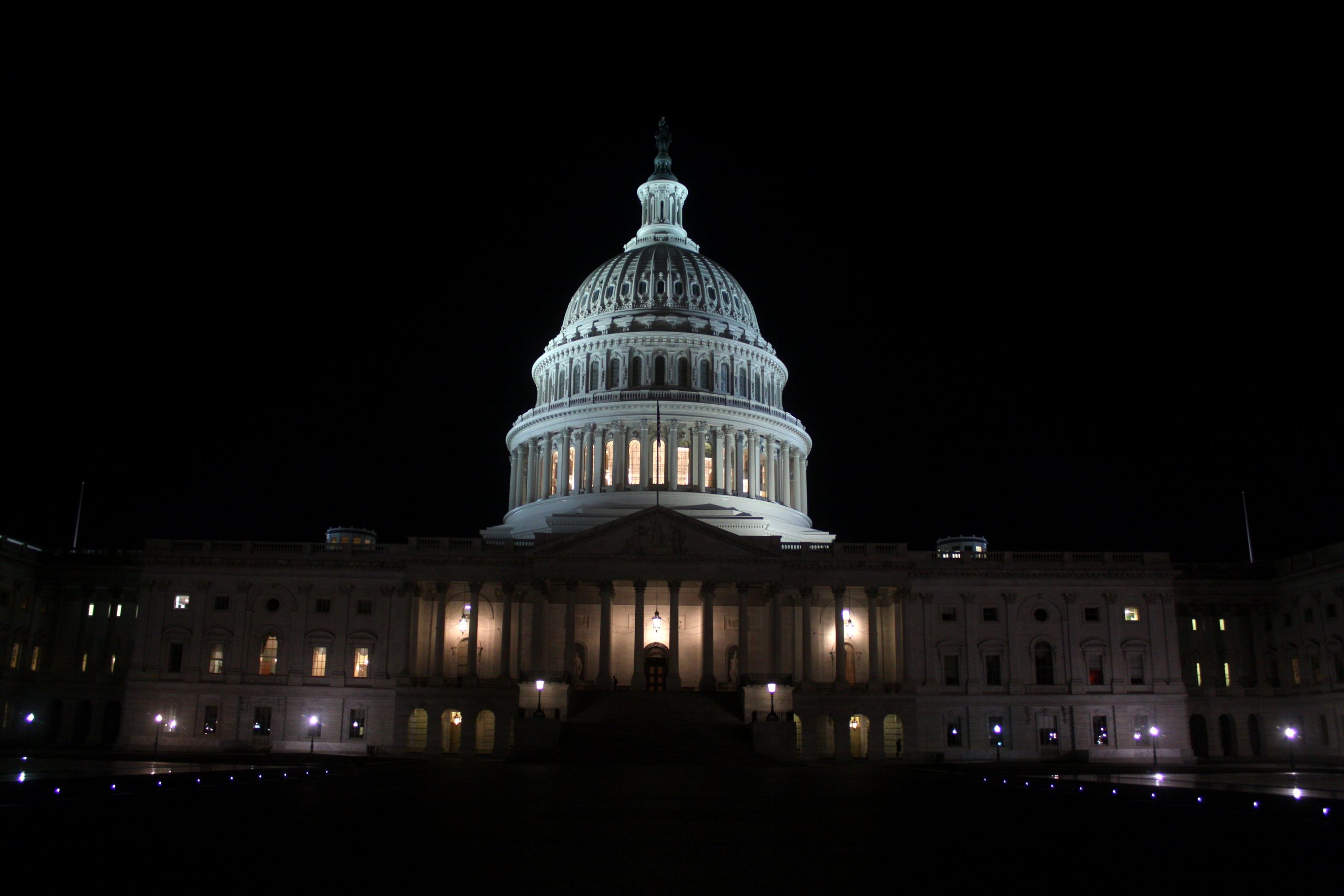
Reuters reported that the House defeated the bid on Wednesday despite substantial Democratic support. AP listed the final tally as 104-314, while other coverage cited 104-313, a one-vote difference that does not change the larger result: the aid remained intact.
That outcome was expected. Most Republicans voted to preserve the Israel money, and enough Democrats opposed the cut to keep the amendment from gaining traction.
Still, the floor vote forced lawmakers to move beyond statements and letters. It created a public record of where members stood on one of the most divisive foreign policy questions now facing Congress.
Why 104 votes matter
The significance is not that the amendment lost. It is that more than 100 Democrats were willing to vote for it.
AP described the vote as the most substantial signal yet that once solid bipartisan support for Israel is weakening after years of war in Gaza. Reuters similarly framed the vote as one that exposed a Democratic divide over U.S. support for Israel.
For decades, large bipartisan majorities in Congress treated military assistance to Israel as a political constant. The Wednesday vote suggests that support remains powerful, but no longer feels automatic inside the Democratic caucus.
The divide is especially sharp because it is not only ideological. It runs through leadership, through safe blue districts, through competitive seats and through a party trying to hold together younger progressive voters, Jewish voters, Arab and Muslim voters, national security hawks and antiwar activists.
Democratic leaders split in public
House Democratic Leader Hakeem Jeffries opposed the measure to zero out the aid, but he did not defend the status quo without criticism. AP reported that Jeffries told colleagues that American policy in the Middle East must change “for the good of Israel and the Palestinian people.”
Jeffries argued there were “more decisive ways” to push for urgent change regarding Israeli Prime Minister Benjamin Netanyahu’s government. That position reflects the lane many Democratic leaders are trying to hold: critical of Netanyahu’s conduct of the war, but unwilling to back a full cutoff of military assistance.
Other senior Democrats landed elsewhere. Democratic Whip Katherine Clark of Massachusetts supported withholding the funds, according to AP. Former House Democratic leader Steny Hoyer opposed the amendment and argued it would undermine U.S. national security.
That split matters because leadership votes are signals to the rest of the caucus. When top Democrats divide on a question this central, rank-and-file members have more room to break with party tradition.
The arguments were stark
The amendment was offered by Rep. Thomas Massie, a libertarian-leaning Kentucky Republican known for opposing foreign spending. During debate, Massie argued the money could be better used at home for roads, bridges and veterans’ needs, especially as deficits rise.
Massie also said American weapons were being used on “oftentimes innocent civilians” and argued the U.S. should stop sending the aid. His pitch combined anti-interventionist conservative arguments with concerns that many progressive Democrats have raised about civilian suffering in Gaza.
Opponents framed the cutoff as dangerous and destabilizing. Hoyer said withdrawing the aid would limit the United States’ ability to confront groups such as Hamas and Hezbollah, which he said target American citizens and military personnel.
The emotional and political backdrop is Gaza. Israel’s military campaign followed the Oct. 7, 2023, Hamas attack on Israel. Since then, the war has killed thousands of Palestinians, and the humanitarian crisis has reshaped Democratic politics. An AP-NORC poll cited by AP found about one-third of U.S. adults, including roughly half of Democrats, believe Israel has committed genocide against Palestinians, an accusation Israel and the U.S. government deny.
Midterms raise the pressure
The vote came as lawmakers prepare for midterm elections, when primaries can punish incumbents long before the general election. For Democrats in deep-blue districts, the pressure may come from the left. For Democrats in swing districts, it may come from both pro-Israel groups and voters angered by the war.
Progressive candidates and self-described democratic socialists have already made Israel policy a sharper dividing line in some high-profile races, including in New York. That has rattled more traditional Democrats who worry the party could fracture over foreign policy at the same time it is trying to campaign on the economy, democracy and opposition to Republicans.
Republicans, meanwhile, see an opening. They have repeatedly used Democratic disagreement over Israel to portray the party as controlled by its left flank.
Yet the GOP has its own foreign aid tensions. House Speaker Mike Johnson has had to manage America First Republicans skeptical of overseas military spending, even when the recipient is a longtime U.S. ally. That means the Israel aid fight is not only a Democratic story, even if the Democratic rupture is the clearest one right now.
What the vote changes
In immediate policy terms, not much changed. The amendment failed, and the $3.3 billion in aid was not stripped from the spending bill.
Politically, the vote changed the conversation. Supporters of Israel aid can point to the overwhelming House defeat and say Congress still backs the alliance. Critics can point to the 100-plus Democratic votes and say the old consensus is cracking.
The unanswered question is whether this becomes a one-time protest vote or the start of a new baseline. Future fights may not focus on a total cutoff. They could center on conditions, weapons transfers, reporting requirements, humanitarian aid or limits tied to Netanyahu’s military strategy.
That is why the failed amendment matters. It did not end U.S. military aid to Israel, but it showed that a large bloc of House Democrats is now willing to vote against it in public. For Washington, that is a warning sign. For the Democratic Party, it is a map of a divide that is no longer possible to hide.










Leave a Reply