
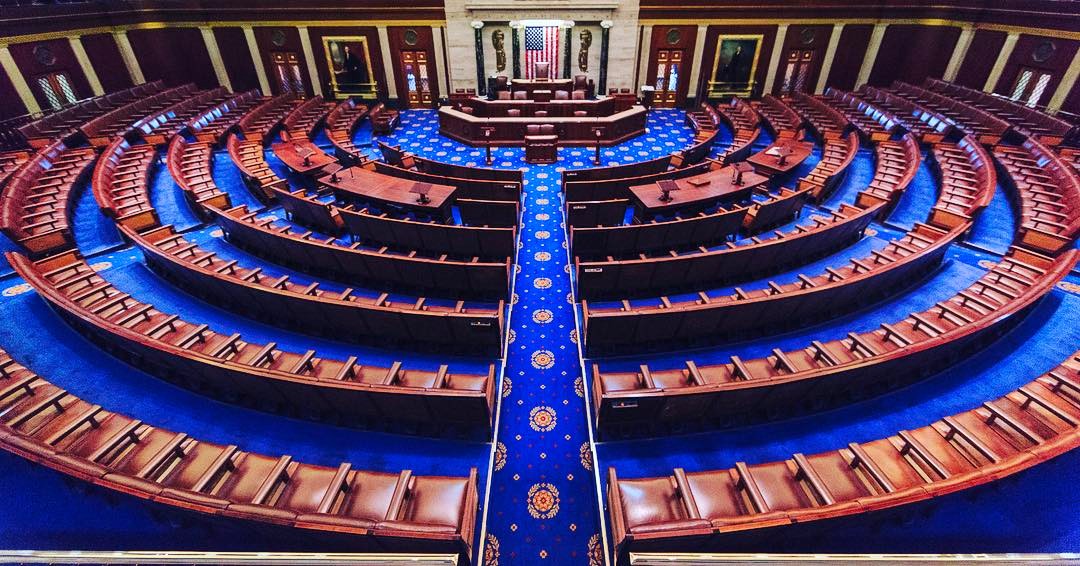
The measure is unlikely to settle the fight by itself, but the narrow vote shows Congress is no longer treating the Iran conflict as a president-only decision.
The House voted to restrict President Donald Trump’s war powers over Iran, passing a war powers resolution 215-208 in the United States after Democrats and four Republicans defied Republican leadership. The vote was a rebuke of Trump over the conflict and the House’s fourth attempt to rein in Trump’s Iran war powers. The resolution would require Trump to withdraw U.S. forces or seek congressional authorization, and this article explains what it does and why it matters.
The measure does not instantly end the confrontation with Iran. But it puts a formal House marker against the White House, exposes a Republican split, and revives a long-running argument over who gets to keep America at war.
A narrow vote, a loud signal
The 215-208 vote was close enough to show the limits of the rebellion, but clear enough to embarrass the administration. According to AP, the House approved the resolution as a handful of Republicans joined Democrats in an effort to halt U.S. military action against Iran.

That crossover mattered. Republican leaders had worked to avoid a vote that would demonstrate mounting opposition to the conflict. AP reported that House Speaker Mike Johnson had abruptly shut down floor action two weeks earlier when the resolution appeared close to passing.
This time, the opposition held. The BBC reported that four Republicans — Thomas Massie, Brian Fitzpatrick, Tom Barrett and Warren Davidson — joined Democrats. Democrat Jared Golden of Maine, who had previously opposed similar measures, supported this one.
The vote also showed how war powers debates can scramble party loyalty. Trump still commands deep support inside the GOP, but some Republicans are drawing a line at military action that lacks explicit congressional approval.
What the resolution would require
The war powers resolution is aimed at forcing a choice: either withdraw U.S. forces from the Iran conflict or obtain authorization from Congress. In practical terms, it is an attempt to reassert Congress’s constitutional role over war.
Critics of the administration argue that Trump has already exceeded the War Powers Resolution, the federal law that generally bars presidents from keeping U.S. troops in hostilities for more than 60 days without congressional approval. The BBC reported that Trump has passed that 60-day threshold.
The administration’s answer is direct: it argues that the restriction is unconstitutional. That position reflects a familiar executive-branch view that presidents need broad authority as commander in chief, especially during fast-moving military crises.
That is why the vote is about more than Iran. If Congress cannot force a president to seek approval after weeks of military action, critics argue, the constitutional power to declare war becomes more symbolic than real.
Why Republicans crossed over
Rep. Tom Barrett of Michigan, one of the Republicans who voted for the measure, framed his decision around Congress’s institutional duty. “Congress alone declares war, that’s something certainly we need to be protective of,” Barrett said, according to the BBC.
Asked whether he feared retaliation from Trump, Barrett said he was voting his conscience and was willing to accept the consequences. That matters in a party where crossing Trump can carry political risk.
The Republican defectors did not turn the vote into a broad GOP revolt. Most Republicans stayed with Trump and party leadership. But four defections were enough to pass the resolution with a united Democratic front.
That makes the vote a warning sign for the White House. A war that begins as a test of national security strategy can become a test of party discipline when costs rise and the public mood shifts.
Trump’s side disputes Congress
Trump has treated the vote as a political attack as well as a constitutional challenge. The BBC described him as hitting back at what he called an “unpatriotic” vote after the House rebuked him over Iran.
Supporters of the president are likely to argue that Congress should not undercut a commander in chief during an active conflict. That view has long had support in both parties when their own president is in office.
But the counterargument is equally old: the framers gave Congress the power to declare war precisely to prevent one person from taking the country into extended military conflict alone.
The fight is especially sharp because the measure is widely seen as largely symbolic unless it advances further. The Senate advanced a similar resolution in May, according to the BBC, but had not held a full floor vote at the time of that report.
Public pressure is rising
The House vote comes against a backdrop of growing public unease. The BBC cited a New York Times/Siena poll from May showing that 64% of registered voters believed Trump was wrong to go to war with Iran, while 34% said he made the right call.
The partisan split was stark. The poll found that 93% of Democrats believed Trump was wrong, while 70% of Republicans believed he was correct. Independents were closer to Democrats on the core question: 73% opposed the war, according to the poll cited by the BBC.
Those numbers help explain why a symbolic House vote can still matter. Congress responds not only to legal arguments but also to political weather. When independents turn heavily against a war, lawmakers in competitive districts pay attention.
The BBC also reported that gasoline prices have spiked as the conflict has continued. Rising prices do not decide a war powers question, but they can make a distant conflict feel immediate to voters at home.
What remains unresolved
The most immediate question is whether the Senate will take up the issue fully. Without Senate action, the House vote remains a major political statement rather than a completed congressional directive.
Another unresolved issue is whether the White House will change course. AP reported that Trump has struggled to negotiate a plan for peace as the conflict drags on. The House vote adds pressure, but it does not guarantee a diplomatic breakthrough.
The legal fight is also unfinished. If the administration continues to reject Congress’s limits as unconstitutional, the dispute could keep moving through political channels rather than producing a clean legal answer.
For now, the takeaway is clear: the House has put Trump on notice over Iran. The vote does not end the conflict, but it shows that the war powers fight has moved from theory to a live confrontation between Congress and the presidency.





Leave a Reply