
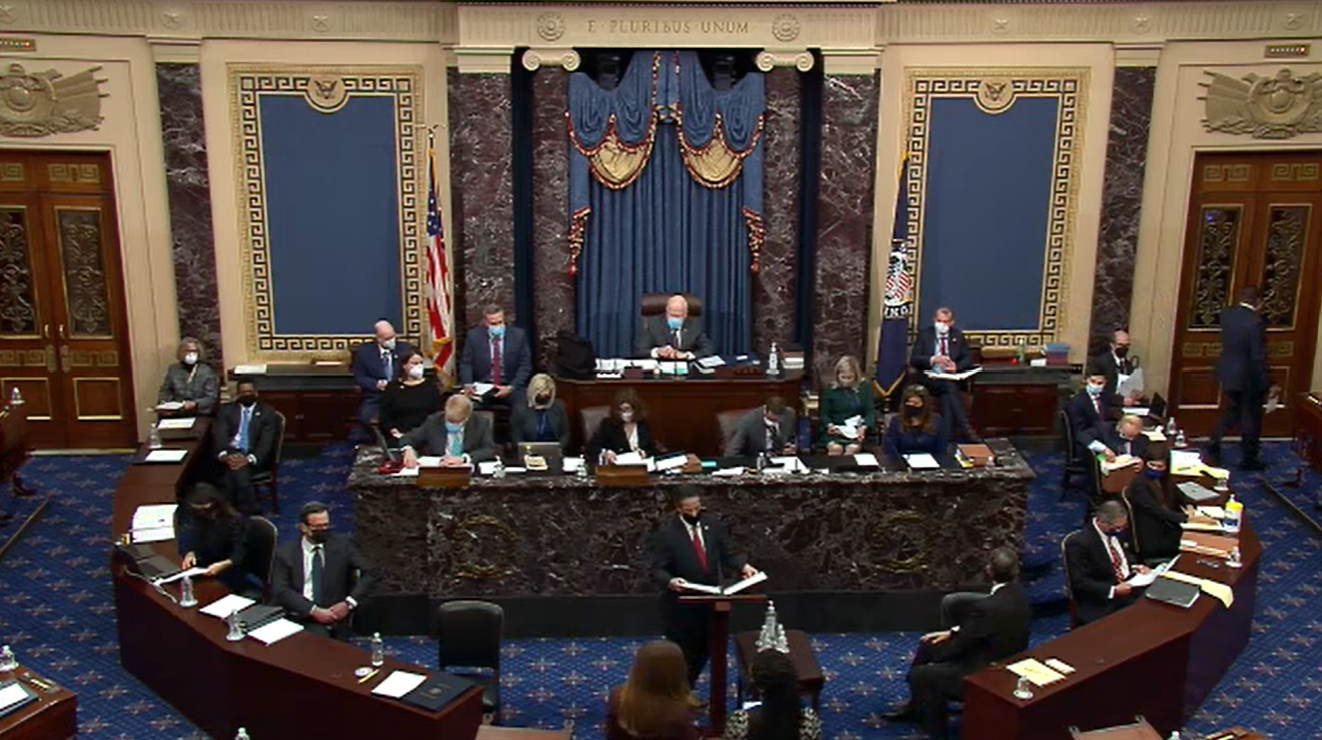
The fight is less about one bill than about who controls the Senate when power flips. Some Republicans see Trump’s demand as a short-term win with a long-term price.
Republicans are criticizing Donald Trump over what Republicans say is Trump’s “guaranteed death” problem for the GOP agenda: Trump is pushing to end the filibuster, and some Republican senators are opposing his plan. The immediate fight is over whether Senate Republicans should weaken the 60-vote rule to move priorities such as his SAVE Act.
The backlash matters now because this is not a symbolic Senate disagreement. If Trump gets his way, Republicans could pass more with a simple majority today — while making it easier for Democrats to undo or replace their agenda later.
The revolt is about Senate math
The filibuster is the Senate rule that usually requires 60 votes to advance most legislation. Ending or weakening it for bills would let the majority move major legislation with 51 votes, assuming the vice president can break a tie when needed.

Trump has urged Republicans to “nuke” the filibuster, a phrase used for changing Senate precedent by majority vote rather than going through the harder process of formally rewriting the rules. His argument is straightforward: Republicans have an agenda, and the filibuster is blocking it.
But a bloc of Republican senators is making clear that the votes are not there. Roll Call reporter Savannah Behrmann described a group of GOP senators openly defending the filibuster despite pressure from the party’s president.
That matters because Senate leaders do not just need a talking point. They need 51 Republicans willing to take the same procedural gamble, and several senators are either publicly opposed or privately resistant.
Curtis gave the warning teeth
Sen. John Curtis of Utah put the argument in stark terms in a Wall Street Journal opinion piece, writing that he would not support any effort to end or alter the filibuster.
His warning was aimed directly at the long game. Curtis wrote that any party that does so “wouldn’t be guaranteed survival” and that its agenda would face “guaranteed death” when the next majority takes power.
That is the line now driving the political fight. The “death” Republicans are talking about is not physical danger; it is the risk that a future Democratic majority could use the same lowered threshold to reverse conservative laws, pass voting legislation, expand social programs or move other priorities Republicans strongly oppose.
Sen. Lisa Murkowski of Alaska has been just as direct in tone. According to the reporting cited by AlterNet, she joked that she might make herself a T-shirt reading, “No, I’m not interested in blowing up the filibuster.”
Why Trump wants it gone
Trump’s frustration is easy to understand from a governing perspective. A president can win an election, bring congressional majorities with him and still watch the Senate’s 60-vote threshold stall core campaign promises.
One of the measures in the fight is the SAVE Act, which Trump and allies have pushed as part of a broader election agenda. The bill would impose wide-ranging changes on elections across the country, including voter ID-related requirements, according to the source material.
For Trump-aligned Republicans, keeping the filibuster can look like letting the minority party veto the majority’s mandate. If Republicans control Washington, they argue, they should be able to pass the program voters chose.
The opposing Republican view is less emotional but more institutional: majorities change. A rule that blocks Republicans today may protect them tomorrow. That is why this fight is not simply Trump versus Democrats. It is Trump versus Senate Republicans who believe the chamber’s slow machinery is a form of insurance.
The boomerang is the point
The filibuster’s defenders are not claiming the rule is painless. They are arguing that the pain is mutual, and that mutual pain keeps both parties from swinging policy too wildly every time voters reshuffle power.
That argument has obvious limits. Critics of the filibuster say it gives a minority too much power, makes elections less meaningful and allows senators to avoid accountability. Democrats have made that case on issues such as voting rights, abortion access and gun legislation. Trump is now making a version of it for Republican priorities.
But Republicans who want to preserve the rule are focused on the boomerang. If the GOP lowers the threshold to pass conservative election legislation, Democrats could later use that same opening for bills Republicans would have no ability to block with 41 senators.
That is why Curtis’ phrase landed. The warning is not that Trump cannot win a vote this week. It is that winning by destroying the 60-vote standard could make the next loss far more damaging.
The filibuster has already shrunk
The Senate has not treated the filibuster as untouchable. Both parties have carved out major exceptions when it suited them.
In 2013, Democrats under then-Majority Leader Harry Reid ended the 60-vote threshold for most presidential nominees. In 2017, Republicans under then-Majority Leader Mitch McConnell extended that approach to Supreme Court nominees.
Those changes reshaped confirmations and helped both parties fill the courts with simple-majority votes. But the legislative filibuster — the rule covering most bills — has remained intact.
That distinction is central to the current standoff. Senators can defend the legislative filibuster while acknowledging their parties already weakened other parts of Senate procedure. The question is whether legislation is the final wall they are unwilling to knock down.
Thune’s narrow path
For Senate Majority Leader John Thune, the issue is not just philosophy. It is vote-counting.
According to Behrmann’s Roll Call reporting, Thune has long faced the same basic problem: there has not been enough support in the Republican conference to establish a new precedent lowering the 60-vote hurdle for legislation to a simple majority.
Sen. Kevin Cramer of North Dakota told Politico this summer that more Republicans oppose the nuclear option than are willing to say so publicly. His complaint was that silence makes the opposition look smaller than it is — “only four or five of us,” as he put it, rather than a much larger group.
Thune has also pushed back on Trump’s insistence that the votes exist. Of Trump’s claim, Thune said Wednesday, “That must be a different form of math.”
What the standoff signals
The filibuster fight is a revealing test of Republican power in the Trump era. Trump remains the dominant figure in the party, but the Senate is still full of members who think procedurally, not just politically.
That creates a rare split where the Republican resistance is not centered on Trump’s policy goal alone. Some senators may support tougher election rules and still oppose the tactic needed to pass them with a bare majority.
The practical takeaway is that Trump’s demand faces a serious internal obstacle. Unless enough Republican holdouts change their minds, the filibuster survives and the SAVE Act or similar legislation still has to clear the higher Senate bar.
The unanswered question is how long that resistance holds. Pressure from a president can change incentives, especially for senators worried about primaries or conservative backlash. For now, though, the loudest warning is coming from inside Trump’s own party: short-term power may come with a cost Republicans cannot control once they lose it.








Leave a Reply