
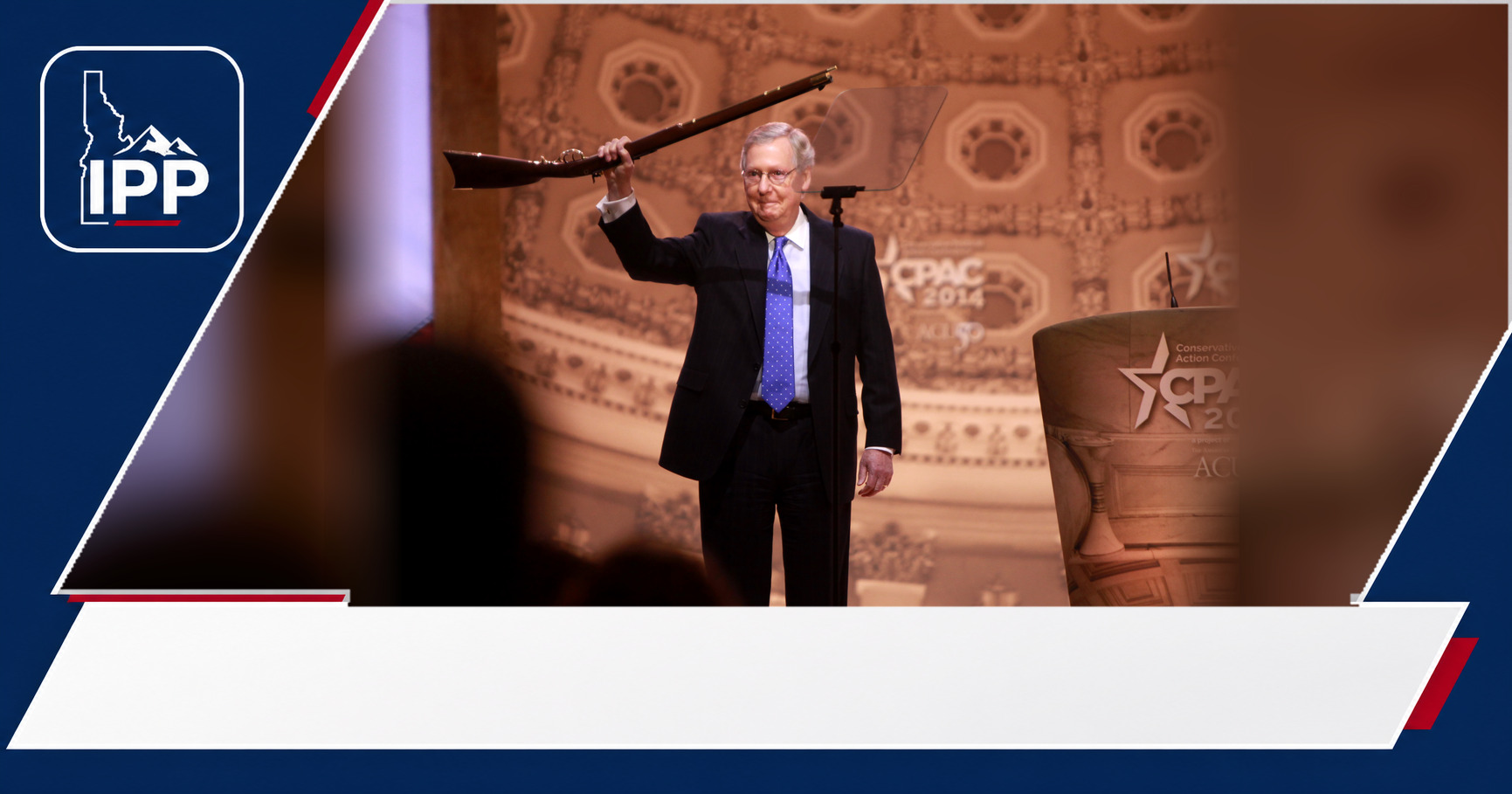
The attack matters because it uses McConnell’s own political origin story against him. It also shows why charges of hypocrisy follow senators who build careers around hardball rules and institutional power.
A Fox News analyst criticizes Mitch McConnell in a new Alternet item distributed through MSN, and the claim involves a 40-year-old example of hypocrisy from McConnell’s first successful Senate race. The analyst’s point is blunt: the Kentucky Republican once used an anti-incumbent argument against a longtime senator, then became one of Washington’s most enduring power brokers himself.
The old example matters now because McConnell’s career is no longer just a partisan story. It is a test case in how politicians weaponize age, attendance, tenure and “Washington insider” labels until those same attacks become available to their opponents.
The 1984 attack boomerang
The hypocrisy claim points back to 1984, when McConnell defeated Democratic Sen. Walter “Dee” Huddleston of Kentucky. McConnell’s campaign became famous for a sharp ad featuring bloodhounds searching for Huddleston under the line “Where’s Dee?”

The message was simple and effective: Huddleston, the incumbent, was portrayed as absent, comfortable and insufficiently focused on Senate work. It was an anti-establishment pitch from a challenger trying to convince Kentucky voters that Washington had changed the senator more than the senator had changed Washington.
Four decades later, that same frame is being turned back on McConnell. Congress.gov lists McConnell as Kentucky’s senator from 1985 through the present, making the 1984 campaign not just an origin story but a measuring stick.
The analyst’s criticism lands because it is not about one old ad alone. It is about the larger irony of a politician who rose by making incumbency look suspect, then built one of the longest and most consequential Senate careers of the modern era.
Why the Fox label matters
The phrase “Fox News analyst” gives the critique an extra charge. McConnell has spent much of his career as a central Republican figure, and criticism from anyone associated with Fox lands differently than an attack from a Democratic campaign account or a progressive advocacy group.
That does not mean Fox News as an institution adopted the criticism. Analysts and contributors often speak for themselves, and their ideological lanes vary widely.
Still, the label matters in the attention economy. A jab tied to Fox can travel further with conservative or politically mixed audiences than the same point framed only as a left-wing complaint.
It also reflects a broader shift around McConnell. He is still respected by many Republicans for reshaping the federal courts and mastering Senate procedure, but he is no longer universally treated as the party’s indispensable strategist.
McConnell’s long Senate shadow
McConnell’s defenders can make a serious counterargument: voters in Kentucky repeatedly sent him back to Washington. Longevity in the Senate is not, by itself, a scandal. The chamber is built around seniority, committee knowledge and procedural experience.
That is why the 1984 comparison is more complicated than a one-line dunk. McConnell’s old attack was aimed at attendance and priorities, not simply the idea that a senator had served too long.
But politics rarely preserves those distinctions cleanly. Once a campaign teaches voters to see a sitting senator as stale, absent or too comfortable in power, that language can be reused decades later against the person who introduced it.
McConnell’s career makes the reversal especially vivid. He did not merely serve a long time; he became one of the Senate’s defining tacticians, a party leader whose decisions shaped Supreme Court nominations, judicial confirmations, campaign finance battles and the Republican Party’s relationship with executive power.
The hypocrisy charge has history
McConnell has faced hypocrisy accusations before, especially over Senate norms. The most famous example remains the fight over Supreme Court vacancies: Republicans blocked President Barack Obama’s nominee Merrick Garland in 2016 during an election year, then moved quickly to confirm Amy Coney Barrett for President Donald Trump shortly before the 2020 election.
Supporters argued the situations were different because the White House and Senate were controlled by different parties in 2016 but the same party in 2020. Critics saw a rule invented for one moment and discarded when power changed hands.
The 1984 example works in a similar way because it turns on standards. When is longevity a sign of expertise, and when is it proof that someone has become the insider they once ran against?
That question is bigger than McConnell. It follows both parties, especially in a Congress where many senior lawmakers have served for decades while public trust in institutions has remained low.
What critics are really saying
The attack is not just that McConnell changed. Most politicians do. The sharper claim is that he benefited from one set of arguments as a challenger and another set as an incumbent power center.
In 1984, the outsider pitch helped make Huddleston’s seniority look like complacency. In later decades, McConnell’s own seniority became part of his pitch: he could deliver influence, protect conservative priorities and play the long game better than almost anyone else in the Senate.
That tension is why the old campaign material still has power. It gives critics a clean visual and historical hook for an argument that otherwise sounds abstract.
It also raises a fair caution. A 40-year-old campaign line should not be treated as the whole story of a career. But it can expose the political bargain McConnell made: attack Washington to get there, then master Washington to stay there.
The unanswered piece now
What remains unclear is how much this kind of criticism changes anyone’s view of McConnell. His supporters are unlikely to abandon him over an old campaign contrast. His detractors already see his career as a monument to procedural hardball.
The more interesting audience is the middle: voters and political observers who are tired of leaders using standards selectively. For them, the 1984 boomerang is easy to understand because it does not require deep Senate procedural knowledge.
It says a politician once mocked the costs of incumbency, then came to embody the benefits of it. That is why the Fox News analyst’s criticism is resonating beyond a typical partisan swipe.
The takeaway is not that long service is automatically hypocrisy. It is that a political attack can outlive the campaign that created it — and sometimes, after 40 years, it comes back with the candidate’s own name attached.











Leave a Reply