
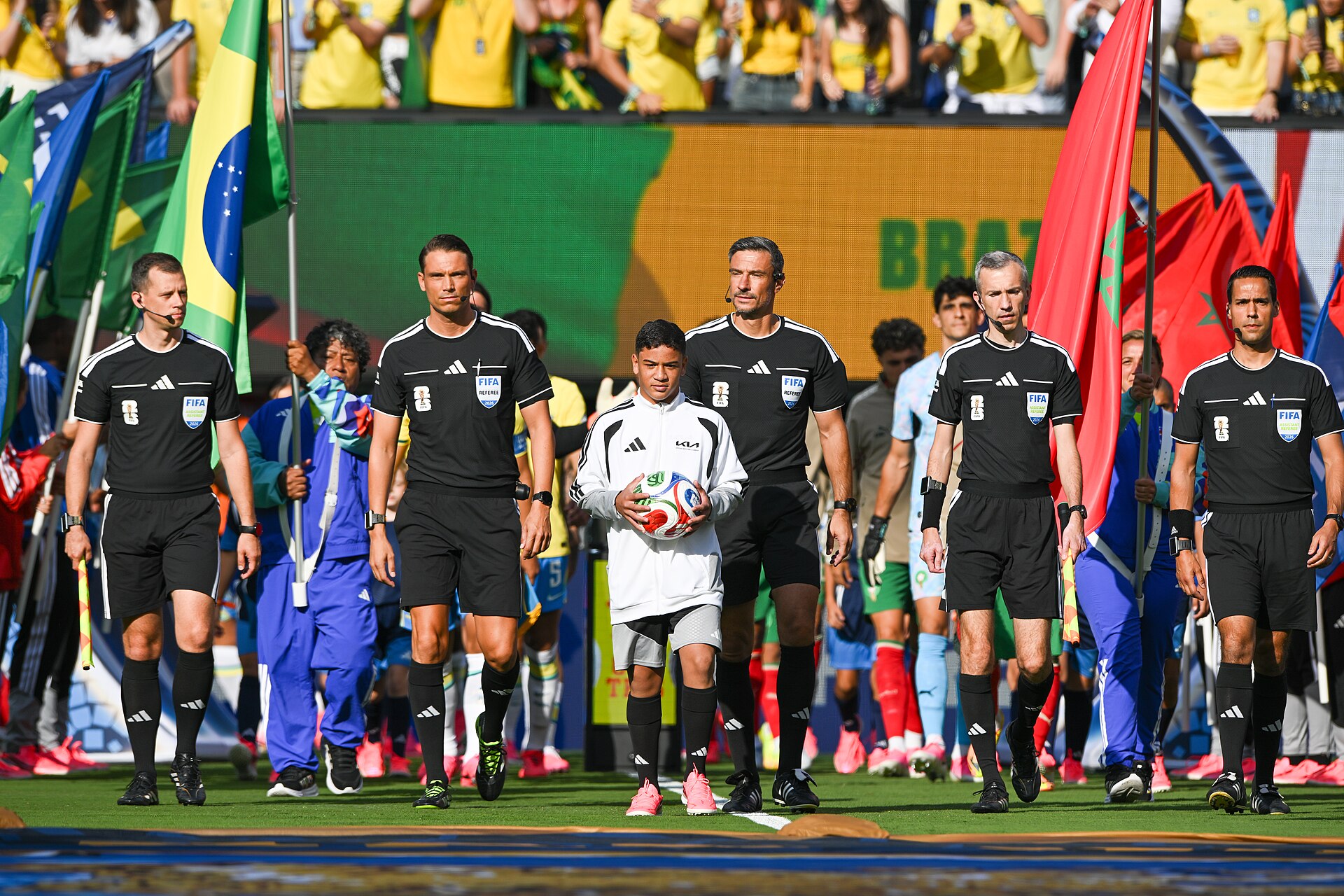
DFB officials see another World Cup as both a sporting prize and a national showcase. The harder question is whether FIFA’s calendar, rotation rules and ticket-price politics leave Germany a realistic path.
Germany is considering a bid to host another FIFA World Cup, with the German Football Association (DFB) looking at 2038 or 2042 and FIFA’s future bidding rules still to be settled. The bid is linked to memories of the 2006 World Cup in Germany, the tournament many Germans still remember as a national showcase.
Germany is being discussed as a possible host for 2038 or 2042 because DFB figures argue the country already has the stadiums, transport networks, hotels and training facilities to do it again. Put simply: after 2006, Germany wants back in the World Cup hosting conversation.
Germany’s case starts with readiness
The clearest public signal has come from Axel Hellmann, a member of the DFB management board and a senior Bundesliga executive. According to OneFootball’s summary of Hellmann’s interview with The Athletic, he said there is an initiative involving DFB president Bernd Neuendorf and the federation to pursue 2042, and possibly 2038, depending on FIFA regulations.

That caveat matters. Germany is not announcing a completed bid with a fixed tournament, host cities and budget. It is positioning itself early, before FIFA has opened the official bidding processes for either 2038 or 2042.
The argument is straightforward: Germany does not need to invent a football market, build a national league culture or prove fans will show up. Hellmann’s pitch is that the country has the necessary stadium infrastructure, mobility infrastructure and hotel capacity, and that every match would sell out.
That is a powerful starting point at a time when World Cups have become larger, more expensive and more logistically complex. The 2026 tournament in the United States, Canada and Mexico is expanding to 48 teams. Future hosts will need not just famous stadiums, but transport systems, training bases, accommodation and public confidence.
Why 2038 is complicated
Germany’s interest in 2038 runs into the awkward machinery of FIFA’s confederation rotation. The 2030 World Cup will be spread across Morocco, Spain and Portugal, with opening centenary matches in Uruguay, Argentina and Paraguay. That edition touches Africa, Europe and South America.
The next tournament, 2034, is set for Saudi Arabia, representing Asia. Based on rotation logic, 2038 may be more open to North America or Oceania than to another European host so soon after 2030.
That is why 2042 may be the cleaner target for Germany. It gives the DFB a longer runway and may avoid some of the political friction that would come with Europe trying to return to the front of the line too quickly.
Hellmann, however, suggested FIFA could show flexibility because the 2030 tournament is so unusual. That is the key uncertainty. FIFA’s rules and politics are not always the same thing, and the governing body’s eventual criteria could shape whether Germany is a serious 2038 contender or mainly preparing for 2042.
The 2006 model still looms
The emotional hook is obvious: the 2006 FIFA World Cup remains one of modern Germany’s defining sporting summers. The tournament is often remembered for packed fan zones, strong organization and a warmer international image of the country.
Hellmann reportedly described 2006 as one of Germany’s greatest global marketing campaigns, arguing that it changed how the world viewed the nation. That framing explains why this is not only about football administration. Hosting a World Cup is also a chance to project identity, openness and competence.
There is a risk in leaning too heavily on nostalgia, though. The World Cup has changed since 2006. The tournament is bigger. Security expectations are different. Fan travel is more expensive. Public scrutiny over costs, sustainability and who benefits from mega-events has intensified.
Germany’s advantage is that it can point to a successful recent history without needing to replicate it exactly. The smarter pitch would be not that 2038 or 2042 can feel just like 2006, but that Germany can update the 2006 formula for a larger and more demanding FIFA era.
Stadiums still need upgrades
Germany’s stadium map is one of the strongest in world football. The Bundesliga and second division include venues with major capacities, modern matchday operations and deep local support. Cities such as Berlin, Munich, Dortmund, Hamburg, Frankfurt, Gelsenkirchen, Cologne, Leipzig and Stuttgart are familiar to international football audiences.
Still, Hellmann acknowledged that some stadiums would likely need modernization. That is not a small detail. A World Cup bid often becomes a catalyst for public and private investment, and those plans can become politically sensitive once costs are attached.
Germany can make a more credible case than many countries because much of the basic infrastructure already exists. It would not be starting with blank maps and speculative arena projects. The question is how much renovation FIFA would demand and who would pay for it.
A future bid would also need to address sustainability. Germany’s dense rail network could be a major asset if organizers emphasize lower-emission travel between host cities. But that promise would have to be backed by capacity, reliability and coordination on matchdays.
Ticket prices may become central
One of the more interesting parts of Hellmann’s comments was not about stadiums at all. He also raised concern about FIFA’s ticket-pricing strategy for the 2026 World Cup, warning that high prices could weaken football’s connection with ordinary supporters.
That issue could become part of Germany’s selling point. German football culture is closely associated with supporter access, strong fan groups, large terraces and the idea that elite football should not price out its base. Hellmann argued that football belongs, to a certain extent, to the people.
That message may resonate with fans, but it could also create tension with FIFA’s commercial model. The World Cup is one of the most valuable sports properties in the world, and ticket revenue, hospitality packages and premium experiences are central to the business.
If Germany builds a bid around affordability and safe-standing culture, it could offer a clear contrast with more corporate tournament models. Whether FIFA would reward that approach is another question.
What has to happen next
For now, Germany’s renewed World Cup ambition is best understood as early positioning. The DFB has not entered an official race because FIFA has not opened the relevant bidding windows. Neuendorf would ultimately be the central figure in any formal bid, with federation backing, government support and host-city commitments all required.
The next step is clarity from FIFA. Once the governing body defines the process for 2038 and 2042, Germany will know whether it is chasing an opening or waiting for a better cycle.
There will also be competition. The United States is already viewed in some circles as a possible 2038 contender despite co-hosting in 2026 with Canada and Mexico, while Oceania’s route would depend on FIFA’s appetite for another multi-country model. By 2042, the field could look entirely different.
Germany’s strongest argument is that it can host with relatively low uncertainty: full stadiums, proven football cities, deep infrastructure and a memory of 2006 that still carries weight. Its challenge is that FIFA World Cup hosting is no longer won only on readiness. It is won through timing, politics, money and a vision that fits the tournament FIFA wants next.



Leave a Reply