
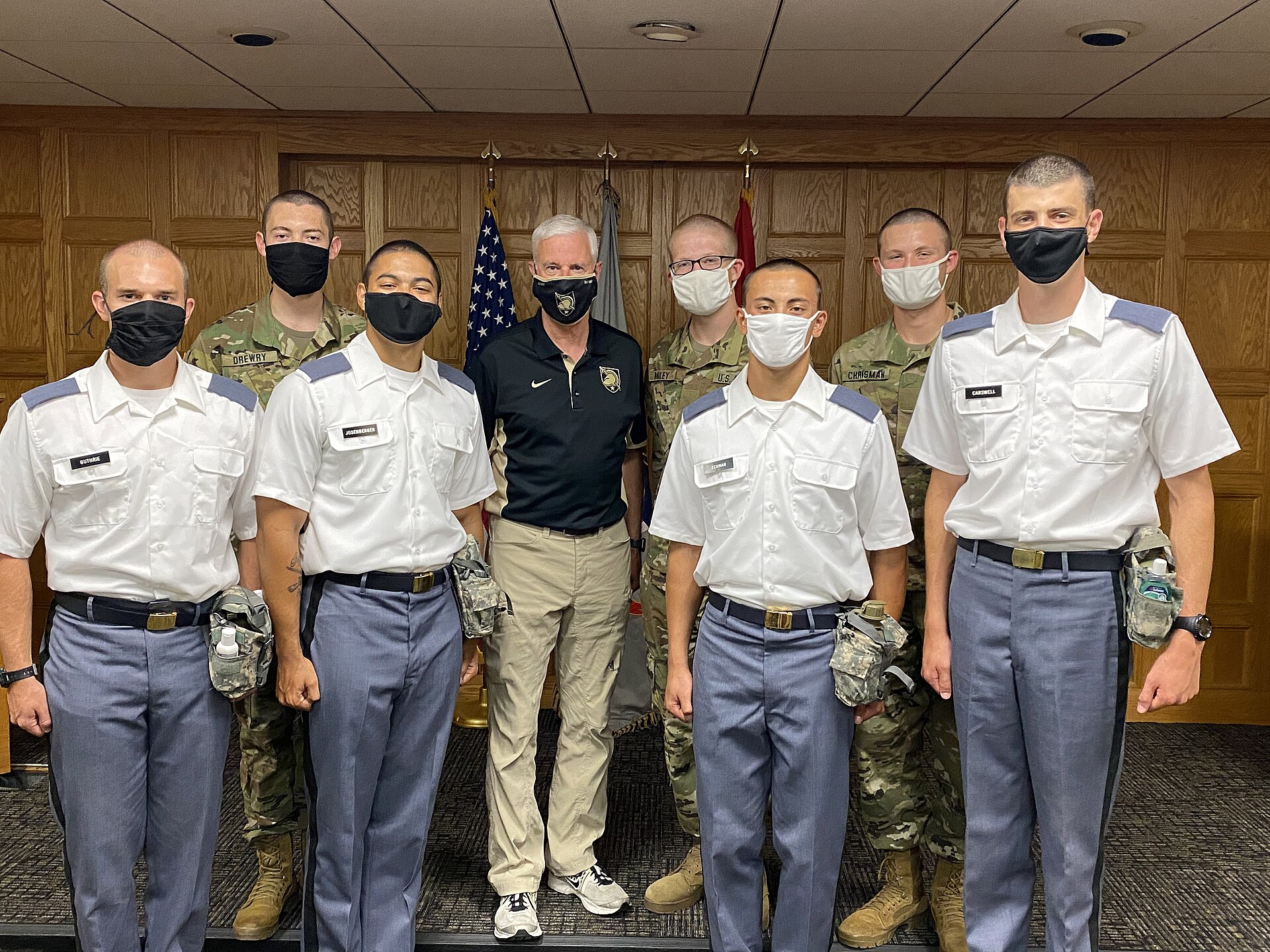
The case tests how far a military academy can go in controlling faculty speech. For civilian professors, the ruling keeps a key protection in place while larger legal questions remain open.
West Point professors are free to comment publicly after West Point has declined to appeal the ruling in the court case over faculty speech restrictions at the U.S. Military Academy in West Point, New York. The dispute grew out of a February 2025 policy that required civilian faculty to obtain prior approval before speaking or publishing.
That leaves the court’s order in place for now and gives civilian faculty more room to speak, write and take part in public academic debate without first seeking permission from the school.
The injunction remains in force
The immediate effect is straightforward: West Point is not pursuing an appeal of the ruling that blocked key parts of its faculty speech policy. The order remains active as the case continues.

The underlying lawsuit, known as Bakken v. U.S. Military Academy, was brought by Tim Bakken, a civilian law professor at West Point. According to Duke University’s Campus Speech Database, Bakken challenged the academy’s Academic Engagement Policy on behalf of a proposed class of more than 100 civilian faculty members.
A federal district court in New York granted a preliminary injunction in May 2026, finding that Bakken was likely to succeed on his First Amendment claim. Reuters reported at the time that the case centered on the February 2025 policy requiring faculty to obtain approval before speaking publicly or publishing.
Because the school has declined to appeal that ruling, the injunction is not heading to an appeals court for immediate review. That does not mean every issue in the case has been resolved, but it does mean the challenged approval system cannot be enforced in the same way while the litigation moves forward.
Why the policy drew fire
The challenged policy covered external academic engagement, including certain public speaking, publishing and communications outside the academy. Bakken argued that the rule forced civilian professors to ask permission before engaging in protected speech.
That is why the phrase “prior approval” matters. In First Amendment disputes, a system that requires government permission before speech occurs can raise especially serious concerns, particularly when it involves academic writing or public commentary.
Bakken’s complaint alleged that the policy chilled faculty expression. Duke’s summary says he had a publishing contract for a book critical of aspects of West Point and said he was deterred from submitting work for approval because of concerns about delay or suppression.
The court’s preliminary ruling did not merely treat the dispute as an internal workplace disagreement. It found that the plaintiffs had shown likely irreparable harm from the ongoing chilling effect on faculty speech.
A military school, civilian professors
West Point is not a typical college. It is the U.S. Military Academy, a federal institution that trains future Army officers and operates within a culture built around discipline, hierarchy and mission focus.
That setting gives the government arguments it might not have at a civilian university. The academy can point to interests in order, discipline, institutional cohesion and national defense education. The court acknowledged those types of interests but found, at the preliminary stage, that they did not sufficiently justify the challenged restrictions as applied to civilian faculty speech.
The civilian piece is central. The ruling, as summarized by Duke, concerns civilian faculty members, not cadets or uniformed military personnel. Military speech rules can differ sharply depending on a person’s status, role and the context in which speech occurs.
That makes the case more precise than a broad fight over “free speech at West Point.” It is about whether civilian professors at a federal service academy can be required to obtain advance clearance before speaking or publishing on academic matters.
What the ruling changes
For professors covered by the injunction, the most practical change is the removal of an advance-permission barrier. They may comment publicly, publish and participate in academic discussion without being subject to the blocked approval requirements.
The ruling also sends a signal beyond one campus policy. Service academies sit at the intersection of military command and higher education, and courts often have to balance those realities carefully. This order leans toward protecting academic expression when the speakers are civilian faculty and the restriction operates before speech occurs.
That does not mean West Point professors have no limits. Faculty can still be bound by valid rules involving classified information, official representation, workplace conduct, confidentiality and other lawful restrictions. The court case is about the contested prior-approval regime, not a blanket immunity from all institutional rules.
The distinction matters because universities and government employers often regulate speech through policies that look administrative on paper. When those policies reach public commentary or scholarship, they can become constitutional flashpoints.
The limits of the victory
The school’s decision not to appeal is a meaningful win for the professors challenging the policy, but it is not necessarily the final word. A preliminary injunction is an early-stage order designed to preserve rights and prevent harm while a case is litigated.
The court has not necessarily issued a final judgment on every claim, nor has it resolved every possible remedy. The lawsuit sought declaratory and injunctive relief, damages and attorneys’ fees, according to Duke’s case summary.
Class certification also remains an important question in cases like this. Bakken sought to represent more than 100 civilian faculty members, but courts apply separate standards before allowing a case to proceed as a class action.
West Point could also revise its policy. A narrower rule, especially one aimed at specific operational concerns rather than broad advance review of academic expression, might raise different legal questions.
What remains unsettled at West Point
The unresolved issue is how West Point will draw the line between military institutional needs and civilian academic freedom going forward. A service academy has legitimate reasons to protect discipline, security and the integrity of its mission. Civilian professors also have strong interests in research, teaching and public debate.
The case sits in a larger argument about government-run education and viewpoint control. If a federal institution employs scholars, can it require preclearance of their public commentary? If it can, how narrow must that rule be? The court’s early answer was skeptical of West Point’s approach.
For now, the practical takeaway is clear. West Point professors covered by the case remain free to comment publicly without the blocked prior-approval requirement, and the academy’s choice not to appeal leaves that protection in place.
The next phase will determine whether the injunction becomes part of a lasting resolution or whether West Point returns with a revised policy that tries to satisfy both military command concerns and constitutional limits.



Leave a Reply