
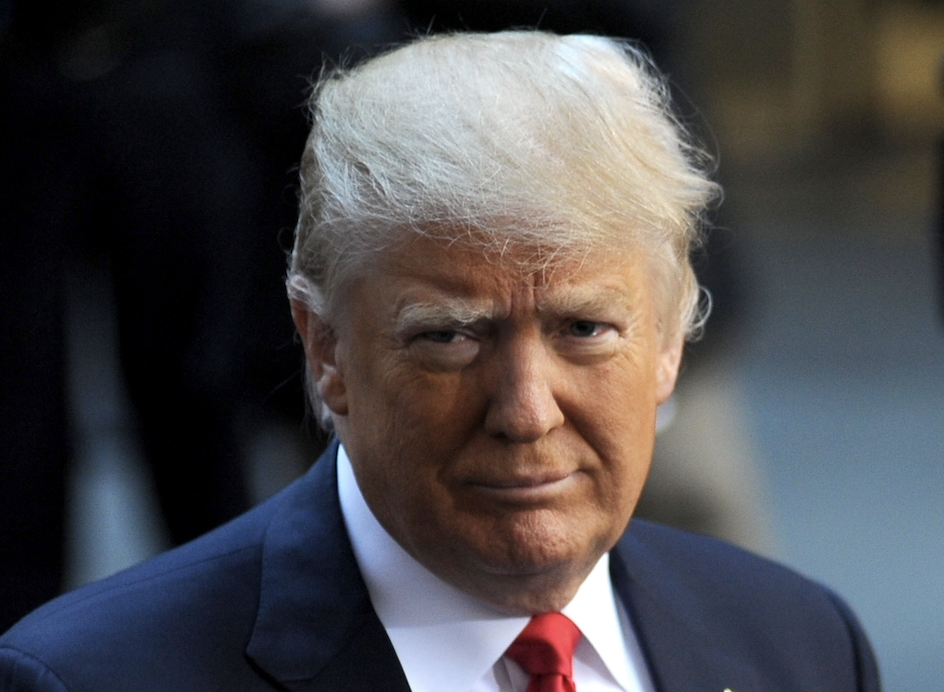
Recent Republican contests offer a more complicated measure of Donald Trump’s influence than a simple win-loss record. His backing still carries weight, but voters have shown they will not always follow it.
Republican voters keep rejecting Trump-endorsed candidates in some high-profile contests, even as Donald Trump’s backing remains one of the strongest assets in a GOP primary. The recent defeats of Trump-endorsed candidates in Georgia and Iowa examine a limit on his influence: voters can still choose a better-funded rival, an outsider or a candidate they see as a stronger local fit.
The pattern does not mean Trump’s endorsements have stopped mattering. It means the endorsement is a powerful signal rather than a guaranteed result — an important distinction as Republican campaigns compete to prove who best represents the party’s future.
Georgia delivered the clearest test
In Georgia’s Republican runoff for governor, billionaire health care executive Rick Jackson defeated Lt. Gov. Burt Jones, who had received Trump’s endorsement more than a year before the vote.
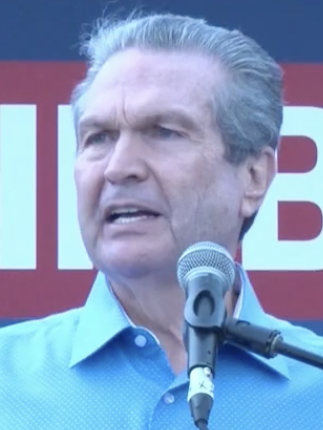
PBS NewsHour, reporting on Associated Press election coverage, described the race as a rare case of Trump’s preferred candidate falling short in a Republican primary. Jackson’s campaign spent more than $100 million, much of it from Jackson himself, in a bid to persuade GOP voters to look past Trump’s recommendation.
That spending does not make the outcome a clean referendum on Trump. It does show the resources required to beat a candidate carrying his imprimatur — and that a well-financed challenger can create enough room for Republican voters to make a different choice.
Jackson had finished behind Jones in the earlier May 19 primary, when a sizable share of voters supported other candidates. In the runoff, he consolidated enough support to win the nomination and advance to a general-election matchup with Democrat Keisha Lance Bottoms.
Iowa offered another warning sign
Georgia was not the only recent disappointment for Trump’s preferred candidate. PBS NewsHour reported that U.S. Rep. Randy Feenstra, Trump’s choice in Iowa’s gubernatorial primary, lost to Zach Lahn.
The Iowa result matters because it underscores a basic reality of primaries: an endorsement can introduce a candidate to voters and validate a campaign, but it cannot erase every concern about the candidate, the campaign’s message or the political mood in a state.
It also complicates the easy assumption that a Trump endorsement operates the same way everywhere. State-level races are shaped by familiar local names, regional alliances, advertising budgets, issue priorities and whether a candidate appears to be an insider or a challenger to one.
For Republican candidates, the lesson is not that Trump’s support is disposable. It is that campaigns still need their own case for why voters should choose them.
Trump still won key contests
Any account of the setbacks needs the other half of the record. Trump-backed candidates also prevailed or advanced in other Republican races covered by PBS and the AP.
In Alabama’s Republican Senate runoff, U.S. Rep. Barry Moore defeated former Navy SEAL Jared Hudson after receiving Trump’s backing. Moore had positioned himself as a supporter of Trump’s “America First” agenda, while Hudson presented himself as an outsider challenging a Washington insider.
Trump’s pick in Oklahoma’s governor’s race, former state Sen. Mike Mazzei, also advanced to a runoff after Trump endorsed him late in a crowded contest. Those races reinforce why candidates still seek the endorsement aggressively: it can shape media coverage, donor interest and voter perceptions at a crucial moment.
The mixed results are more revealing than either a perfect streak or a complete collapse would be. Trump remains a central force in Republican politics, but his endorsement does not automatically settle every fight.
Money changes the equation
The Georgia race puts a spotlight on a factor that can be easy to overlook in discussions about political influence: money can buy time, attention and repeated opportunities to challenge a dominant party message.
Jackson’s more than $100 million in campaign spending gave him an unusual ability to communicate directly with voters and sustain an extended contest against a Trump-endorsed opponent. Few candidates can match that kind of self-funded effort.
That is why the result should not be read as a simple template for every Trump-backed candidate. A less wealthy challenger may struggle to overcome the advantages of a presidential endorsement, especially in a low-turnout primary where motivated partisan voters can be decisive.
Still, the race illustrates that endorsement politics has a price. Trump’s support can provide a major head start, but rivals with enough money and a credible local argument can force voters to make a choice beyond the endorsement.
The outsider label is shifting
There is also a deeper tension inside the Republican Party. Trump rose as an anti-establishment figure, channeling frustration with party leaders and promising to disrupt the political order. Now, as the party’s dominant figure, he often endorses officeholders and candidates with institutional support.
That creates an opening for opponents to use a version of Trump’s own political language against his preferred candidates. Hudson tried that strategy in Alabama, though it did not succeed against Moore. Elsewhere, candidates may argue that the Trump-backed option has become the establishment choice.
Whether that argument works depends on the race. Some Republican voters may see a Trump-aligned incumbent or party figure as an experienced ally; others may be drawn to a challenger who promises a fresh break from political institutions.
The result is a party in which Trump’s coalition still sets many of the terms of debate, even when his endorsed candidate loses.
What the losses do and do not mean
The defeats of Jones and Feenstra are meaningful because they show Republican voters retain independent leverage in primary elections. A Trump endorsement is not a command, and voters can reject it when a competing candidate has stronger resources, sharper local appeal or a more persuasive campaign.
But a handful of losses does not establish that Trump has lost his influence over the GOP. His endorsed candidates continue to win important races, and the value of his support varies greatly depending on the state, office, field and timing of the endorsement.
The more useful takeaway is narrower: Trump can elevate candidates, but he cannot fully substitute for candidate quality, organization and the specific concerns of voters. Republican primaries are still contests, not coronations.
As more races unfold, the key question will be whether these setbacks remain unusual exceptions or become a broader pattern in which Republican voters increasingly distinguish between support for Trump and support for every candidate he chooses.









Leave a Reply