

The Democratic senator’s remarks do not amount to an endorsement, but they put a striking limit on how far he is willing to go against a Republican colleague. The stance reflects a working relationship that has become part of Pennsylvania’s political story.
John Fetterman said he will not campaign against Dave McCormick in 2030 if McCormick runs for reelection, a remarkable pledge between Pennsylvania’s Democratic and Republican senators. Fetterman said he would never move against McCormick, whom he considers a friend and a “great guy,” signaling that he will not help Democrats defeat Dave McCormick in a future statewide race.
The statement does not decide a 2030 election, and it does not prevent Democrats from backing another candidate. It does, however, show how unusually public the Fetterman-McCormick partnership has become — and why it may complicate the normal partisan script in a closely watched swing state.
Fetterman draws a personal line
Fetterman, a Democrat, made the comments when asked whether he would support or oppose a possible second-term campaign by McCormick, a Republican. According to reporting by The Hill, Fetterman said, “I would absolutely never move against my friend.”
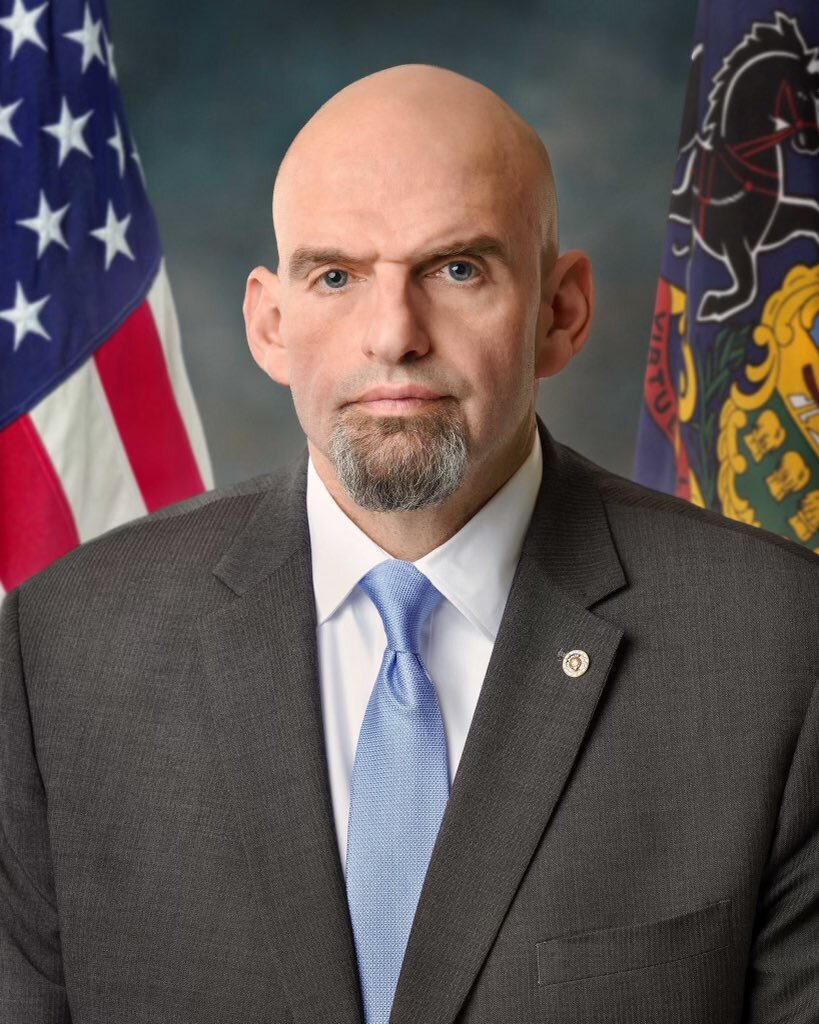
That wording matters. He did not say he would endorse McCormick, donate to him, or discourage Democrats from contesting the seat. He said he would not personally campaign against him.
Political figures often praise colleagues across the aisle after passing legislation or during ceremonial appearances. Promising not to work against a potential opponent years before an election is a much more consequential public gesture, particularly for senators representing the same state.
A rare split Senate delegation
Pennsylvania voters sent Fetterman and McCormick to Washington from opposing parties, creating a split Senate delegation in a state where federal races are routinely expensive, competitive and nationally important. The two senators have leaned into that arrangement rather than treating it solely as a partisan divide.
They have appeared together in the media, co-sponsored legislation and participated in a joint fundraising effort, according to The Hill. The political action committee, Common Ground PA, was created to accept donations supporting both senators.
A spokesperson for the group told The Center Square that donors value the collaboration demonstrated by Fetterman and McCormick on behalf of Pennsylvania. The message is straightforward: voters can have representatives who disagree politically but still pursue shared state interests.
That approach has practical appeal in a state with divided political loyalties. It also carries risks. Bipartisanship can be rewarded by voters tired of Washington conflict, but it can frustrate party activists who expect elected officials to fight hard for their side.
McCormick has embraced the alliance
The warmth is not one-sided. McCormick has publicly praised Fetterman as a partner and said he is fortunate to work alongside him for Pennsylvania.
In a recent radio appearance cited by The Hill, McCormick said Fetterman is willing to criticize what McCormick called “craziness” in the Democratic Party. He suggested that willingness has made Fetterman unpopular with some Democrats.
That praise is politically useful for McCormick because it portrays the Republican as able to work with a prominent Democrat. For Fetterman, the relationship reinforces a political identity he has increasingly cultivated: independent-minded, willing to break with progressive factions and resistant to party pressure on issues he considers fundamental.
Still, cordiality should not be confused with ideological agreement. The senators remain members of opposing parties, with different voting coalitions, policy priorities and national alliances.
Why 2030 is already notable
McCormick’s potential 2030 reelection contest remains years away, and many variables could change before then. McCormick would first have to seek another term. Democrats would need to choose a nominee. Pennsylvania’s political environment could look entirely different.
Fetterman’s comment is notable precisely because it comes so early. Rather than leaving himself room to become a campaign surrogate for his party’s eventual nominee, he has announced a personal exception for McCormick.
It may also limit expectations around a conventional Democratic campaign. Fetterman is one of Pennsylvania’s highest-profile elected Democrats, and his support could matter in a major statewide contest. His refusal to participate against McCormick would deny a future Democratic challenger a powerful in-state ally — at least in the campaign sense Fetterman described.
But the scope remains unclear. Fetterman did not lay out whether he would remain neutral, publicly praise McCormick during a campaign, support a different Democrat in other ways or simply stay off the trail.
The tension inside Democratic politics
Fetterman has repeatedly said he has no plans to leave the Democratic Party. At the Hill Nation Summit, however, he said he would consider leaving if the party became, in his words, officially anti-Israel.
His criticism of democratic socialism and parts of the progressive movement has made him an outlier in some intraparty debates. That does not make him a Republican, but it helps explain why his relationship with McCormick has drawn attention beyond ordinary Senate collegiality.
Democrats could view his 2030 position in two sharply different ways. Supporters of his approach may see it as evidence that he puts a working relationship and his judgment of a colleague ahead of partisan reflex. Critics may argue that a senator’s duty to his party includes helping preserve or win seats that shape control of the chamber.
Both views reflect a broader question confronting national politics: whether voters want more public cross-party alliances, or whether such alliances weaken the accountability that party competition is meant to provide.
What the pledge does — and does not — mean
- It does mean: Fetterman says he would not personally campaign against McCormick if McCormick seeks reelection in 2030.
- It does not mean: McCormick has announced a 2030 campaign or received Fetterman’s endorsement.
- It does not mean: Pennsylvania Democrats cannot recruit, nominate or support a challenger.
- It may mean: The two senators intend to keep emphasizing a bipartisan Pennsylvania partnership despite major party differences.
For now, the larger political development is not a campaign plan but a boundary Fetterman has chosen to set. In an era when partisan combat is often rewarded, he is publicly saying that his relationship with McCormick will not be sacrificed for a future race — even one that could help determine the Senate’s balance of power.








Leave a Reply