
The vote does not immediately end U.S. military action, but it marks a rare bipartisan challenge to presidential war authority. It also signals growing political strain as the Iran conflict drags on.
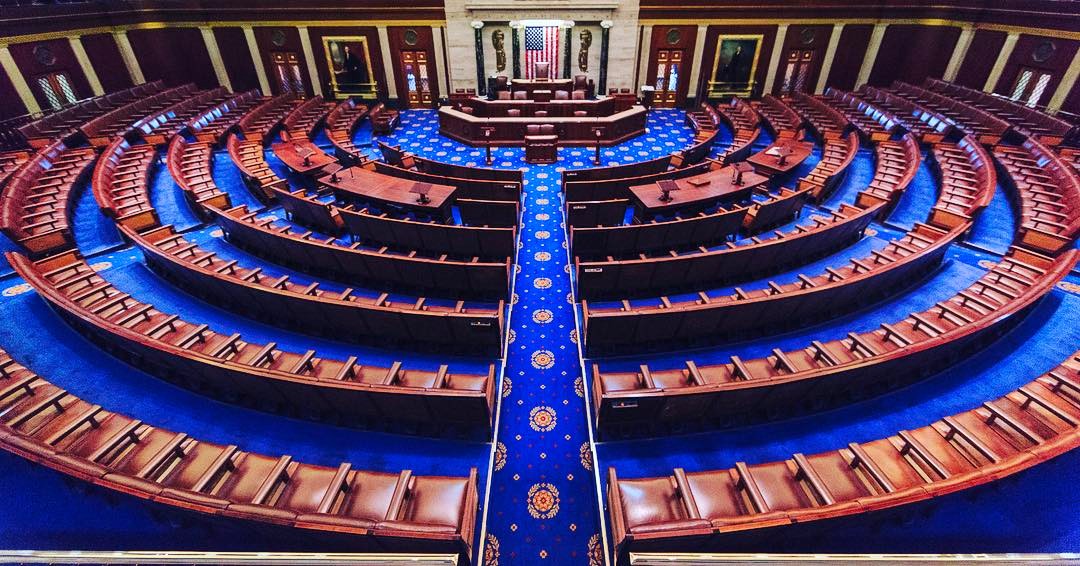
The U.S. House passed a war powers resolution on Iran in Washington on Wednesday, directing President Donald Trump to end U.S. military involvement in the Iran conflict. The bipartisan House vote was 215-208, with four Republicans joining Democrats, and the measure’s significance is blunt: Congress moved to curb Trump’s authority over a war many lawmakers say has drifted beyond its mandate.
The measure does not by itself instantly end the fighting. But it is an unusually public rebuke of Trump’s Iran strategy, and it puts a basic constitutional fight back on the table: who decides when the United States goes to war, the president or Congress?
A narrow vote with real weight
The House adopted the resolution by a seven-vote margin, according to reporting from The Associated Press and The New York Times. AP described it as the first time the House has approved a war powers resolution aimed at halting U.S. military action against Iran.
That matters because war powers votes are often treated as symbolic until they are not. They force lawmakers to put their names beside a position on war, presidential authority and congressional responsibility. In this case, four Republicans broke with Trump and joined Democrats, giving the vote its bipartisan force.
Rep. Gregory Meeks of New York, the top Democrat on the House Foreign Affairs Committee and a leader of the effort, framed the resolution as a response to public fatigue with the conflict. “Enough is enough,” he said, according to AP. “It is time for the president to do the right thing.”
The roll call also showed how thin the margin remains. Most Republicans stood with the president, and the resolution still faces an uncertain path in the Senate. Trump would be expected to resist any measure that limits his authority as commander in chief.
Why four Republicans mattered
The number four is politically important here. Democrats alone could not have delivered the House rebuke. The resolution passed because a small group of Republicans decided that backing Trump on Iran was no longer the safer or stronger position.
AP reported that GOP unease has been building as the three-month conflict has dragged on. The House had tried several times to curb the U.S. war against Iran, with vote totals inching upward as opposition grew. The Senate advanced its own war powers resolution last month after several Republican senators broke ranks, though it has not taken a final vote.
The break is especially sharp because Trump campaigned on ending U.S. entanglements abroad and focusing on domestic concerns. The Iran conflict has pulled attention back to the Middle East, while economic pressure at home has given lawmakers a direct argument to take to voters.
Meeks tied the war to everyday costs, saying people were “suffering at the gas pump” and at supermarkets. That message is not just about foreign policy. It is about whether a distant conflict is becoming a domestic political liability.
Johnson tried to hold the line
House Speaker Mike Johnson had worked to prevent exactly this outcome. AP reported that Johnson abruptly shut down floor action two weeks earlier when the resolution appeared close to passing. That delay did not stop the measure; it only postponed the vote.
Johnson has argued that Trump remains focused on domestic priorities, especially with midterm elections ahead. He said he had spent three hours at the White House with the president this week and described Trump as focused on reopening the Strait of Hormuz and restoring the flow of commerce.
The Strait of Hormuz is central to the conflict’s wider impact. AP reported that Iran has been able to interrupt shipping through the waterway, a vital route for oil, natural gas and related products such as fertilizer. Disruptions there can ripple quickly into energy prices and consumer costs.
That is one reason the House vote carries weight beyond Washington procedure. It is a foreign-policy vote with pocketbook consequences, and both parties know voters are likely to judge the conflict partly through prices, not just strategy.
The administration warns of leverage lost
The Trump administration’s argument is that a congressional curb could weaken U.S. bargaining power. Secretary of State Marco Rubio told a House Foreign Affairs Committee hearing that Iran could read the resolution as proof that the administration’s “hands are going to be tied,” according to AP.
Rubio’s warning gets at the core strategic dispute. Supporters of the resolution say Congress must stop open-ended military involvement without proper authorization. Opponents say limiting the president during active negotiations or an unstable ceasefire could embolden Iran and make a durable settlement harder.
AP reported that a ceasefire was declared in April, but described it as uneasy and uncertain. Talks toward a more durable end have dragged on, while military strikes between the U.S. and Iran have continued to flare. The situation is further complicated by Israel’s broader fight with Iran-backed Hezbollah militants in Lebanon.
That makes the vote both urgent and incomplete. Lawmakers are trying to shape a conflict that is still shifting, while the White House argues that flexibility is essential precisely because conditions remain volatile.
The war powers fight returns
The legal fight is familiar but unresolved. The Constitution gives Congress the power to declare war, while the president commands the armed forces. The modern presidency has stretched that balance for decades, with military actions often launched or sustained without a formal declaration of war.
The War Powers Act gives the White House a 60-day window to seek congressional approval for military action. AP reported that the administration has indicated the declared ceasefire means hostilities have ceased, an argument that could shape how the White House responds to the resolution.
Critics are likely to see that as a loophole if U.S. strikes and military activity continue. Supporters of the administration are likely to argue that Congress should not box in the president while threats remain active and diplomacy is underway.
The practical effect is still uncertain: the House resolution is a formal challenge, not an automatic end to U.S. involvement. Its power depends on what the Senate does next, how Trump responds and whether courts or Congress press the constitutional question further.
What happens next
The resolution now points toward the Senate, where a similar measure has advanced but not yet received final approval. If the Senate joins the House, Congress would put a sharper war powers confrontation in front of Trump.
Several possibilities remain open:
- The Senate could approve a similar measure, setting up a direct clash with the White House.
- Trump could reject or resist the resolution, arguing it interferes with commander-in-chief authority.
- Lawmakers could use the vote as leverage for further limits, oversight hearings or funding restrictions.
- The conflict itself could change the politics if negotiations advance, the ceasefire stabilizes or fighting escalates.
The House also has other national security fights moving at the same time, including Democratic-led efforts involving Ukraine and a separate war powers resolution related to U.S. action in Lebanon, according to AP. That broader agenda shows Democrats trying to peel off Republican support where foreign policy strains are most visible.
For now, the House vote is a marker: 215 members said Trump should withdraw U.S. forces from the Iran conflict, and four of them came from his own party. It may not end the war today, but it makes clear that the political permission for the war is shrinking.







Leave a Reply