
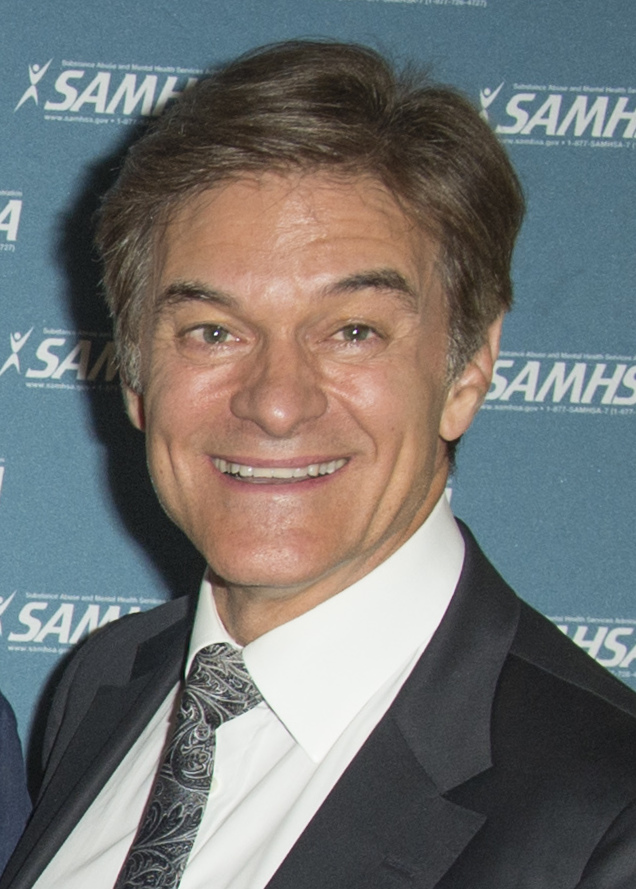
Dr. Mehmet Oz’s public break with President Donald Trump on the MMR vaccine puts a basic safety question at the center of a wider fight over vaccine policy and parental choice. The stakes are heightened by falling measles vaccination coverage among U.S. kindergarteners.
Dr. Mehmet Oz said the MMR vaccine is not lethal, directly walking back Donald Trump’s claim that the combined measles, mumps and rubella shot could be lethal. Oz, the administrator of the Centers for Medicare & Medicaid Services, rejected the assertion during a Sunday television interview, creating a notable public split over vaccine safety.
Trump had claimed that the MMR vaccine is lethal when its three components are given together rather than separately. Oz’s response matters because the dispute comes as measles vaccination coverage among U.S. kindergarteners has fallen below the level public-health experts often cite for broad community protection.
Oz drew a clear line
Appearing on CBS’s Face the Nation, Oz was asked directly about Trump’s comments. His answer was unambiguous: “No, the MMR vaccine is not a lethal vaccine.”
That statement did not amount to a break with every part of Trump’s vaccine agenda. Oz emphasized that parents should receive treatments recommended by their doctors and also framed the larger policy conversation around parental choice.
Still, the distinction is consequential. A senior administration official explicitly rejected the premise that the standard combined MMR vaccine is lethal, rather than merely softening or redirecting the president’s language.
What Trump said about MMR
Trump’s remarks followed an executive order issued earlier in August that raised the prospect of giving measles, mumps and rubella vaccines as separate shots. At the signing, he said, without presenting evidence, that administering them together could be “quite lethal.”
The standard MMR vaccine combines protection against all three diseases in one injection. According to CBS News, separate measles, mumps and rubella vaccines are not currently sold in the United States as individual routine shots.
Oz said individual MMR components are offered in some other countries. But availability elsewhere is not the same as evidence that the combined vaccine is unsafe, and his interview answer did not endorse Trump’s claim about lethality.
Safety evidence does not support claim
The Centers for Disease Control and Prevention says vaccination protects against measles, mumps and rubella, diseases that can each cause serious complications. Measles can lead to pneumonia, brain damage and death; mumps can rarely cause inflammation of the brain and other serious outcomes; rubella can be especially dangerous during pregnancy.
Like all medical products, vaccines can have side effects. The CDC lists common reactions following MMR vaccination such as soreness at the injection site, fever, a mild rash and swollen glands. Serious reactions can occur but are rare, and the agency does not describe the MMR vaccine as lethal.
That difference is central to the dispute. Discussing potential side effects, contraindications or family-specific medical questions is not the same as declaring a routinely used vaccine deadly. Parents with questions about a child’s health history should discuss them with a qualified clinician.
Coverage has slipped below 95%
The clash is unfolding against a worrying vaccination trend. CDC figures cited by CBS show that 92.4% of U.S. kindergarteners received measles vaccination during the 2025-2026 school year, down from 95.2% in 2019-2020.
Public-health officials frequently point to roughly 95% coverage as an important benchmark for limiting measles spread in a community. The national figure can also conceal sharper drops in particular schools, counties or states, where outbreaks can take hold more easily.
Officials in the Trump administration have encouraged parents to vaccinate children against measles as cases have reached their highest level in 35 years, according to CBS. That makes the disagreement unusually difficult to parse: the administration is promoting measles vaccination while its president has cast doubt on the combined vaccine most commonly used to provide it.
Choice is now the policy fight
Oz sought to shift attention from the vaccine’s safety to parental autonomy. He argued that families should be able to ask difficult questions and said the president wants states to offer eligibility for parents who object to vaccines on religious or other grounds.
Supporters of that approach may see it as a defense of informed consent and a response to families who feel shut out of medical decisions. Critics are likely to argue that policy discussions about exemptions become more dangerous when they are paired with unsupported claims about a vaccine being lethal.
Those debates involve separate questions: whether states should change school-vaccine rules, how broad exemptions should be, and how health officials should communicate known risks and benefits. Oz’s comments answered only one of them plainly: the MMR vaccine is not lethal.
The unresolved issue is trust
The immediate contradiction is simple. Trump suggested the combined MMR shot could be deadly; Oz said it is not. But the larger effect may be less simple, especially for parents already trying to assess conflicting messages from political leaders, doctors and public-health agencies.
It remains unclear whether Trump will clarify or retract his earlier statement, whether the executive order will lead to specific federal policy changes, or how states will respond to renewed attention on exemptions and separate-dose options.
For now, the available public-health guidance is clear that the combined MMR vaccine protects against three potentially serious diseases and is not classified by the CDC as a lethal vaccine. Oz’s response put that evidence-based point on the record even as the political argument around vaccination continues.





Leave a Reply