
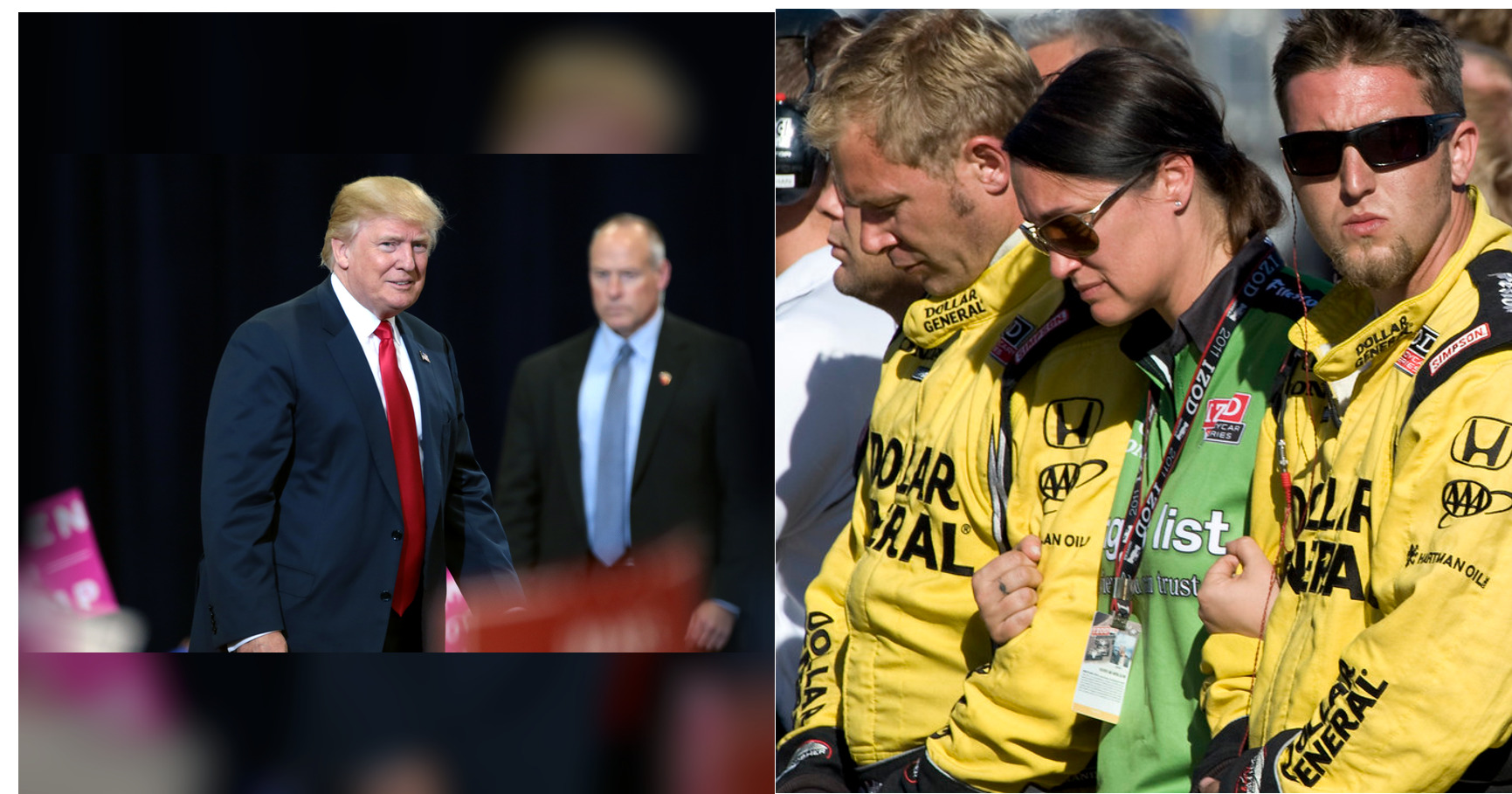
The two-day Freedom 250 Grand Prix turned Washington’s National Mall into a high-speed street circuit, but the spectacle also put spectators, museums, commuters and security agencies under unusual pressure. Reports of oppressive heat add another challenge to an event already built around extensive closures and presidential security.
Donald Trump’s big race, the Freedom 250 Grand Prix in Washington, DC, was held August 22 and 23, 2026, amid reports that fans were sweltering and that the event was plagued by chaos. The two-day IndyCar street-racing event was fast-tracked by Trump and placed a 1.66-mile course around the National Mall, turning a central slice of the capital into a heavily fenced, tightly controlled race venue.
The heat concerns matter because the Freedom 250 was designed to draw nearly 300,000 people over two days, while visitors navigated security screening, altered museum access, traffic restrictions and the practical challenge of watching racing around some of the nation’s busiest public spaces. Available reporting establishes the event’s extraordinary logistical demands, though it does not provide a detailed official accounting of heat illnesses or crowd-control incidents.
A race built around monuments
The Freedom 250 was not staged at a permanent speedway. Its course ran along 3rd Street near the National Mall and connected stretches of Pennsylvania Avenue, Constitution Avenue, Independence Avenue, Maryland Avenue and 9th Street.
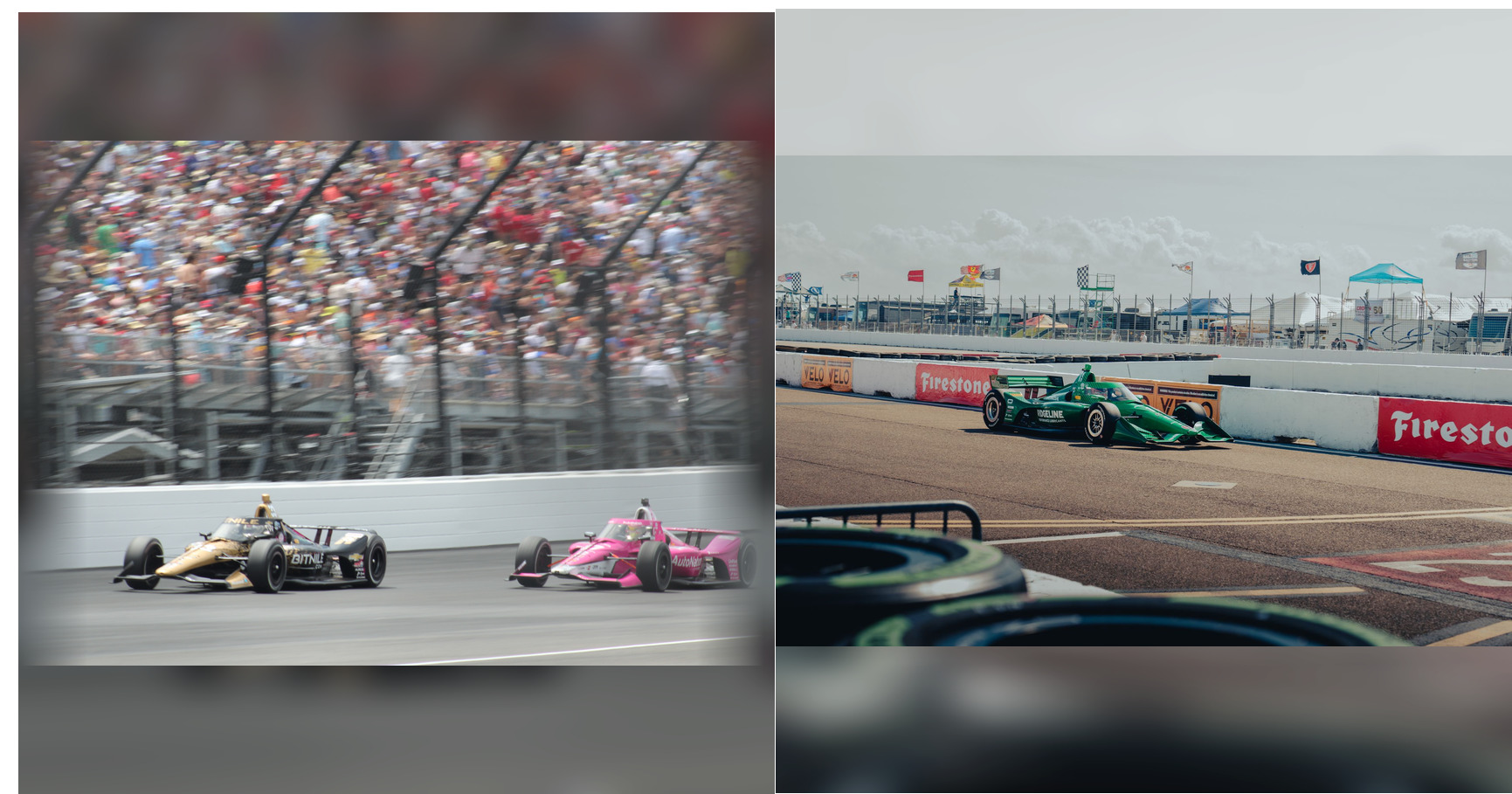
That put IndyCars, capable of speeds approaching 180 mph, near the US Capitol, the Washington Monument, the National Gallery of Art, the National Archives and the Smithsonian Air and Space Museum. The visual appeal was obvious: a major race framed by landmarks normally associated with civic life, tourism and school trips.
It also created a basic tension. A downtown street race can be a rare attraction for motorsports fans, but every road closure, ticketed perimeter and restricted entrance changes how residents and visitors use the city.
CNN reported that the 147-lap, 250-mile main race was intended as part of celebrations for the United States’ 250th anniversary. The number of laps was itself symbolic, linking the sporting event to the broader anniversary program.
Trump’s role raised the stakes
Trump’s involvement was central to the event’s unusually rapid arrival. CNN reported that he fast-tracked the race through a January executive order after Penske Corporation President Bud Denker proposed it, bypassing local bureaucratic hurdles that could otherwise have slowed the project.
The president was also expected to attend the Sunday main event, take a ceremonial lap in the presidential limousine known as “The Beast,” and drop the green flag, according to a White House official cited by CNN.
That presidential appearance changed the operational picture. A race already requiring closed streets, fencing and crowd management also had to accommodate the security demands of a sitting president and members of the Cabinet.
Supporters could view the race as a highly visible anniversary event and a way to bring a new audience into the center of the capital. Critics, or simply inconvenienced residents, had reason to focus on the cost of access restrictions and the pressure placed on a dense public district during a summer weekend.
Heat turns waiting into a risk
The report that fans were sweltering is significant because spectators at a street circuit do not experience an event the way they would at a conventional stadium. They may spend long stretches walking between entrances, standing behind barriers, waiting at security checkpoints and searching for sightlines around fencing and grandstands.
Heat can make those routine frustrations harder to manage, especially for children, older adults and visitors unfamiliar with the area. Fuel fumes, pavement, crowds and limited shade can make an outdoor event feel more punishing than the temperature alone suggests.
The supplied reporting from the race’s first day described light drizzle in the morning and temperatures cooling into the evening, while the later headline described fans sweltering. That means the available material supports concern about difficult spectator conditions but does not establish how many attendees were affected, whether medical treatment was needed, or which operational breakdowns led to the description of “chaos.”
That distinction matters. Heat safety is a real public-event issue, but it is not responsible reporting to turn a broad description of uncomfortable conditions into a claim of a verified emergency without official details.
Security and access reshaped downtown
Security was one of the most visible features of the weekend. Attendees were expected to pass through tall magnetometers, while federal personnel on site included the FBI, National Guard, US Park Police and Naval Criminal Investigative Service, according to CNN.
Officials also planned extensive traffic and parking restrictions. The Federal Aviation Administration said it would pause flights departing Ronald Reagan National Airport from 10:15 a.m. to 1:15 p.m. Sunday, subject to change, underscoring how far the event’s footprint extended beyond the circuit itself.
Several cultural institutions were affected. Visitors needed Freedom 250 tickets to access museums in the race path, and CNN reported that the National Gallery of Art conducted an extensive vibration study and adopted safety measures to protect guests and collections near the pit lane.
Those measures reflect the oddity of placing motorsports next to irreplaceable artifacts and heavily visited public buildings. The race was marketed as a civic celebration, but it temporarily made parts of the civic center less open to people who were not there for racing.
The track brought its own complications
Even before the main event, drivers were learning a circuit unlike their usual venues. CNN reported that more than one driver appeared to miss a sharp turn on 9th Street NW during practice, requiring them to turn around and rejoin the course.
Organizers had also addressed the street’s physical demands. Denker’s team reportedly used silicone on nearly 50 manhole covers, an effort to prevent the aerodynamic suction of high-speed cars from lifting them.
These are not necessarily signs of failure; temporary street circuits require drivers and organizers to adapt quickly. But they show why a race through a working city is different from one at a purpose-built track. The pavement, turns, drainage covers, barriers, pedestrian routes and emergency access all become part of the sporting challenge.
For fans, those complications can translate into blocked views, longer walks and uncertainty about where to enter or exit. For the city, they can mean that a successful race is judged not only by who wins but by whether the surrounding public systems hold up.
What the weekend leaves unresolved
The Freedom 250 demonstrated the appeal of bringing a major motorsport event into a setting as recognizable as Washington’s National Mall. Fans interviewed by CNN praised the historical backdrop, and the race gave the city an event few American downtowns could replicate.
It also showed the trade-off. A projected crowd of nearly 300,000, a presidential visit, airport adjustments, museum restrictions and severe-weather concerns are not side notes to the event; they are part of its core design.
The key unanswered questions are practical ones: how organizers handled the reported heat and crowd strain, whether access plans worked for ticket holders and non-ticketed visitors, and what disruptions residents and institutions experienced after the final lap. Those details will determine whether Washington sees the Freedom 250 as a repeatable showcase or a one-off experiment with too much collateral disruption.
For now, the clearest picture is of an ambitious race that made the capital its backdrop while placing exceptional demands on the people trying to watch it, work around it and keep it secure.

Leave a Reply