
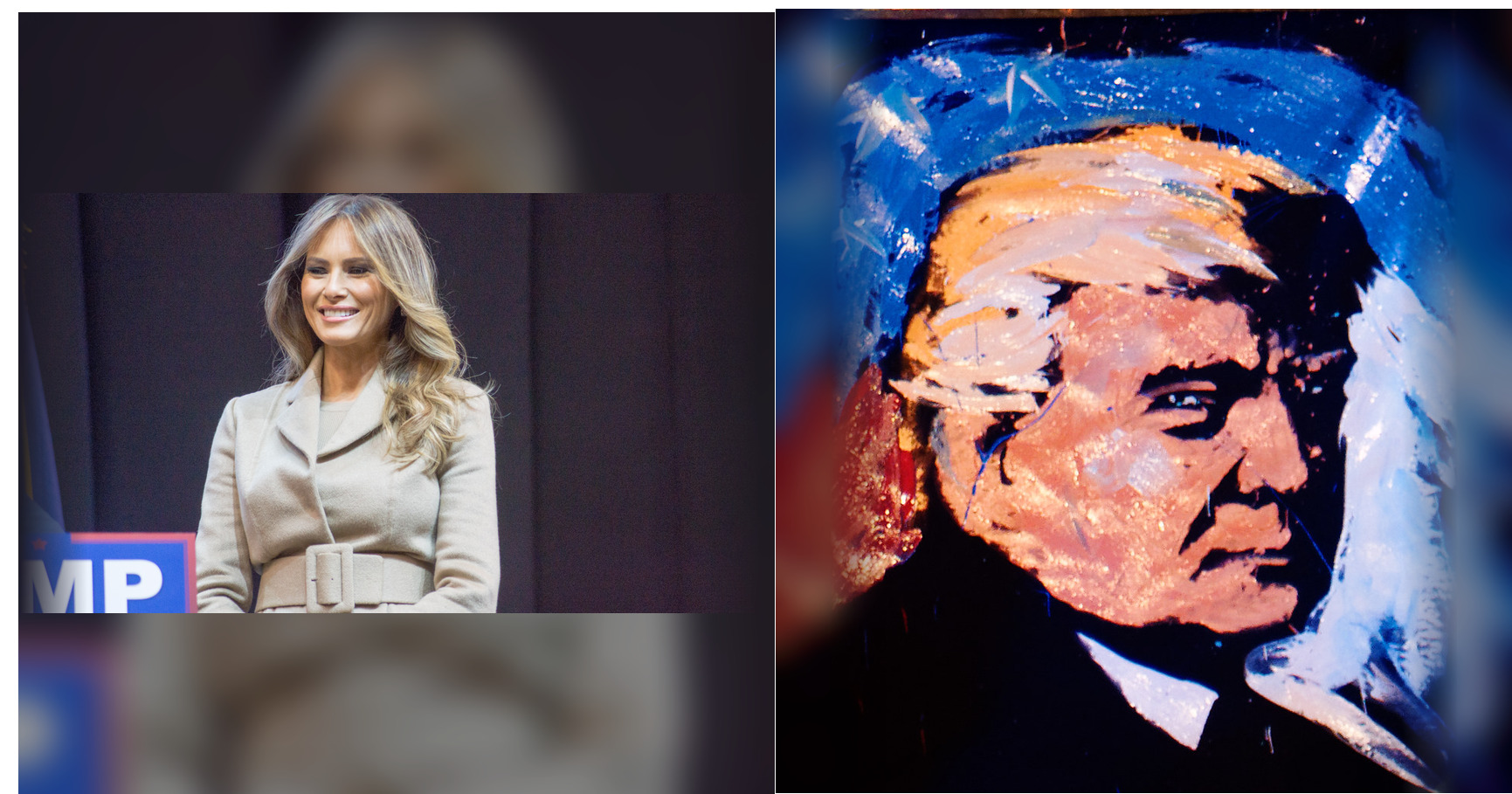
The moment has fueled fresh attention on Natalie Harp, a senior Trump aide whose proximity to the president has become a subject of wider political interest. A short public interaction, however, cannot by itself explain the relationships behind it.
Melania Trump stood up and left Donald Trump’s side as Natalie Harp sought the president’s attention, according to the headline of a widely shared report. The interaction involving Melania Trump, Donald Trump and Harp has sparked speculation because Harp is a highly visible aide with an unusually close working role around the president.
What the brief moment does not establish is just as important: there is no official account in the available reporting explaining why Melania Trump got up, what Harp said, or whether the three-way exchange carried any significance beyond the immediate setting.
A short moment, few firm answers
The available source material identifies the basic claim: Melania Trump rose from her seat and moved away from Donald Trump while Harp tried to get his attention. It does not provide a verified transcript, a precise event location, a date, or a statement from the White House or any of the people involved.
That leaves a wide gap between an observable action and the story people may be tempted to construct around it. A spouse leaving a seat and a staff member approaching a president can reflect scheduling, protocol, a practical request, a private conversation or nothing particularly noteworthy.
Calling Harp’s action a “demand” goes beyond what can be independently established from the research provided. The more supportable description is that she appeared to seek or request the president’s attention.
For political figures, body language is often treated as evidence of a larger story. It can be compelling video material, but it is weak evidence without clear context, audio or on-the-record confirmation.
Why Natalie Harp draws attention
Harp’s role is the reason a fleeting interaction can draw scrutiny. The White House’s 2025 annual staff report lists Natalie J. Harp as a special assistant to the president and executive assistant to the president, with a reported annual salary of $150,000.
That formal title places her in a close support position, but public reporting has depicted her influence in more expansive terms. The New York Times reported on Aug. 18, 2026, that Harp works closely with Trump, travels with him, provides him information and is a frequent presence near him.
The Times described Harp as an important conduit of information to the president, citing people familiar with her work. It also reported that she has been nicknamed “the human printer” because she carries a portable printer to provide Trump with hard-copy material.
The White House press secretary, Karoline Leavitt, characterized Harp to the Times as one of the president’s loyal and hard-working aides. That official defense underscores a point sometimes lost in online discussion: Harp is not a bystander or celebrity guest. She is a paid White House staff member with a defined job.
Access is not the same as authority
Close physical access to a president can look like power, and sometimes it is. Still, proximity alone does not reveal who made a decision, who shaped policy, or whether an aide’s request was urgent.
Presidential aides routinely move in and out of conversations, flag documents, relay messages and manage timing. An executive assistant may have a particularly visible role because the job requires staying close enough to keep a principal informed and on schedule.
There is also a competing concern raised by the Times’ reporting: critics inside and outside an administration may see an aide who provides a direct, informal stream of information as bypassing normal institutional channels. Supporters can see the same arrangement as efficient, loyal and responsive to the president’s working style.
Neither interpretation can be settled by this incident. The available material does not show what Harp needed, whether Trump responded, or whether the interaction affected any official matter.
Melania Trump’s public role differs
Melania Trump is first lady, not a White House staff aide assigned to manage the president’s daily workflow. Her public appearances with Donald Trump are watched intensely, often with viewers assigning meaning to posture, facial expressions and small changes in where she stands or sits.
That attention can turn ordinary movement into an apparent political signal. It is especially easy to project rivalry or tension onto an image involving the first lady and a prominent female aide, even when no direct evidence supports that reading.
There is no verified evidence in the supplied research of conflict between Melania Trump and Harp. There is also no account from either woman describing the moment or their relationship.
The absence of such information should not be filled with guesses. The public can reasonably examine how power and access work around a president; it cannot responsibly infer private motives from a few seconds of movement.
The larger question is information flow
The more consequential issue is not whether one person stood up or another sought attention. It is how presidents receive information, which aides get regular access, and whether formal decision-making systems remain part of the process.
Every White House has gatekeepers, schedulers and trusted confidants. Trump’s administration has attracted particular interest because the president’s personal relationships, media habits and preference for direct communication are central to how observers understand his governing style.
Harp’s reported closeness to Trump makes her a natural focus in that debate. But it does not make every interaction involving her a policy story, and it does not turn an unexplained public moment into proof of friction inside the president’s circle.
What remains unclear
No official statement in the available research explains the exchange among Melania Trump, Donald Trump and Natalie Harp. There is no verified description of the setting, no transcript of Harp’s words and no confirmation that Melania Trump’s departure from the seat was connected to Harp at all.
The clearest takeaway is modest: Harp’s proximity to the president is real and documented by her White House position and outside reporting. The significance of this particular moment is not established.
That distinction matters in an era when a brief clip can race ahead of the facts. Attention around presidential access is warranted; certainty about what a silent interaction meant is not.


Leave a Reply