

The ruling turns a high-profile hotel death into a clearer, if still painful, account of toxicology, treatment and unanswered questions about the prince’s final hours.
A Saudi prince was found dead at the Kensington Hotel in London, and an inquest has now put an official cause to the case: Prince Abdullah bin Fahad bin Abdullah bin Abdulaziz bin Jalawi al Saud, 29, died from cardiac arrest linked to a cocktail of drugs and alcohol, according to a court toxicology report cited by The Telegraph.
The London coroner’s findings, reported after the Inner West London Coroner’s Court inquest, say the Saudi prince found in his fifth-floor hotel room last November had high alcohol levels and other substances in his system. Assistant Coroner Jean Harkin reportedly said she did not believe the death was purposeful.
The ruling after months
Prince Abdullah’s death was first reported after he was discovered in a room at the Marriott hotel in Kensington, West London, on the morning of Nov. 25. He had been staying there for just under a week.
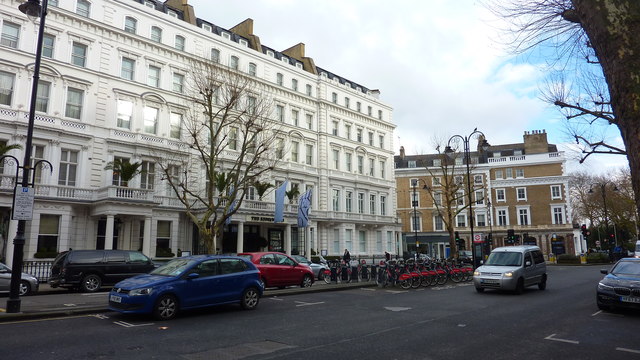
Authorities were called after a cleaner found him, according to the inquest account cited by The Telegraph. Emergency responders were unable to revive him, and he was pronounced dead at the scene.
The new detail is the cause. The toxicology report described cardiac arrest caused by a mixture of substances, not an unexplained medical collapse and not, in the coroner’s view, a deliberate act.
That distinction matters. Coroner’s findings do not erase grief or uncertainty, but they do separate evidence from speculation in cases involving public figures, especially when a royal name and a luxury London address draw attention.
What toxicology showed
The toxicology findings cited by The Telegraph said Prince Abdullah had 222mg of alcohol per 100 mL of blood. The report described that as a level high enough to have the potential to cause a coma.
The same reporting said he also had potentially fatal levels of Gamma-hydroxybutyrate, commonly known as GHB or liquid ecstasy, in his system. Trace amounts of cannabis, Xanax and other anti-anxiety medication were also reported.
Those details are stark, but they should be read carefully. Toxicology can show what was present in the body and at what level; it does not, on its own, explain every decision or circumstance that led to a death.
For readers, the key point is the interaction. Alcohol, sedatives and substances such as GHB can depress the central nervous system and sharply increase danger when combined. The inquest’s finding centers on that mix rather than a single substance alone.
Final hours at the hotel
According to the inquest account, Prince Abdullah was last seen alive the evening before he was found dead, smoking a cigarette outside the hotel. The next morning, he was discovered in his fifth-floor room.
There is no public indication from the reported findings that hotel staff or emergency services could have changed the outcome once he was found. The available account says authorities were called immediately but could not resuscitate him.
That leaves a narrow but significant window: the time between when he was last seen and when he was discovered. Public reporting so far has not answered what happened in that interval, whether anyone else saw him later, or how the substances were taken.
In high-profile deaths, those gaps often become the space where rumor grows. The coroner’s role is more limited: establish who died, when and where they died, and by what medical cause, based on the evidence available.
Treatment before his death
The inquest also placed the death against a recent treatment history. The Telegraph reported that Prince Abdullah had been struggling with substance abuse, particularly involving Xanax and alcohol, and had recently spent time at Priory Clinic, an inpatient rehabilitation facility.
Dr. Victoria Chamorro, who worked with him during that stay, reportedly said he engaged well with treatment and had no physical side effects during the process. She described him as supportive and kind to other patients, and said he made friends while there.
Chamorro also said he had symptoms of low mood and anxiety on admission, but was not considered at risk of suicide when discharged. That point aligns with the coroner’s reported view that the death was not believed to be purposeful.
One concerning detail remains: he reportedly failed to attend follow-up appointments by Zoom after being discharged on Oct. 14. Chamorro said there was nevertheless no concern for him because he had completed treatment and engaged well.
A royal name, a private crisis
Prince Abdullah was a member of the House of Al Saud and was described as a descendant of the great-great-grandfather of King Salman, Saudi Arabia’s current monarch. That lineage explains why the case has traveled beyond a local London inquest report.
But the findings also put a familiar public-health issue inside an unusually prominent frame. Substance misuse, relapse risk and missed follow-up care are not confined to any class, title or country.
There are two ways the case can be misread. One is to turn it into tabloid spectacle because of the royal connection. The other is to flatten it into a generic warning about drugs without acknowledging the individual facts: a 29-year-old man, recent treatment, anxiety and low mood, and a hotel-room death now explained by toxicology.
The more responsible reading sits between those extremes. The inquest offers evidence of a lethal combination and a non-purposeful death, while still showing how fragile the period after inpatient treatment can be.
What remains unanswered
Several points remain unclear from the public record. It has not been reported who, if anyone, was with Prince Abdullah in the hours before his death, how the substances were obtained, or whether there were warning signs after he missed follow-up appointments.
E! News reported it had reached out to the West London Coroner’s Court but had not received a response. The central findings being circulated come through The Telegraph’s account of the toxicology report and inquest.
For now, the official picture is narrower than the attention around the case: Prince Abdullah died in a Kensington hotel room after a dangerous mixture of alcohol and drugs led to cardiac arrest. The coroner did not believe it was purposeful.
That leaves a sober takeaway rather than a dramatic one. The mystery of the cause has been reduced, but the human questions around isolation, recovery and the final hours before a preventable death remain much harder to settle.




Leave a Reply