
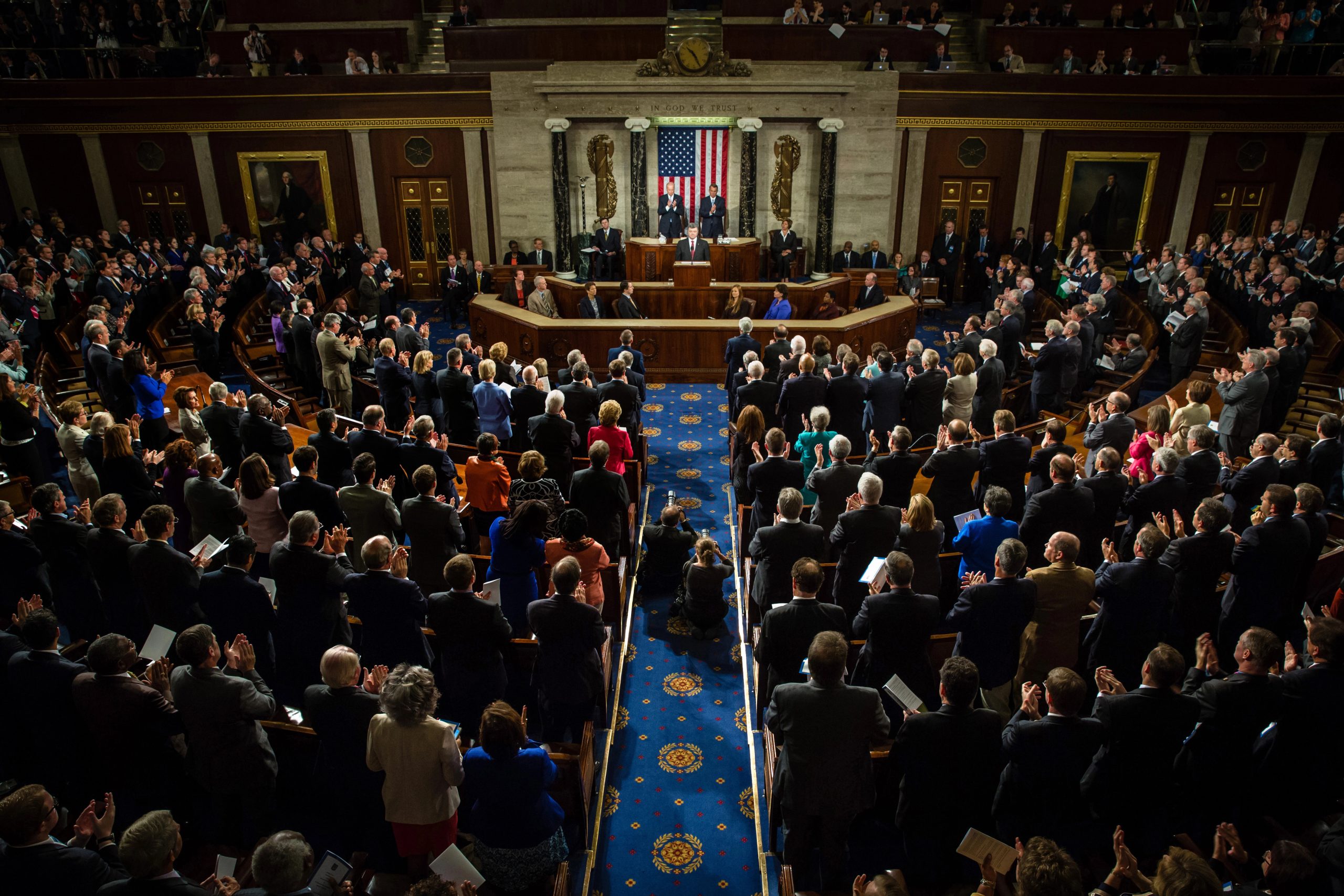
The dispute shows how even a missed roll call can become a political flashpoint when Trump is involved. It also highlights what voters lose when Congress leaves without forcing members onto the record.
Congress adjourned without a Trump-related vote, and MAGA supporters reacted angrily, turning a procedural break into another loyalty fight around Donald Trump. The backlash over the missing Trump vote surfaced after a Daily Beast item distributed on MSN used the phrase MAGA melts down over Congress taking off without that vote.
The core issue is not just vacation optics. When Congress leaves without holding a politically loaded vote, supporters and critics alike are left with no roll call, no recorded position and plenty of room to accuse lawmakers of ducking the fight.
A break becomes a loyalty test
Congressional adjournments are usually explained in calendar language: recess, district work period, pro forma session, legislative break. To activists, especially in the Trump era, those terms can sound like cover.
That is why the anger from MAGA supporters landed so quickly. If a vote is seen as tied to Trump, skipping it can look less like scheduling and more like avoidance. The fight becomes less about the mechanics of the floor and more about whether elected Republicans are willing to be seen taking a stand.
The available source material does not identify the exact Trump-related vote at issue or which chamber’s schedule created the flashpoint. That matters. A binding vote, a symbolic resolution and a procedural motion carry different legal and political weight.
Still, the political signal is clear enough: for Trump’s base, congressional inaction can register as betrayal. No vote means no proof of loyalty.
Why the missing vote matters
A vote in Congress does more than advance or block a measure. It creates a public record. It gives campaigns, activists, opponents and voters a clean answer to a simple question: where did this lawmaker stand?
That is why a missing vote can be so combustible. Supporters who wanted Congress to act on a Trump-related matter did not just lose a result. They lost the accountability mechanism that comes with a roll call.
The Congressional Record shows how formal and public Trump-related proceedings can be when Congress chooses to act. Congress.gov’s record of the Senate’s February 2021 session, for example, lists proceedings under the trial of Donald J. Trump during his impeachment case. That kind of record is durable. It can be cited years later.
By contrast, adjournment without a vote leaves a blur. Lawmakers can say the issue was not ready, leadership can blame the calendar, and activists can argue the delay was intentional. Everyone gets a talking point. Nobody gets a final answer.
Adjournment is not just optics
Congress leaving town is often mocked as a perk of political life, but adjournment has real constitutional and procedural consequences. The Library of Congress’ Constitution Annotated explains that bills passed by both houses must be presented to the president for approval or veto under Article I, Section 7.
That same constitutional framework recognizes that adjournment can affect what happens next. If a president does not sign a bill within the required period and Congress has adjourned in a way that prevents its return, the bill does not become law. Constitution Annotated notes this is commonly called a pocket veto.
That does not mean the Trump-related vote in this dispute involved a bill already presented to a president. The available material does not establish that. The point is broader: congressional timing is never purely cosmetic. When Congress pauses, it can change leverage, delay accountability and reshape the political calendar.
For voters watching from outside Washington, the difference between a routine break and a strategic retreat can be hard to see. That uncertainty is exactly where outrage thrives.
The MAGA pressure campaign
The Trump movement has long rewarded confrontation and punished hesitation. Its activists tend to see process arguments as excuses, especially when the issue is framed around Trump personally.
That creates a problem for Republican lawmakers. Some may prefer not to vote on a Trump-linked matter unless the outcome is certain. Others may want to avoid forcing vulnerable members into a difficult public position. Leadership may also calculate that delay is safer than a messy floor fight.
Those explanations can be practical inside Congress and toxic outside it. A base that wants visible combat does not usually applaud procedural caution. It wants names.
There is another side to the argument. Not every postponed vote is a cover-up or surrender. Congress routinely delays action because of negotiations, absences, committee work or leadership strategy. But in a polarized environment, the burden of explanation falls on the lawmakers who left without acting.
What remains unclear
Several important facts remain unresolved from the available record. The specific Trump-related vote has not been identified in the extracted source material. The timing of the adjournment, the responsible chamber and the leadership decision-making behind it are also not clear from the available brief.
Those gaps limit what can be concluded about the legislative stakes. A symbolic vote would mainly matter as a political marker. A substantive bill, contempt motion, investigative step or procedural vote could carry more serious consequences.
It is also unclear whether Congress can revisit the matter quickly, whether leadership intends to reschedule it or whether the missed vote will simply become another grievance in the broader fight over Trump’s influence on Capitol Hill.
What is clear is that the absence of a vote created its own story. In modern politics, especially around Trump, delay is not neutral. It is interpreted, branded and weaponized almost immediately.
The risk for Republicans
For Republicans, the episode is a reminder that Trump-related votes are no longer only about policy or procedure. They are tests of alignment with a movement that closely watches whether lawmakers fight, stall or disappear.
That dynamic can put GOP leaders in a bind. Holding a vote may expose divisions. Avoiding a vote may infuriate the base. Either choice can create campaign material for someone.
Democrats also have an incentive to highlight the absence of a vote if it makes Republicans look divided or afraid of their own voters. In that sense, the adjournment may have spared members a roll call while creating a different kind of vulnerability.
The clean takeaway is simple: Congress can leave without voting, but it cannot always leave without consequence. When the missing vote involves Trump, the political fight often starts the moment lawmakers walk away.





Leave a Reply