
The dispute lands during a broader CBS News shake-up and raises questions about editorial independence at one of television’s most closely watched news programs.
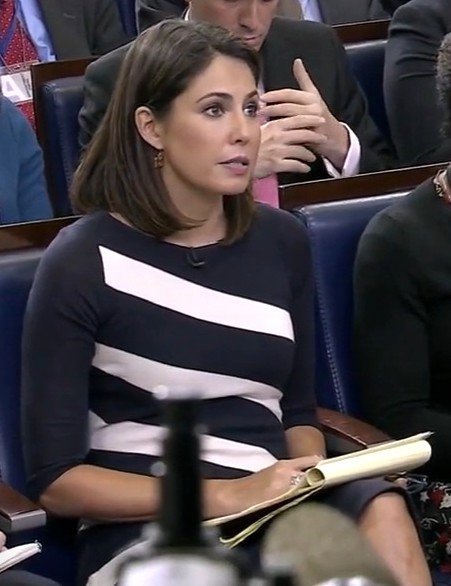
Cecilia Vega says Bari Weiss pushed 60 Minutes to report on events that never happened, and Vega alleges editorial pressure at 60 Minutes tied to the dispute over CBS News leadership and reporting standards. The allegation, reported by Variety, comes as CBS News is reshaping the legendary newsmagazine under parent company Paramount Skydance.
Vega, who says she was fired from 60 Minutes, described a newsroom where some reporting teams became wary of pitching sensitive stories. CBS News rejected her account, saying her claims are “not based in reality.”
A fight over newsroom independence
The core of Vega’s complaint is direct: she says she and her producing teams faced efforts to push political bias into their work. In her statement to Variety, Vega said teams had “held back” on pitching important news topics because they feared internal repercussions.
That is a serious charge at any outlet. At 60 Minutes, it lands with extra force because the program’s brand is built on deeply reported, high-stakes journalism that often depends on institutional trust: from viewers, sources, producers and correspondents alike.
Vega also said she refused to accept editorial suggestions she believed crossed a line. She described colleagues wrestling with the same question: how much resistance is possible before professional consequences follow.
Her most explosive allegation, reflected in Variety’s headline, is that Bari Weiss pushed 60 Minutes toward reporting on events Vega says never happened. CBS News disputes that characterization.
CBS denies Vega’s version
CBS News responded to Vega’s accusations with a brief but firm denial. “We respect Ms. Vega and her contributions, but her claims are not based in reality,” the network said, according to Variety.
That leaves two sharply different accounts in public view. Vega portrays the situation as a threat to editorial independence. CBS News says her claims are unfounded.
What has not been made public is the paper trail behind the dispute: the specific story ideas, the precise edits or suggestions at issue, and the internal conversations that led Vega to conclude the pressure was political. Without those details, the public is left weighing a former correspondent’s detailed warning against the network’s categorical denial.
That uncertainty matters. Newsroom conflicts often involve judgment calls over framing, sourcing, timing and tone. But Vega’s wording goes beyond ordinary disagreement. She alleges pressure over facts themselves, including events she says did not happen.
The shake-up around 60 Minutes
Vega’s statement arrived amid a broader reorganization of 60 Minutes. Variety reported that CBS News also ousted correspondent Sharyn Alfonsi and two top executives at the program, Tanya Simon and Draggan Mihailovich.
The network also brought in Nick Bilton, a former technology journalist and investigative reporter with experience at The New York Times, Vanity Fair and in documentaries. Bilton told Variety he wants to bring 60 Minutes journalism to digital audiences and make the program more relevant beyond its traditional Sunday-night slot.
That digital push is not unusual. Every legacy television news brand is trying to meet audiences who now watch clips, interviews and investigations on phones before they ever sit down in front of a broadcast.
The tension is whether that modernization changes only the delivery system or also the editorial culture. Vega’s warning is that the shift is not just about platforms, but about the pressure being applied to what stories get pursued and how they are told.
Why Bari Weiss is central
Bari Weiss, named in Vega’s allegations, is a polarizing figure in media because she has built a public profile around arguments over free speech, institutional bias and the boundaries of mainstream journalism. According to Variety, CBS News personnel have said Weiss holds strong opinions about Israel and other major news topics.
That context helps explain why Vega’s claims are drawing attention. Weiss’s supporters may see her role as an attempt to challenge groupthink or broaden the range of perspectives inside a legacy newsroom. Critics may see the same intervention as ideological pressure dressed up as editorial reform.
Those competing views are likely to shape how people interpret the dispute. But the most important question is narrower than anyone’s media reputation: did editorial leaders push reporting teams toward claims that were not supported by facts?
That is the line Vega says she tried to hold. It is also the line CBS says was not crossed, because it rejects her account altogether.
Vega’s place at the program
Vega joined 60 Minutes in 2023 after leaving ABC News. At the time, former executive producer Bill Owens praised her experience and described her as a major addition to the broadcast’s future.
Her hiring was also historically significant: Vega said she was the first Latina correspondent on 60 Minutes. In her statement, she said she lost “an amazing job” but kept her integrity.
She also said her contract was not scheduled to expire until March 2027, a detail that adds another layer to the personnel move. CBS has not publicly laid out, in the available reporting, a detailed explanation for her departure beyond its denial of her claims.
For viewers, the personnel changes are not just inside-baseball media drama. Correspondents and producers shape what investigations get airtime, which sources are trusted, and how aggressively powerful institutions are challenged.
What remains unresolved
The dispute now sits at the intersection of three questions: whether Vega’s allegations can be substantiated, whether CBS News will provide more detail about the reorganization, and how 60 Minutes will define its editorial identity under new leadership.
The program’s challenge is delicate. It has to adapt to a digital audience without appearing to dilute the standards that made it valuable in the first place. A faster, more platform-conscious 60 Minutes may be necessary. A politically pressured one would be a different proposition entirely.
CBS News has made clear it rejects Vega’s version of events. Vega has made clear she believes the issue is bigger than one correspondent’s job.
For now, the most important takeaway is not that a famous newsroom is fighting with a former star correspondent. It is that the fight is about the most basic promise of journalism: report what can be proven, resist what cannot, and keep the audience’s trust when the pressure is coming from inside the building.






Leave a Reply