
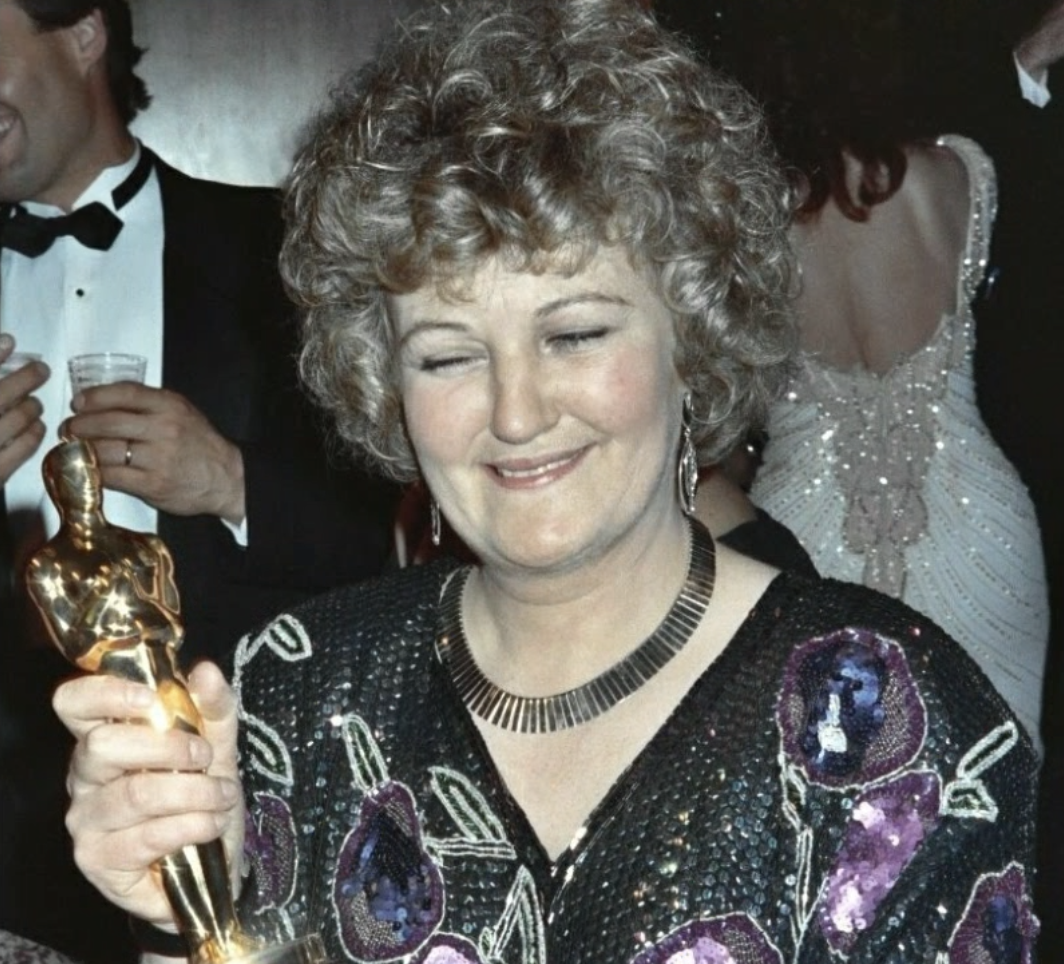
Her Central Park Pigeon Lady became a holiday-movie memory for millions. But Fricker’s story also runs through a history-making Oscar win, hard-edged television work and a complicated view of fame.
Brenda Fricker died at 81 in Dublin after a period of ill health, according to reports citing her representatives. The Ireland-born actor was the first Irish actress to win an Oscar at the Academy Awards, taking best supporting actress in 1990 for the 1989 drama My Left Foot, and she was best known for playing the Central Park Pigeon Lady in Home Alone 2.
That combination explains why the news has landed across generations. For some, Fricker was the Oscar winner who brought fierce tenderness to Irish cinema. For others, she was the lonely woman in the park who helped Kevin McCallister understand fear, friendship and grace.
A history-making Oscar win
Fricker’s Academy Award came for playing Bridget Fagan Brown, mother of Christy Brown, in My Left Foot. The film told the story of the Irish writer and artist, played by Daniel Day-Lewis, who was born with cerebral palsy and learned to write and paint using his left foot.
The role could have been reduced to saintly endurance. Fricker made it tougher than that. Her performance carried the weight of poverty, family exhaustion and devotion without sanding down the character’s impatience or humor.
When she won best supporting actress in 1990, she became the first Irish actress to receive an Oscar. The BBC noted that she beat a field that included major Hollywood names such as Julia Roberts and Anjelica Huston, a reminder that the win was not just sentimental recognition for a small film. It was a breakthrough moment for Irish acting on the global stage.
Day-Lewis also won for My Left Foot, making the film one of the defining Irish screen successes of its era. Fricker’s award gave her international visibility, but she later suggested the prize came with a cost.
The role families replayed
Two years after the Oscar ceremony, Fricker appeared in Home Alone 2: Lost in New York as the Pigeon Lady, a homeless woman living around Central Park who first frightens Macaulay Culkin’s Kevin and then becomes one of the film’s emotional anchors.
It was not a large role, but it was built to stay with viewers. In a movie full of slapstick traps, hotel chaos and holiday glitter, Fricker brought stillness. Her character’s isolation gave the sequel a melancholy streak that many fans remember as clearly as the comedy.
The Pigeon Lady also explains why younger audiences may know Fricker without knowing her name. Holiday movies create a strange kind of immortality: a performance is rediscovered every December, often by children who then revisit it as adults.
That can flatten an actor’s career into one image. In Fricker’s case, the image was a woman surrounded by birds under the New York skyline. The fuller record is much wider, and much less tidy.
Television gave her staying power
Before Hollywood recognition, Fricker had already built a deep résumé in Irish and British television and theater. She was born in Dublin and appeared in early Irish television, including the soap Tolka Row in the 1960s, according to the BBC.
She later appeared in Coronation Street and in David Hare’s Licking Hitler, part of the BBC’s Play for Today strand. Those credits point to the range she had before many American viewers encountered her through an Oscar clip or a family comedy.
Her most durable television role was Megan Roach in the BBC medical drama Casualty. Fricker was part of the show from its first episode in 1986 and remained a fixture through 1990, returning in later years and making her final appearance in 2010.
That matters because Casualty connected her to viewers in a different way than film did. The Oscar made her historic; television made her familiar. The two kinds of fame rarely feel the same, and Fricker had both.
Tributes remembered the person
Fricker’s agent, Phil Belfield, said in a statement reported by the BBC that the world was lesser without her and that she would remain in the hearts of film and television fans. The wording reflected the breadth of her audience: cinema lovers, hospital-drama loyalists and holiday-movie devotees all had a claim on her memory.
Former Casualty co-star Derek Thompson, who played Charlie Fairhead, called her the best actor he had worked with, according to the BBC. Cathy Shipton, who played Duffy, remembered Fricker as authentic, witty, intelligent and courageous.
Public tributes also came from Irish officials. Tánaiste Simon Harris described her as a national treasure and praised the depth and humanity she brought to her work. Edward Walsh, the U.S. ambassador to Ireland, called her a giant of Irish film and pointed to the way her performances carried Irish stories beyond Ireland.
Those tributes share a theme: Fricker was admired not just for prestige, but for presence. She could seem warm and guarded at once, which made her especially effective in roles built around survival.
The Oscar’s complicated afterlife
Award wins are often treated as clean turning points. Fricker’s own view was more complicated. She later said the Oscar may have limited her in some ways, because it encouraged casting assumptions and did not necessarily lead to the kind of work people might imagine.
That tension is familiar in acting careers, especially for performers who win for a role so emotionally specific that the industry begins to confuse the performance with the person. Prestige can open doors, but it can also narrow expectations.
Fricker seemed alert to that irony. She joked that there were things about an Oscar that were not so great, including the absence of any money attached to the statuette. The line was funny because it punctured glamour without pretending the honor meant nothing.
Her career after My Left Foot still included recognizable films, among them So I Married an Axe Murderer, Angels in the Outfield, A Time to Kill and Veronica Guerin. But the industry did not always appear to know what to do with an actor whose strength was specificity rather than polish.
A legacy bigger than nostalgia
Obituaries often reduce performers to the roles most likely to jog a reader’s memory. For Brenda Fricker, that means My Left Foot and Home Alone 2, with Casualty close behind for British and Irish audiences.
Those landmarks are not wrong. They just do not capture the full texture of the career: the Dublin beginnings, the theater and television work, the Oscar breakthrough, the discomfort with being packaged by Hollywood, and the late-life frankness about the hardships she had endured.
Some details around her death remain limited beyond reports that she died in Dublin after a period of ill health. What is clearer is the shape of the response: grief from colleagues, pride from Ireland, and renewed attention from viewers who may have known only one corner of her work.
Fricker’s Pigeon Lady told Kevin that good deeds can erase fear, at least for a moment. Her own screen legacy is less sentimental and more interesting: a performer who could make vulnerability feel unsweetened, and who made even a small role impossible to forget.







Leave a Reply